TL;DR: How to Build a Projector Screen
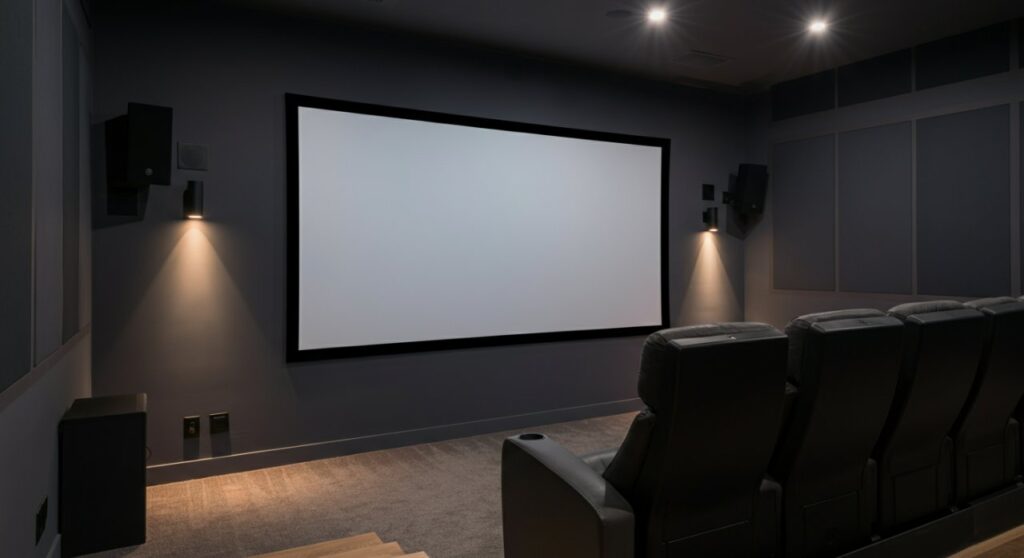
If you want to know how to build a projector screen quickly and affordably, the best method is constructing a wooden frame wrapped in blackout cloth. This DIY approach typically costs under $100, compared to $300+ for commercial screens, and yields a professional, high-contrast image.
- Best Material: Blackout cloth (non-stretchy, matte white).
- Frame: 1×4 pine boards (straight and lightweight).
- Time Required: 3–4 hours (plus drying time for paint if applied).
- Tools Needed: Staple gun, miter saw, drill, and measuring tape.
Why Choose a DIY Projector Screen?
Many home theater enthusiasts ask how to make a screen for a projector because store-bought options are often overpriced or lack custom sizing. A DIY screen allows you to tailor the dimensions perfectly to your room’s wall space.
From my personal experience building three different screens, the blackout cloth method provides the best gain-to-cost ratio. Commercial screens often use reflective coatings that can cause “hotspotting,” whereas high-quality fabric diffuses light evenly for a natural cinema look.
Materials and Tools Required
To successfully build a projector screen, you must gather the right supplies. Using high-quality materials ensures your surface remains taut and wrinkle-free over time.
Essential Supplies List
- Blackout Cloth: Buy a piece roughly 12 inches larger than your target screen size.
- 1×4 Pine Boards: Ensure they are “select” grade to avoid warping.
- Staple Gun: Heavy-duty with 3/8-inch staples.
- Miter Saw: For precise 45-degree angle cuts on frame corners.
- Corner Braces: To reinforce frame rigidity.
- Black Velvet Tape: Optional, for creating a crisp, light-absorbing border.
Comparison: DIY vs. Commercial Screens
Before you start, consider how your project compares to professional options. This table highlights why many people choose the DIY route.
| Feature | DIY Blackout Screen | Commercial Fixed Frame |
|---|---|---|
| Cost | $50 – $120 | $300 – $1,500+ |
| Customization | Unlimited (any size/ratio) | Fixed sizes only |
| Setup Difficulty | Moderate (requires tools) | Easy (assembly required) |
| Image Quality | Excellent (if built well) | Professional/Standard |
| Durability | High (easy to repair) | High (premium materials) |
Step-by-Step: How to Build a Projector Screen
Follow these steps to ensure your frame remains square and your fabric stays perfectly tight.
Step 1: Planning Your Dimensions
Determine your aspect ratio (typically 16:9 for movies). Measure your wall and subtract 4 inches to allow for the frame and mounting clearance.
Step 2: Constructing the Frame
Cut your pine boards at 45-degree angles to create a mitered joint. Assemble the frame using wood glue and corner braces to prevent sagging. Always measure diagonally from corner to corner; if the measurements match, your frame is perfectly square.
Step 3: Stretching the Fabric
Lay your blackout cloth face down on a clean floor. Place the frame on top and start stapling from the center of each side, moving outward.
- Pull the fabric taut but not so tight that you distort the weave.
- Work in a “cross” pattern (top, then bottom, then left, then right) to ensure even tension.
Tips to Fix or Improve Your Projector Screen
Even with careful planning, you might encounter minor issues. Knowing how to fix a projector screen after installation can save you hours of rework.
- Wrinkle Removal: If you notice small wrinkles, use a steamer on the back of the fabric. Never use a hot iron directly on the front surface.
- Improving Contrast: If your room isn’t fully dark, consider painting the fabric with a light grey acoustic or projection paint to improve black levels.
- Border Enhancement: Use black velvet tape around the edges to absorb “overscan” light from the projector, creating the illusion of a deeper, sharper image.
How to Install Your Projector Screen
Once the screen is built, the final step is mounting it securely. Use French cleats for a flush, professional-looking wall mount.
Ensure you find the wall studs before drilling. A heavy wooden frame requires sturdy support to prevent it from pulling away from the drywall over time. Always use a level during installation; even a slight tilt will be noticeable during panning shots in movies.
Frequently Asked Questions (FAQs)
What is the best material to build a projector screen?
Blackout cloth is widely considered the gold standard for DIYers because it is opaque, matte white, and affordable. It prevents light from passing through the back of the screen, which helps retain brightness.
Is it hard to learn how to make a screen for projector use?
It is a beginner-friendly project if you have basic woodworking tools. The most challenging part is maintaining even tension on the fabric to prevent wrinkles, which is easily managed with a systematic stapling process.
How do I maintain my DIY projector screen?
Avoid touching the screen surface, as oils from your hands can leave marks. Use a microfiber cloth or a soft brush attachment on a vacuum to gently remove dust, and avoid using liquid cleaners.
Can I paint my DIY projector screen?
Yes, you can use specialized projection paint or high-quality matte white interior paint. However, the surface must be perfectly smooth, or the texture of the paint will be visible when the projector is running.