Understanding Projector Screen Orientation
You can typically rotate the projector screen image by accessing the “Projection” or “Installation” settings in your projector’s On-Screen Display (OSD) menu. Most modern projectors offer options like “Front,” “Rear,” “Front-Ceiling,” and “Rear-Ceiling” to automatically flip or mirror the image based on how you have mounted your device. If these built-in settings do not provide the exact orientation you need, you may need to adjust your source device’s display settings or use a third-party software solution.
TL;DR: Quick Solutions for Screen Rotation
If you are in a hurry, check these common methods to fix your orientation:
- Projector Menu: Navigate to
Settings>Installation>Projectionto flip the image (Ceiling/Floor mount). - Source Device (Windows/Mac): Change the
Display Orientationin your computer’s system settings. - Media Player: Use software like VLC Media Player to rotate the video output independently of the display.
- Physical Adjustment: Verify if the lens shift or keystone correction settings are causing an unintentional tilted appearance.
Why Is Your Projector Image Upside Down or Sideways?
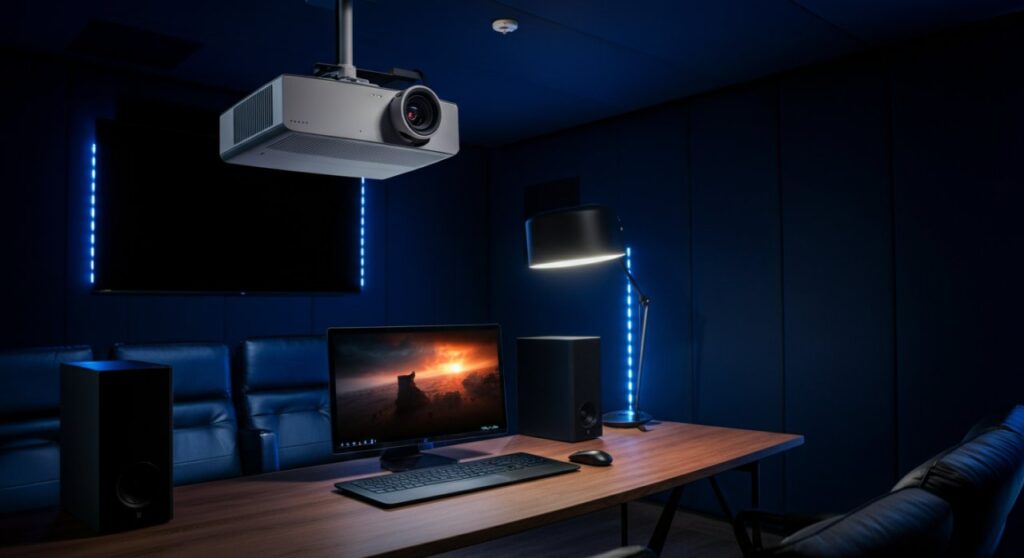
Most users encounter rotation issues because they have mounted the projector on the ceiling without updating the internal software settings. By default, projectors are configured for “Tabletop/Front” projection. When you flip the physical unit upside down to attach it to a mount, the projected image remains oriented for a flat surface, appearing inverted.
Common Scenarios Requiring Rotation
- Ceiling Mounting: You must switch to “Ceiling” mode to flip the image 180 degrees.
- Rear Projection: When projecting from behind the screen, you need to “Mirror” the image so text appears correctly.
- Portrait Mode: Some digital signage installations require rotating the image 90 degrees, which standard projectors often struggle to do natively.
Step-by-Step Guide: How to Rotate the Projector Screen
Follow these procedures to correct your display alignment through various methods.
Method 1: Using the Projector’s Native Settings
This is the most effective way to rotate the projector screen because it handles the correction at the hardware level.
- Press the Menu button on your projector or remote control.
- Locate the Setup, Installation, or Projection tab.
- Look for Projection Mode or Mounting Type.
- Select the option that matches your setup:
- Save the changes and exit the menu.
Method 2: Adjusting from Your Computer (Windows/Mac)
If your projector lacks a 90-degree rotation feature, you can force the orientation from your PC.
- For Windows 10/11: Right-click your desktop > Display settings > Display orientation. Select Landscape (flipped) or Portrait as needed.
- For macOS: Go to System Settings > Displays > Rotation. Choose the degree of rotation that corrects the view.
Comparison of Rotation Methods
| Method | Best For | Ease of Use | Pros |
|---|---|---|---|
| Projector Menu | Ceiling/Rear Mounts | High | Native fix, no loss in quality. |
| OS Display Settings | Portrait Mode | Medium | Good for desktop/laptop sources. |
| Media Player | Video Content | Medium | Works for specific video files. |
| External Scaler | Professional Install | Low | Professional control, high cost. |
Troubleshooting Tilted or Crooked Images
Sometimes the image isn’t “rotated” 90 or 180 degrees, but simply looks crooked. This is usually a physical alignment issue rather than a software one.
- Keystone Correction: Use the Keystone settings in your menu to adjust the trapezoidal distortion.
- Lens Shift: If your projector has a Lens Shift dial, use it to move the image vertically or horizontally without tilting the projector itself.
- Physical Leveling: Ensure the projector is perfectly level on its mount. Even a slight tilt of a few degrees can cause a noticeable skew at large screen sizes.
Expert Tips for Optimal Setup
In my experience installing home theater systems, the biggest mistake users make is over-relying on digital keystone correction. While it helps rotate the projector screen appearance or fix alignment, heavy use of keystone correction reduces image resolution and introduces artifacts.
- Prioritize Physical Placement: Always try to center your projector perfectly with the screen before resorting to digital adjustments.
- Use High-Quality Cables: If you are running long distances for a ceiling mount, ensure you use active HDMI cables to prevent signal degradation, which can sometimes interfere with display handshake signals.
- Update Firmware: Occasionally, an image orientation bug can be fixed by installing the latest firmware provided by the manufacturer (e.g., Epson, BenQ, or Optoma).
Frequently Asked Questions (FAQs)
Can I rotate the projector screen 90 degrees for portrait mode?
Most home theater projectors do not support 90-degree rotation natively. You will likely need to adjust the orientation settings on your source PC or use a professional-grade digital signage projector.
Why does my image flip back to normal after restarting?
This often happens if you haven’t saved the settings in the projector’s menu or if your computer is overriding the projector’s display settings upon connection. Ensure you hit “Apply” or “Save” in the OSD menu.
Will rotating the image damage the projector?
No, rotating the image digitally via the menu or your computer is a standard software process and will not harm the hardware.
How do I fix a mirror image on my projector?
This is caused by the “Rear Projection” setting being active. Navigate to your projector’s installation menu and change the mode to “Front” or “Front Ceiling.”