Understanding Projector Blue Light: What You Need to Know
Yes, do projectors emit blue light? The short answer is yes, virtually all modern digital projectors—whether DLP (Digital Light Processing), LCD (Liquid Crystal Display), or LCoS—emit blue light because they rely on white light sources that contain a full spectrum of colors, including the blue wavelength. Unlike direct-view screens like smartphones or monitors, projectors use reflected light, which is generally considered easier on the human eye; however, the presence of blue light remains a factor for prolonged viewing sessions.
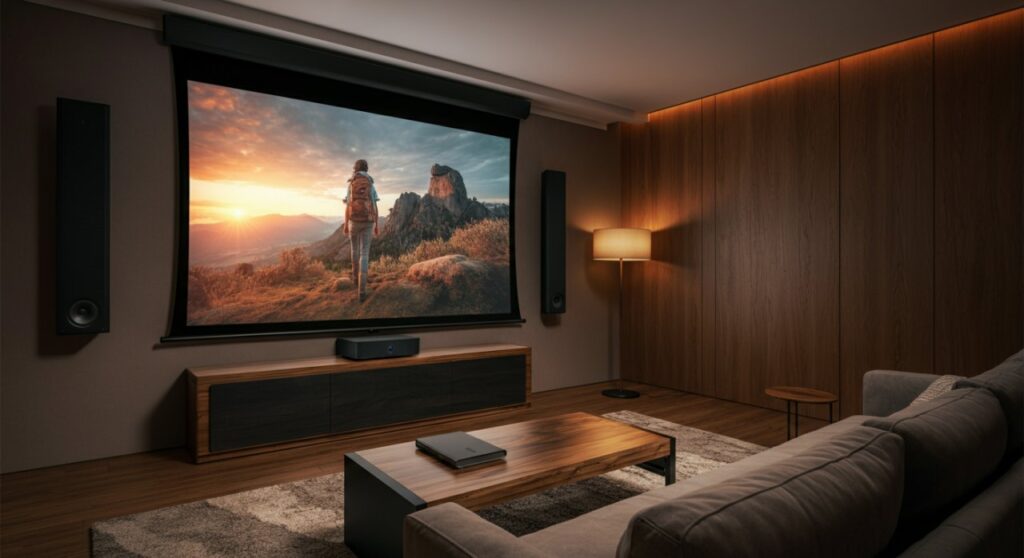
TL;DR: Quick Summary
- Blue light emission: All standard projectors emit blue light as part of their RGB (Red, Green, Blue) light spectrum.
- Reflected vs. Direct light: Because you view the image reflected off a screen or wall, it reduces the intensity of direct exposure compared to looking at an LED display.
- Eye comfort: While projectors are safer than staring at a tablet, managing total screen time and ambient light remains vital for preventing digital eye strain.
Why Do Projectors Emit Blue Light?
Understanding do projectors have blue light requires a look at how digital imaging works. To create the millions of colors you see in a movie or presentation, a projector must combine red, green, and blue light.
Whether the light source is a traditional UHP lamp, LED, or Laser, the goal is to produce a balanced white light. Without the blue component, the image would appear yellow or overly warm, making accurate color reproduction impossible.
The Physics of Projector Light
- DLP Projectors: Use a spinning color wheel or individual LED/Laser chips to sequence light, including a significant amount of blue light.
- LCD Projectors: Pass light through three separate liquid crystal panels to filter colors. Even here, the underlying light source contains the full visible spectrum.
- Laser Phosphor: These systems often use a blue laser as the primary source to excite yellow phosphors, inherently involving blue light in the process.
Is Projector Blue Light Harmful?
Many people wonder, does projector have blue light levels equivalent to a TV? While the source contains blue wavelengths, the viewing experience is fundamentally different due to the way light reaches your eyes.
When you watch a monitor, you are looking directly at a light source (emissive). When you watch a projector, the light reflects off a surface (diffusive), which significantly scatters the photons and reduces the harshness.
Comparison: Projectors vs. Direct-View Screens
| Feature | Projector (Reflected) | Monitor/TV (Emissive) |
|---|---|---|
| Light Pathway | Indirect (Wall/Screen) | Direct (Into Eye) |
| Blue Light Intensity | Lower perceived intensity | Higher concentration |
| Eye Strain Potential | Generally lower | Higher for prolonged use |
| Viewing Distance | Typically farther | Often very close |
How to Reduce Blue Light Exposure While Projecting
If you are concerned about does a projector have blue light that impacts sleep or eye health, you don’t need to stop using your projector. You can adjust your setup to minimize potential fatigue.
Actionable Tips for a Safer Viewing Experience
- Adjust Color Temperature: Most projectors have “Warm” or “Cinema” modes. These settings reduce the intensity of the blue channel in the color gamut.
- Calibrate Your Device: Use a calibration tool to shift the white point toward the red/yellow spectrum, which is naturally softer on the eyes.
- Manage Ambient Lighting: Projecting in a completely dark room increases the contrast between the screen and your surroundings, which can lead to faster eye fatigue. Use bias lighting to soften the contrast.
- Follow the 20-20-20 Rule: Every 20 minutes, look at something 20 feet away for 20 seconds to give your eye muscles a break.
Expert Insights on Projector Safety
In my years of setting up home theaters and professional conference rooms, I have found that screen material plays a role too. High-gain screens can sometimes create “hot spots” that increase light intensity.
If you or your children are sensitive to light, opt for a matte white screen with lower gain. This provides a more diffuse, softer image that maintains color accuracy without the intensity associated with highly reflective, high-gain surfaces.
Frequently Asked Questions
Does a projector have blue light that causes sleep issues?
Yes, blue light can suppress melatonin production. If you watch a bright, high-contrast projector screen late at night, it may impact your ability to fall asleep. Consider switching to a “Warm” picture mode in the evening.
Is a projector better for eyes than a television?
For most people, yes. Because projectors use reflected light, the image is less intense than the emissive light coming directly from an LED or OLED television panel.
Do laser projectors emit more blue light than lamp projectors?
Not necessarily. While many laser projectors use a blue laser as the engine, the final output is filtered and balanced to create a white image. The perceived amount of blue light reaching your eye depends more on your brightness and color settings than the light source type.
Can I buy a blue light filter for my projector?
While you cannot put a “screen protector” on a projector lens like you do on a phone, you can use specialized ambient light rejecting (ALR) screens or color-calibrated filters to adjust the light output to your preference.