Can You Use a Projector on a Black Wall? The Reality Check
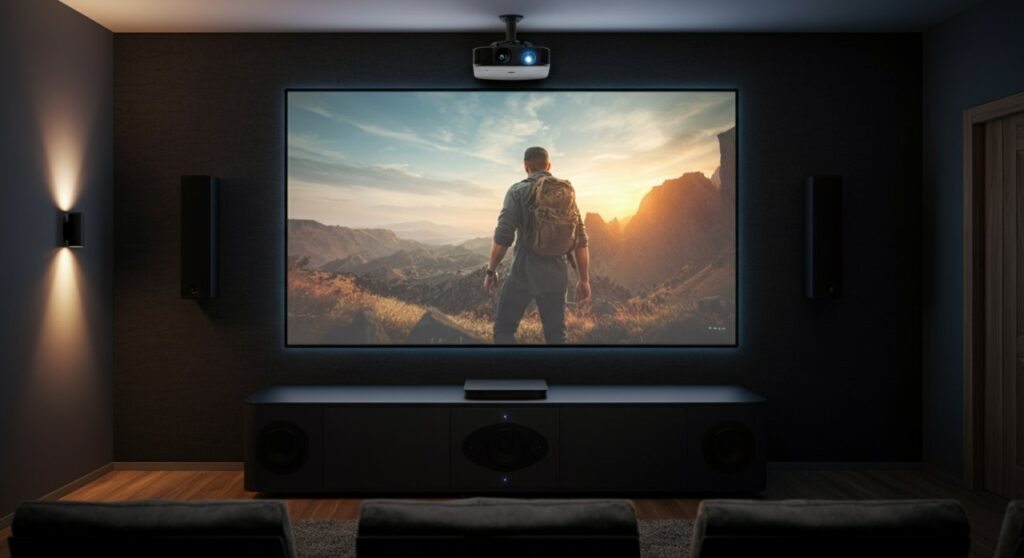
Yes, you can use a projector on a black wall, but you must adjust your expectations regarding image quality. While a dark surface absorbs light—the opposite of what a standard white screen does—modern high-lumen projectors can still produce a watchable image if configured correctly. Using a dark surface often results in deeper, more cinematic black levels, though you will inevitably sacrifice some brightness and color vibrancy. If you are aiming for a moody, home theater aesthetic, a black wall can be an unconventional but effective canvas.
TL;DR: Quick Summary
- Feasibility: Technically possible, but requires a high-lumen projector.
- The Trade-off: Better contrast (blacks look deeper) but lower peak brightness and color accuracy.
- The Fix: Use a specialized high-contrast projector paint or a dedicated ambient light rejecting (ALR) screen if the wall performance is too dull.
- Verdict: Best for dark rooms; avoid in rooms with high ambient light.
Why Surface Color Matters for Projection
To understand why people ask can you use a projector on a dark wall, you must understand how projection screens function. A white surface reflects the maximum amount of light hitting it, preserving the projector’s original color gamut and brightness output.
When you project onto a black wall, the surface absorbs a significant portion of the light. This creates two distinct scenarios for your viewing experience:
- Improved Contrast: Darker areas of the image appear true-to-life because the black wall itself acts as a deep baseline.
- Washed Out Highlights: Because the surface cannot reflect light efficiently, bright colors and whites will appear dim or “muddy.”
Assessing Your Projector’s Capabilities
Not every device can handle a non-white surface. When testing whether can you use a projector on a black wall effectively in your specific setup, focus on these two technical specifications:
Lumens (Brightness)
You need a projector with a high lumen count. For a white wall, 2,000 lumens might suffice. For a black wall, you should aim for 3,000+ ANSI lumens to compensate for the light absorption.
Contrast Ratio
A higher native contrast ratio helps the projector distinguish between subtle shades of gray, which is crucial when the surface is working against you.
| Feature | White Wall/Screen | Black Wall |
|---|---|---|
| Brightness | High (Reflective) | Low (Absorptive) |
| Black Levels | Standard | Excellent |
| Color Accuracy | High | Low/Shifted |
| Ideal Environment | Any lighting | Pitch black room |
How to Optimize Your Black Wall Setup
If you have already painted your wall black or prefer the aesthetic, you can optimize the setup to make it functional. I have personally experimented with various surfaces and found that specific techniques can significantly improve performance.
- Apply Specialty Paint: Avoid standard matte black wall paint. Use high-contrast projection paint (like Screen Goo or Black Widow mixes) which contains reflective particles to bounce light back to the viewer.
- Control Ambient Light: This is mandatory. Even a small amount of stray light will kill the image contrast on a black surface. Use blackout curtains to ensure the room is completely dark.
- Distance Calibration: Move the projector closer to the wall. Reducing the “throw distance” concentrates the light beam, making the image appear significantly brighter.
When Should You Use a Dark Surface?
While many home theater enthusiasts ask can you use a projector on a dark wall to save money, it is rarely the optimal choice for general use. However, there are specific scenarios where it excels:
- Immersive Gaming: In a dark gaming “cave,” the deep black levels can make high-contrast games feel more immersive.
- Cinematic Aesthetics: For films with dark, atmospheric cinematography, the reduced light spill creates a very “theatrical” vibe.
- Minimalist Decor: If you hate the look of a large white screen on your living room wall, a painted black feature wall is a subtle alternative.
Frequently Asked Questions (FAQs)
Can I use a projector on a grey wall instead of black?
Yes, a neutral grey wall is significantly better than a black one. Grey surfaces provide a balance, helping to improve contrast without sacrificing as much brightness as a black surface.
Do I need a special projector for a dark wall?
You do not need a “special” projector, but you definitely need one with high ANSI lumens. A standard budget office projector will likely produce a very dim image that is difficult to watch.
Is the image quality as good as a commercial screen?
No. Even the best-painted wall cannot compete with a high-end ALR (Ambient Light Rejecting) screen. Commercial screens are engineered with optical layers that precisely manage light reflection.
Can I paint my wall with metallic paint to help?
Some DIYers use metallic-infused paints to increase gain. While this can brighten the image, be careful of “hot spotting,” where the center of the image looks much brighter than the edges.