Understanding Projector Light Safety
Generally, is projector light harmful for eyes? No, when used correctly, projector light is not inherently harmful to your eyes or skin. Unlike a direct light source like a laser pointer or the sun, a projector creates a reflected image, which is much safer for human vision.
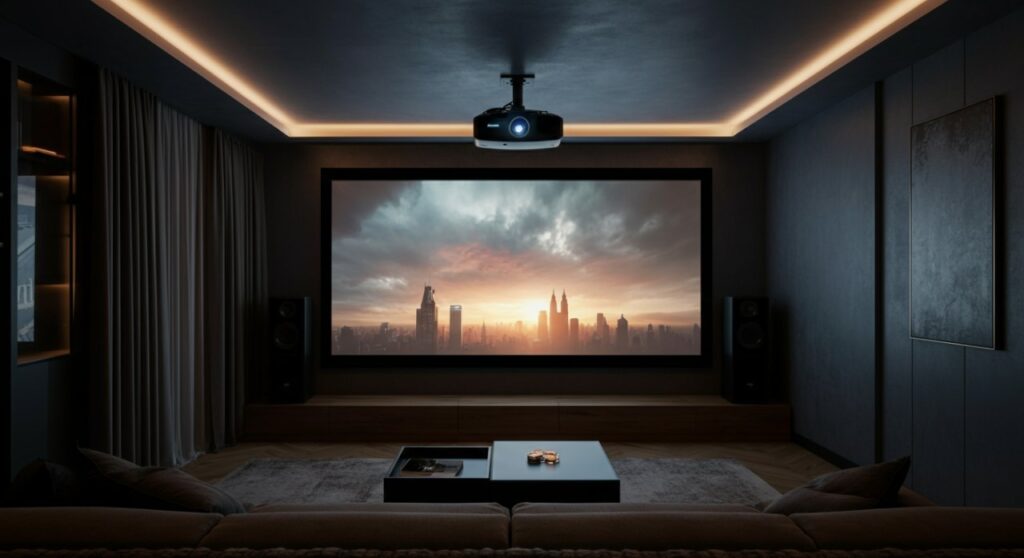
While direct, intense beams can pose risks, modern home and office projectors are designed with strict safety protocols. By understanding how to position your device and manage your environment, you can enjoy a cinematic experience without compromising your long-term eye health or worrying about whether is projector light harmful for skin.
TL;DR: Projector Light Safety Essentials
- Reflected Light: Projectors use reflected light off a screen or wall, which is significantly softer than direct glare.
- Direct Exposure: Never look directly into the projector lens; this can cause temporary or permanent retinal damage.
- Blue Light: Most modern projectors emit less blue light than smartphones or computer monitors, reducing digital eye strain.
- Skin Safety: There is no evidence suggesting that standard projector light causes skin damage or UV-related issues.
- Best Practices: Maintain proper distance, use an appropriate projection surface, and control ambient room lighting.
Is Projector Light Harmful for Eyes? The Science Explained
When you ask, is projector light harmful for eyes, you must distinguish between direct exposure and reflected light. When a projector hits a screen, the photons scatter before reaching your eyes.
This process, known as diffuse reflection, prevents the high-intensity concentrated light from hitting your retina. This is the exact opposite of looking at a TV or smartphone, where you are looking directly into the light source.
Factors Affecting Eye Comfort
- Ambient Light: High ambient light forces your eyes to work harder to distinguish the image.
- Resolution: Lower resolution images may cause eye fatigue due to lack of visual clarity.
- Flicker Rate: Cheap projectors may have a low refresh rate, leading to subtle flickering that causes headaches.
- Screen Material: A high-quality projection screen improves contrast, allowing you to view images more comfortably without straining.
Is Projector Light Harmful for Skin?
Many users also wonder, is projector light harmful for skin? Based on current technological standards, there is no risk of UV damage or dermatological harm from standard DLP (Digital Light Processing) or LCD projectors.
Unlike tanning beds or high-intensity industrial lamps, consumer-grade projectors do not emit harmful ultraviolet (UV) radiation. You can safely use a projector for long periods without needing sunscreen or protective barriers.
Comparison: Light Sources and Safety
| Light Source | Direct or Reflected | Eye Risk Level | Skin Risk |
|---|---|---|---|
| Projector | Reflected | Low (if not staring) | None |
| Smartphone | Direct | Moderate | None |
| Laser Pointer | Direct | Very High | None |
| Sunlight | Direct | High | High (UV) |
Best Practices for Safe Projector Use
To minimize eye strain and ensure the safest viewing environment, follow these professional recommendations. These steps focus on optimizing the optical comfort of your home theater.
Never Look Directly into the Lens
The projector lens emits a concentrated beam of light. Staring directly into it can potentially damage your vision due to high brightness levels. Always ensure children and pets are educated or kept away from the immediate front of the device.
Maintain Optimal Viewing Distance
Follow the 1.5x rule. The distance between your seating position and the screen should be roughly 1.5 times the width of the image. This prevents the “golf spectator” effect, where your eyes have to move excessively to track the content.
Adjust Brightness and Contrast
Many users keep their projector settings at maximum brightness. Often, this is unnecessary and adds to visual fatigue. Calibrate your device so the image is bright enough to be sharp, but not so bright that it creates glare in a dark room.
Use Ambient Light Rejection (ALR) Screens
If you use a projector in a room with windows, ALR screens are essential. They reflect the projector’s light toward the viewer while absorbing ambient light. This dramatically improves contrast and reduces the need for “squinting” to see details.
Frequently Asked Questions
Is projector light harmful for eyes if I watch movies for many hours?
No, it is not inherently harmful. However, watching for long hours can cause digital eye strain. Follow the 20-20-20 rule: every 20 minutes, look at something 20 feet away for 20 seconds to relax your eye muscles.
Does the type of projector (Laser vs. Lamp) change the safety level?
Both are generally safe when used as intended. Laser projectors are incredibly bright, which makes the risk of looking directly into the lens much more severe. Always exercise extra caution with high-lumen laser units.
Can projector light cause headaches?
If you suffer from headaches, it is likely due to a low refresh rate or improper screen contrast rather than the light itself. Adjusting your settings or upgrading to a projector with a higher refresh rate (e.g., 120Hz) usually solves this issue.