TL;DR: Quick Solutions to Hide Your Projector Screen
If you want to know how to hide a projector screen in the ceiling, the most effective solution is installing a recessed motorized projector screen. This mechanism retracts the screen completely into a hidden slot within your ceiling drywall, making it invisible when not in use.
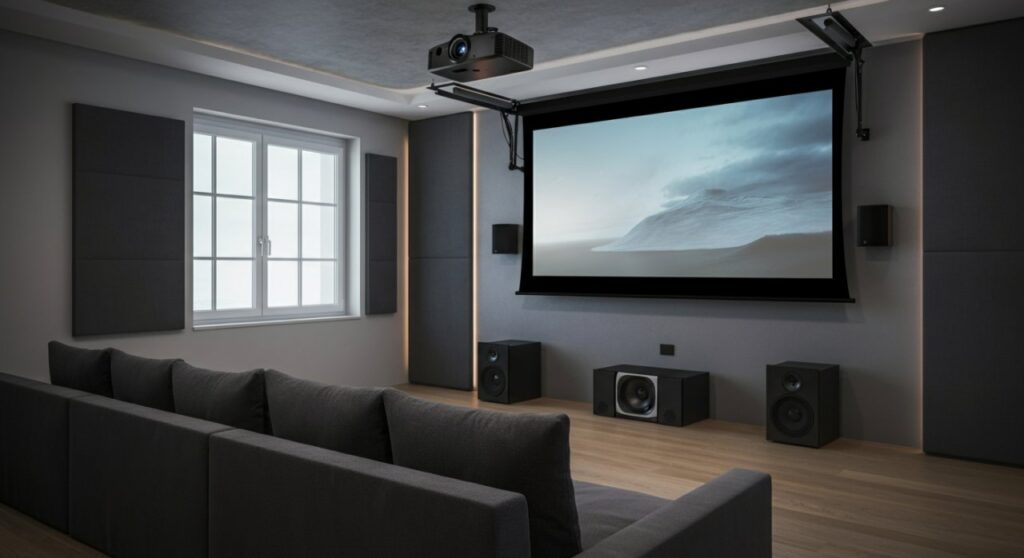
- Best for Clean Aesthetics: Recessed motorized screens.
- Best for DIY/Budget: Custom-built drop ceilings or “soffits.”
- Best for Retrofitting: Surface-mounted casing covers or decorative beams.
Why Conceal Your Projector Screen?
Home theater enthusiasts often struggle with the “black hole” effect, where a large, grey or white screen dominates the room when the projector is off. By learning how to hide a projector screen in the ceiling, you transform your living space from a dedicated cinema back into a sleek, functional room in seconds.
Beyond aesthetics, hiding your screen protects the delicate surface from dust, accidental damage, and pet interference. A clean, minimalist look significantly increases the high-end appeal of any multi-purpose media room or living area.
Understanding Recessed Motorized Screen Installation
The gold standard for a professional home theater is the recessed motorized projector screen. These units are designed to sit inside a custom-cut slot in your ceiling, leaving only a slim, flush metal cover visible.
Essential Tools and Components
To successfully execute this installation, you will need:
- Recessed Motorized Screen Kit (check dimensions carefully).
- Drywall saw and stud finder.
- Electrical wiring/Outlet (unless using a battery-powered model).
- Ceiling mounting brackets (usually included).
- Finishing trim (to clean up the drywall edges).
Step-by-Step Installation Process
- Map the Joists: Use a stud finder to locate ceiling joists. You must mount the screen casing parallel or perpendicular to joists, ensuring they do not obstruct the retraction path.
- Mark and Cut: Trace the template provided by the manufacturer onto the ceiling drywall. Carefully cut along the lines using a high-quality drywall saw.
- Secure the Housing: Lift the housing into the cavity. Secure it directly to the ceiling joists using heavy-duty lag bolts to ensure it can support the weight of the motor and screen material.
- Electrical Connection: Connect the motor to a power source. Many professionals recommend adding a smart outlet so you can control the screen via voice commands or a central automation hub like Control4 or Home Assistant.
- Finishing: Apply drywall tape and mud around the edges of the housing to create a seamless, built-in appearance.
Alternative Methods: Hiding Without Full Recessing
Not every ceiling is suitable for cutting into. If you have concrete ceilings or HVAC obstructions, consider these alternatives to hide your projector screen.
The Soffit/Bulkhead Method
Building a decorative soffit (a dropped ceiling section) around the perimeter of the room allows you to hide a standard wall-mounted or ceiling-mounted screen inside a custom-built wooden “box.”
- Pros: Does not require structural ceiling modifications.
- Cons: Reduces ceiling height in that specific area.
Ceiling-Mounted Decorative Beam
If you have a ceiling-mounted screen, you can install a custom hollow wooden beam that encases the screen housing. When the screen retracts, it looks like a decorative architectural element of the room.
Comparison of Concealment Strategies
| Method | Aesthetic Quality | Complexity | Cost |
|---|---|---|---|
| Recessed Motorized | Excellent (Invisible) | High | $$$$ |
| Custom Soffit | Very Good | Moderate | $$$ |
| Decorative Beam | Good | Low | $$ |
| Standard Ceiling Mount | Poor | Low | $ |
Expert Tips for a Professional Finish
As someone who has installed several home theater setups, I’ve learned that the details are what make the difference between a “DIY project” and a “professional installation.”
- The “Flap” Strategy: Ensure the motorized screen housing includes an automatic bottom flap. This flap closes the opening in the ceiling once the screen is fully retracted, ensuring total concealment.
- Alignment is Key: Use a laser level during the installation process. Even a half-inch tilt in the casing can result in a screen that looks crooked when deployed.
- Avoid Vibration: Apply rubber gaskets between the screen housing and the ceiling joists. This prevents motor vibrations from transferring through the house framing, keeping your movie nights quiet.
Frequently Asked Questions
Can I install a recessed projector screen in a drop ceiling?
Yes, drop ceilings (acoustic tile ceilings) are actually easier to work with than drywall. You simply remove the tiles, install the framing, and use a custom trim kit to support the housing.
Do I need a professional electrician for the screen motor?
If your screen requires hardwiring into the home’s AC power, it is highly recommended to hire a licensed electrician to ensure your installation meets local building codes.
How do I control a hidden projector screen?
Most modern motorized screens come with IR or RF remotes. For advanced setups, look for screens that offer RS232 or 12V trigger cables, which allow the screen to deploy automatically when you turn on your projector.
Can I hide a fixed-frame screen in the ceiling?
No. Fixed-frame screens are designed to be wall-mounted. If you want a hidden look, you must use a retractable motorized screen.