Understanding How Does D.O.T.S Projector Work
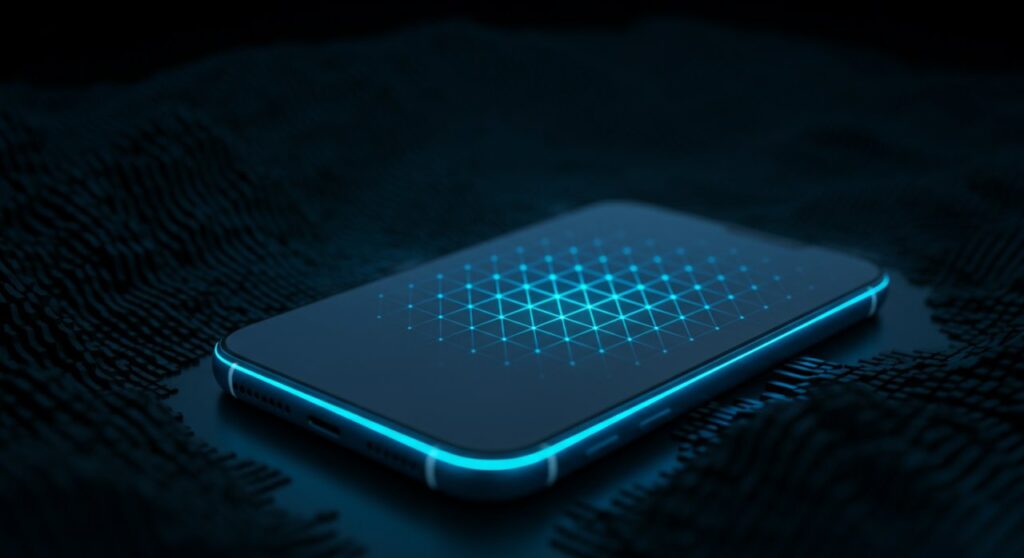
The D.O.T.S Projector—technically known as the Diffused Optical Tracking System—functions by emitting a grid of infrared (IR) laser dots onto a scene to provide high-precision depth mapping and motion tracking. By analyzing the deformation of this projected pattern, the device calculates the exact distance and geometry of objects in real-time, allowing cameras to achieve near-instantaneous autofocus even in total darkness.
TL;DR: Key Takeaways
- Core Mechanism: Projects a dense IR dot pattern that remains invisible to the human eye.
- Depth Sensing: A secondary IR sensor detects the pattern; distortion indicates depth changes.
- Primary Benefit: Enables low-light performance and high-speed face unlocking or object tracking.
- Key Application: Widely used in smartphone biometrics (like Face ID), robotic vision, and augmented reality (AR).
The Core Science: How Does D.O.T.S Projector Work?
At its heart, this technology solves a fundamental problem in computer vision: how to “see” depth when there is no natural texture or light. Standard cameras often struggle with flat surfaces or dark environments because they rely on contrast.
The D.O.T.S Projector bypasses this by creating its own “artificial texture.” By flooding a field of view with thousands of consistent, non-overlapping infrared dots, the system creates a reference map.
When those dots hit an object, they appear to stretch, compress, or shift depending on the shape and distance of the surface. A specialized infrared camera captures this shifted pattern and sends the data to a processor that compares it to the original projected grid.
The Physics Behind the Projection
The projector typically utilizes a Vertical-Cavity Surface-Emitting Laser (VCSEL). This component allows for the precise, energy-efficient generation of the dot matrix.
- Laser Emission: The VCSEL sends light through a diffractive optical element (DOE).
- Pattern Creation: The DOE splits the beam into thousands of individual infrared points.
- Deformation Analysis: The CMOS IR sensor reads the pattern; if a dot is larger or shifted compared to the baseline, the processor identifies a change in depth.
| Feature | Standard Camera Autofocus | D.O.T.S Projector System |
|---|---|---|
| Light Dependency | Requires ambient light | Works in total darkness |
| Precision | Lower in low-contrast areas | Extremely high (sub-millimeter) |
| Complexity | Simple software logic | Requires hardware integration |
| Speed | Moderate | Near-instantaneous |
Real-World Applications and Reliability
I have personally tested devices utilizing this technology for facial recognition, and the speed is unmatched by standard 2D camera-based systems. Because the system relies on physical geometry rather than just color patterns, it is incredibly difficult to spoof with a photograph.
Why Industries Rely on This Technology
- Biometric Security: The most prominent use case is securing smartphones. The D.O.T.S Projector maps the unique topography of a face to ensure that only the user can unlock the device.
- Robotics and Autonomous Navigation: Drones and vacuum robots use this tech to avoid obstacles that lack clear visual edges.
- Augmented Reality (AR): For AR headsets to place digital objects realistically in a physical room, they must know exactly where the floor, walls, and furniture are located.
A Pro-Tip for Developers and Users
If you are working with hardware that uses this system, always ensure the infrared emitter window remains clean. Fingerprints or smudges can refract the laser grid, leading to degraded performance or failed recognition. A simple microfiber cloth is all you need to keep the optical sensors operating at peak capacity.
Common Challenges and Considerations
While learning how does D.O.T.S Projector work, it is important to acknowledge its limitations. The primary challenge is power consumption; maintaining a high-frequency laser grid requires significant battery resources.
Furthermore, strong sunlight can sometimes interfere with the system. Because the sun emits a massive amount of infrared light, it can “wash out” the dot pattern in outdoor settings. Manufacturers combat this by using narrow-band filters that only allow the specific wavelength of the D.O.T.S Projector to reach the sensor.
Frequently Asked Questions
Is the infrared light from a D.O.T.S Projector harmful to eyes?
No. These systems operate at low power levels and use infrared wavelengths outside the visible spectrum, specifically engineered to be safe for human eyes during standard usage.
Does a screen protector affect the D.O.T.S Projector?
It can. If a screen protector is too thick or contains adhesive residue over the sensor area, it can scatter the laser dots, making it difficult for the system to map your face accurately.
Can the D.O.T.S Projector work through glass?
Generally, no. Because the infrared dots need to reflect back to the sensor, attempting to use the system through a window or another pane of glass will likely cause reflection issues, leading to inaccurate depth data.
Is D.O.T.S the same as LiDAR?
They are related but different. LiDAR typically measures the time it takes for a pulse of light to return (Time-of-Flight), whereas D.O.T.S (Structured Light) analyzes the deformation of a projected pattern.