Understanding What Happens If You Put a Projector on a Dimmer
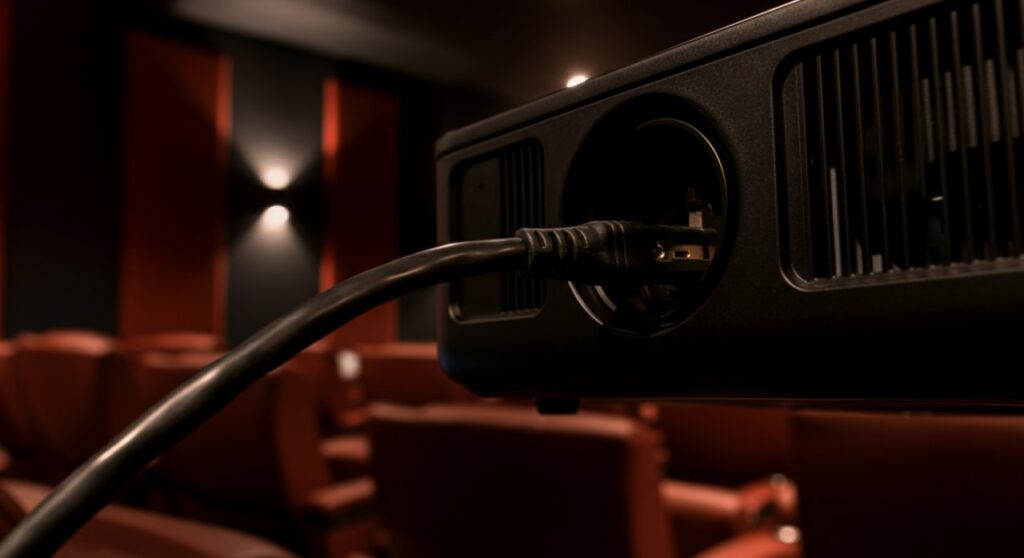
If you plug a standard projector into a wall dimmer switch, you will almost certainly damage the device or cause it to malfunction immediately. Projectors are complex electronic devices with sensitive power supplies, ballasts, and cooling systems that require a constant, stable 120V/240V AC power source to operate safely. Using a dimmer disrupts the necessary voltage levels, leading to internal component failure, overheating, and potential fire hazards. Never attempt to dim a projector using household light dimmers, as they are strictly designed for simple, resistive loads like incandescent light bulbs, not sophisticated digital equipment.
TL;DR: Can You Dim a Projector?
| Action | Result | Risk Level |
|---|---|---|
| Using a Wall Dimmer | Device failure, damaged power supply, fire risk | Critical |
| Using “Eco Mode” | Safe dimming, extends lamp life | Low (Safe) |
| Using Neutral Density Filters | Safe dimming, preserves image quality | Low (Safe) |
| Adjusting Contrast/Brightness | Safe, software-based adjustment | Low (Safe) |
Why Standard Dimmer Switches Destroy Projectors
When you ask what happens if you put a projector on a dimmer, the answer lies in how these switches function. Most residential dimmers use TRIAC (Triode for Alternating Current) technology. These devices work by “chopping” the AC sine wave to reduce the average power delivered to a bulb.
The Power Supply Conflict
Modern projectors utilize Switching Mode Power Supplies (SMPS). These supplies are designed to take a full, clean sine wave and convert it into the specific DC voltages required for the DLP or LCD chips, the ballast, and the cooling fans.
- Voltage Inconsistency: The chopped waveform from a dimmer confuses the SMPS, causing it to work much harder to compensate.
- Harmonic Distortion: This creates electrical noise that can cause the projector to flicker, buzz loudly, or shut down entirely.
- Component Overheating: The internal capacitors and switching transistors will overheat rapidly, often leading to a “pop” and the smell of burning electronics.
Damage to the Ballast and Lamp
The lamp ballast is the heart of the projector’s light system. It requires a precise strike voltage to ignite the mercury vapor lamp and a constant current to maintain the arc.
- Failure to Strike: A dimmed power source provides insufficient voltage to ignite the lamp, potentially blowing the ballast.
- Arc Instability: Even if it strikes, the unstable power causes the lamp arc to wobble. This creates visible flickering on the screen and can lead to premature lamp explosion.
Safe Alternatives to Dim Your Projector
Since you now know what happens if you put a projector on a dimmer (imminent equipment death), you might wonder how to actually lower the light output for a better viewing experience. Thankfully, manufacturers provide safe, built-in methods to achieve this.
Utilize “Eco Mode” or “Lamp Dimming”
Most modern projectors include an Eco Mode or a dedicated Lamp Dimming feature. These are engineered by the manufacturer to safely reduce the power supplied to the bulb.
- Benefits: Reduces fan noise, lowers operating temperatures, and significantly extends the lamp life (often by thousands of hours).
- Implementation: Check your remote control or the on-screen Menu settings. Look for “Lamp Power,” “Brightness Mode,” or “Eco Mode.”
Physical Neutral Density (ND) Filters
If your projector is still too bright for your room, professional installers use ND Filters. These are high-quality optical glass filters that you mount in front of the projector lens.
- How they work: Think of them as sunglasses for your projector. They physically block a percentage of light from leaving the lens without changing the color temperature or the electronic signal.
- Recommendation: Use a ND2 or ND4 filter for subtle reductions in brightness, especially in darkened dedicated home theaters.
Software Adjustments (Contrast and Brightness)
While these don’t reduce the actual light output of the bulb, they alter the signal processing to achieve a “perceived” dimming.
- Brightness (Black Level): Adjusting this setting controls the darkest part of the image.
- Contrast (White Level): Adjusting this allows you to cap the peak white output, which can make the image more comfortable in a pitch-black room.
Expert Tips for Managing Projector Brightness
From my experience in home theater calibration, users often overestimate the need for “maximum brightness.” In a light-controlled room, a screen that is too bright can actually cause eye fatigue and wash out shadow detail.
- Calibrate for the Room: If you have high ambient light, you need a high-gain screen rather than a brighter projector setting.
- Avoid DIY Dimming Hacks: Do not attempt to rewire or use “voltage regulators” bought from hobbyist sites. These rarely provide the pure sine wave required for expensive optical engines.
- Monitor Fan Speed: If you hear your fans spinning at maximum speed constantly, your projector is struggling. Ensure the intake filters are clean, as restricted airflow mimics the symptoms of power-related stress.
Frequently Asked Questions (FAQs)
What happens if I use a “smart” dimmer switch on my projector?
Even “smart” dimmers typically use the same TRIAC or leading-edge technology as standard dimmers. They are not compatible with the complex power requirements of a digital projector and will likely cause the same catastrophic damage.
Can I dim an LED projector safely?
No. While LED light sources are inherently dimmable, the projector’s electronics (the power board and logic board) are not designed to receive dimmed AC power. Any power fluctuation at the plug will damage the projector’s internal circuitry.
Does turning on Eco Mode affect image color?
In some projectors, Eco Mode can slightly shift the color temperature, making the image appear slightly “warmer” or “cooler.” If you are a stickler for color accuracy, you may need to perform a quick calibration using a calibration disc or software after switching to Eco Mode.