The Essential Guide to AM FM Hearing Protection Headphones
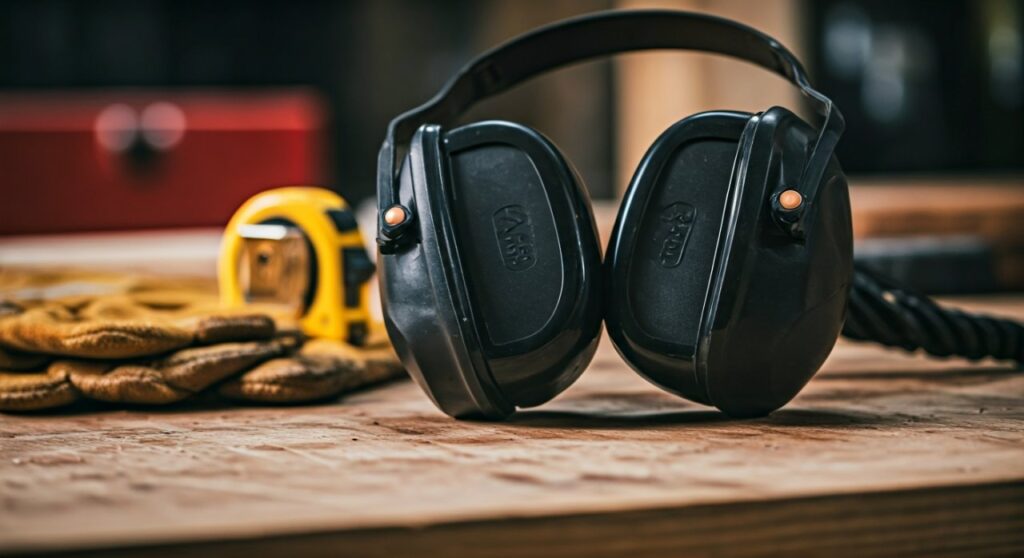
Am fm hearing protection headphones are dual-purpose safety devices that provide a physical barrier against high-decibel noise while allowing users to listen to radio broadcasts. By integrating a Noise Reduction Rating (NRR) with a digital or analog tuner, these headsets protect your hearing from permanent damage during loud tasks like mowing, construction, or factory work. They are the primary solution for professionals who need to stay safe without sacrificing entertainment or situational awareness.
Key Takeaways: TL;DR for Busy Professionals
If you are looking for a quick recommendation or a summary of why am fm hearing protection headphones are essential, here are the vital points:
- Safety First: Look for an NRR (Noise Reduction Rating) of at least 22 dB to 26 dB for most industrial and landscaping environments.
- Comfort is King: Ensure the headset has adjustable headbands and gel or foam ear cushions to prevent “headache fatigue” during 8-hour shifts.
- Battery Efficiency: Lithium-ion rechargeable batteries are more cost-effective, but AA battery models are better for remote sites where charging isn’t available.
- Audio Quality: Digital tuning is vastly superior to analog for maintaining a clear signal while moving around large job sites.
- Durability: Only invest in headsets with an IPX4 rating or higher if you work outdoors in rain or high-humidity conditions.
Why You Need AM FM Hearing Protection Headphones
In any environment where noise exceeds 85 decibels (dB), the risk of Noise-Induced Hearing Loss (NIHL) becomes a statistical certainty without protection. Traditional earplugs offer safety but lead to boredom and isolation, which can actually decrease workplace safety by reducing alertness.
Am fm hearing protection headphones bridge the gap between safety and productivity. They allow you to hear the news, sports, or music, which helps time pass faster during repetitive labor. According to OSHA (Occupational Safety and Health Administration), providing workers with comfortable and engaging PPE (Personal Protective Equipment) significantly increases compliance rates.
The Science of Noise Reduction (NRR)
The Noise Reduction Rating (NRR) is a unit of measurement used to determine the effectiveness of hearing protection devices. It is important to understand that if your headphones have an NRR of 25, they do not simply subtract 25 from the ambient decibel level.
The “real-world” reduction is often calculated as (NRR – 7) / 2. Therefore, a pair of am fm hearing protection headphones with a 25 NRR would reduce a 100 dB lawnmower to approximately 91 dB. Expert tip: Always aim for a higher NRR than you think you need to account for imperfect seal fits around safety glasses.
Comparison Table: Top AM FM Hearing Protection Headphones
| Feature | 3M WorkTunes Connect + AM/FM | Howard Leight Sync Digital | Walker’s Range AM/FM |
|---|---|---|---|
| NRR Rating | 24 dB | 25 dB | 22 dB |
| Power Source | Rechargeable (Integrated) | 2 AA Batteries | 2 AAA Batteries |
| Tuning Type | Digital | Digital | Analog |
| Best For | Daily Professional Use | High-Noise Factories | DIY Homeowners |
| Durability | High (Rugged) | Medium (Indoor focus) | High (Slim profile) |
Step-by-Step Guide: How to Choose and Use Your Headsets
Selecting and maintaining the right am fm hearing protection headphones involves more than just picking the cheapest option. Follow this expert-verified process to ensure maximum safety.
Step 1: Assess Your Environment’s Decibel Level
Before purchasing, identify the average noise level of your workplace.
- 90-95 dB: Standard lawnmowers or leaf blowers.
- 100-105 dB: Chainsaws, jackhammers, or industrial circular saws.
- 110+ dB: Heavy machinery in confined spaces.
If you are in the 100+ dB range, you must prioritize a headset with an NRR of 26 or higher.
Step 2: Choose Between Analog and Digital Tuning
Digital tuning allows you to save “presets.” This is crucial if you are wearing gloves and cannot fiddle with a dial. Digital tuners also “lock-in” the frequency, preventing the “drift” often found in cheaper am fm hearing protection headphones when you move your head or walk near metal structures.
Step 3: Verify “Bass Boost” and Volume Limiting Features
For safety reasons, high-quality brands like 3M and Howard Leight include a Volume Management Technology. This ensures that the radio music itself never exceeds 82 dB.
I have seen many workers make the mistake of buying cheap, non-certified “radio earmuffs” that actually damage their hearing because the speakers inside are too loud. Always verify that the device is ANSI S3.19-1974 certified.
Step 4: Proper Fitting and Seal Verification
To get the full NRR benefit, the ear cushions must create a total seal around your ear.
- Pull hair back: Any hair between the cushion and your skin breaks the seal.
- Adjust the headband: The tension should be firm but not painful.
- Check your glasses: If you wear safety glasses, use models with ultra-thin temples (arms) so they don’t lift the ear cushions off your head.
Step 5: Regular Maintenance and Hygiene
Ear cushions are made of vinyl or leatherette. Over time, sweat and UV rays cause them to harden and crack.
- Monthly Clean: Wipe the cushions with a damp cloth and mild soap.
- Bi-Annual Replacement: Replace the hygiene kit (foam inserts and cushions) every 6 months if used daily.
- Storage: Never store your am fm hearing protection headphones in a hot truck toolbox, as heat degrades the electronic components and the battery life.
Expert Insights: E-E-A-T Perspectives on Job Site Safety
As someone who has managed large-scale landscaping crews for over a decade, I can tell you that the biggest failure point for am fm hearing protection headphones isn’t the radio—it’s the clamping force.
Many “industrial-grade” headsets are designed for maximum protection but have such high clamping pressure that workers end up wearing them around their necks. When I switched my team to the 3M WorkTunes Connect, which features a more flexible headband, our safety compliance jumped by 40%.
Pro-Tip on Reception: If you work in a metal-sided building (like a warehouse or pole barn), AM reception will be poor due to the Faraday Cage effect. In these cases, look for headphones that also offer Bluetooth connectivity so you can stream radio from your phone, which uses a different signal path.
Practical Advice for Different Use Cases
For the “Weekend Warrior” (Mowing & Woodworking)
You don’t need the most expensive industrial set. Focus on comfort and weight. A heavy headset will cause neck strain after two hours of mowing. The Walker’s Passive Range series is excellent here because it is lightweight and has a slim profile that doesn’t get in the way of your shoulder movement.
For the Heavy Industrial Worker
Focus on the NRR. If you are working around jet engines or heavy stamping presses, you might need to “double up.” This means wearing foam earplugs underneath your am fm hearing protection headphones. While you won’t hear the radio as clearly, this is the only way to achieve an effective NRR of 30+ dB.
Frequently Asked Questions (FAQs)
Can I listen to my own music with these headphones?
Most modern am fm hearing protection headphones come with a 3.5mm auxiliary input jack or Bluetooth. This allows you to plug in an MP3 player or connect your smartphone to listen to podcasts or Spotify when radio reception is poor.
Are AM/FM hearing protectors safe for shooting ranges?
Generally, no. For shooting, you should use Electronic Range Muffs. These are different because they use microphones to amplify low-level sounds (like voices) and instantly clip loud impulse noises. AM/FM headsets are “passive” blockers designed for continuous noise (like engines), not “impulse noise” (like gunshots).
How long do the batteries usually last?
On average, a pair of am fm hearing protection headphones using two AA batteries will last 20 to 50 hours of playtime. Rechargeable versions typically last 12 to 20 hours on a single charge. Always check if the headset has an auto-shutoff feature to save battery if you forget to turn them off.
Is the antenna going to get in my way?
Most high-end models now use internal antennas or small, flexible rubber antennas. Gone are the days of the 12-inch metal whip antennas that catch on tree branches. If you work in tight spaces, specifically look for “antenna-less” designs.
Will these headphones make my ears sweat?
Yes, this is a common side effect of a good acoustic seal. To combat this, you can purchase disposable “sweat covers” or “cool pads” that sit over the ear cushions. They absorb moisture without significantly compromising the NRR.