Why 80 Ohm Headphones are the “Goldilocks” Choice for Audio Enthusiasts
80 ohm headphones are good for users who want professional-grade audio quality without requiring a massive external amplifier. They offer a significant step up in detail and transient response compared to 32-ohm consumer models while remaining versatile enough to be driven by most modern audio interfaces and some high-end laptops.
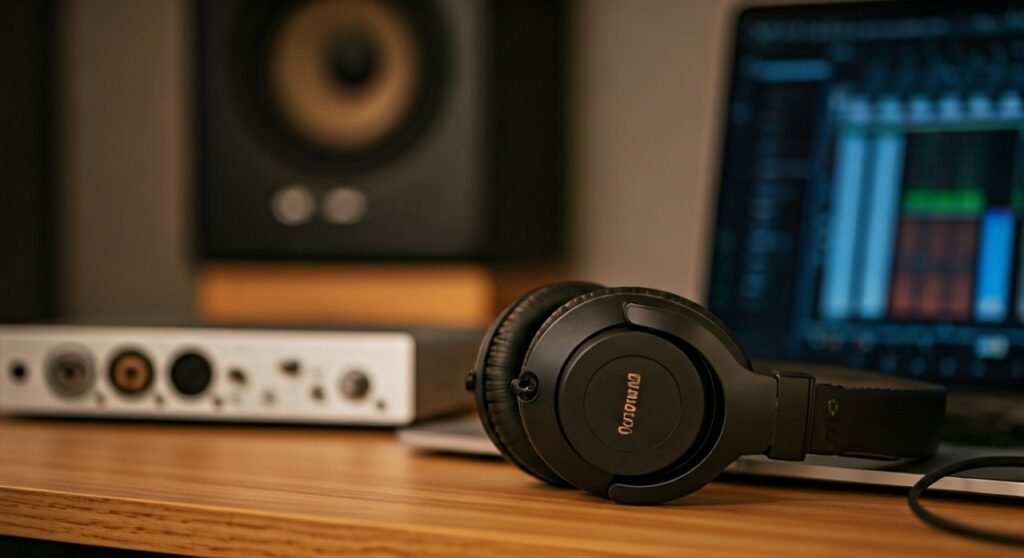
If you are looking for the perfect balance between studio accuracy and everyday usability, the 80-ohm impedance level is widely considered the “sweet spot.” Unlike high-impedance 250-ohm or 600-ohm headphones, which require dedicated high-voltage amps, 80 ohm headphones provide a rich, controlled bass and crisp highs that satisfy both music producers and discerning gamers.
Key Takeaways: Quick Summary for 80 Ohm Headphones
Before diving into the technical details, here is a quick reference guide to help you decide if this impedance level fits your setup.
| Feature | 80 Ohm Performance | Recommendation |
|---|---|---|
| Sound Detail | High – Excellent clarity and low distortion. | Great for critical listening. |
| Power Needs | Moderate – Needs more juice than a phone. | Use with an interface or budget amp. |
| Versatility | Excellent – Works in studios and for home media. | Best “all-rounder” choice. |
| Bass Control | Strong – Better damping than low-ohm models. | Ideal for bass-heavy genres/gaming. |
| Ideal For | Mixing, Gaming, High-fidelity casual listening. | The standard for home studios. |
TL;DR: Choose 80 ohm headphones if you want professional sound quality and own a dedicated audio interface or a modern PC, but don’t want to invest in expensive, high-voltage specialized amplifiers.
Understanding the Physics: What Does “80 Ohms” Actually Mean?
To understand why 80 ohm headphones are good, we must look at Impedance. Impedance, measured in Ohms (Ω), is the electrical resistance of the headphones to the signal coming from your source.
In my years of testing studio gear, I’ve found that the 80-ohm variant (particularly the legendary Beyerdynamic DT 770 Pro) uses a thinner wire in the voice coil than its 32-ohm counterpart. This lower mass allows the driver to move more quickly and precisely.
- Higher Impedance = More Coil Windings: This results in better “damping,” which means the driver stops vibrating exactly when the signal stops.
- Reduced Distortion: Because the 80-ohm coil is lighter and more efficient at handling electricity, it produces a cleaner signal with less “muddy” overlap.
- Voltage vs. Current: 80-ohm sets require more voltage to reach high volumes, whereas low-impedance sets require more current.
Comparing 32 vs. 80 vs. 250 Ohms: Which One Wins?
When manufacturers offer the same headphone model in different impedance levels, the 80 ohm version is almost always the most popular choice for a reason.
Ohm Models (The Mobile Standard)
These are designed for smartphones, tablets, and low-power laptops. While they get very loud, they often suffer from a “looser” bass response. If you are strictly a mobile listener without any extra gear, 32 ohms is your safest bet.
Ohm Models (The Versatile Pro)
This is the version I recommend most to content creators and gamers. The 80 ohm headphones offer a tighter bass and more “air” in the treble. They sound noticeably more “professional” than the 32-ohm versions but aren’t as difficult to power as the 250-ohm versions.
+ Ohm Models (The Studio Purist)
These require a dedicated, high-quality Headphone Amplifier to sound good. Without an amp, they will sound quiet, thin, and lifeless. They offer the highest level of detail but at the cost of zero portability.
Do You Need an Amplifier for 80 Ohm Headphones?
The short answer is: It depends, but usually yes for the best experience.
In my experience, if you plug 80 ohm headphones directly into a budget Android phone or an old motherboard, they will sound “fine,” but you will likely find yourself cranking the volume to 90% or 100%. This often introduces floor noise or clipping.
To get the most out of them, you should use:
- USB Audio Interfaces: Devices like the Focusrite Scarlett 2i2 or Audient iD4 have more than enough power to drive 80-ohm sets perfectly.
- Portable DAC/Amps: Something like the Fiio E10K or IFi Hip-Dac will significantly open up the soundstage.
- Modern Gaming Motherboards: High-end boards (e.g., ASUS ROG or MSI Godlike series) often feature dedicated headphone amps that handle up to 150 ohms easily.
The Best Use Cases: Where 80 Ohm Headphones Shine
Music Production and Mixing
If you are starting a home studio, 80 ohm headphones are good because they don’t color the sound as much as consumer gear. You get a flatter frequency response, allowing you to hear mistakes in your mix that cheap headphones would hide.
Immersive Gaming
For gamers, the imaging (the ability to tell where a sound is coming from) is superior on 80-ohm drivers. In tactical shooters like Valorant or Escape from Tarkov, the tighter damping helps you distinguish footsteps from nearby explosions more clearly.
High-Fidelity Casual Listening
If you are a fan of FLAC files or Tidal HiFi, moving to an 80-ohm setup is the most cost-effective way to enter the world of audiophilia. You will notice “micro-details” in songs—like the sound of a singer’s breath or a guitar pick hitting the string—that were previously invisible.
Step-by-Step Guide: How to Set Up Your 80 Ohm Headphones
If you have just purchased a pair of 80 ohm headphones, follow these steps to ensure you are getting the “pro” sound you paid for.
Step 1: Check Your Source Output
Plug your headphones into your primary device. Play a high-quality track (320kbps MP3 or better). If you have to set your volume above 80% to get a comfortable listening level, your source is underpowered.
Step 2: Invest in a Basic DAC/Amp (If Needed)
You don’t need a $500 tube amp. A simple $75 – $100 DAC/Amp combo will provide the clean voltage required to move those 80-ohm coils. This prevents the “thin” sound that happens when headphones are under-driven.
Step 3: Configure Software Settings
On Windows, go to Sound Settings > Device Properties > Additional Device Properties > Advanced. Ensure your bit depth is set to 24-bit, 48000 Hz (Studio Quality) or higher to match the capabilities of the hardware.
Step 4: The “Burn-In” Period
While controversial among some, many experts recommend playing music through new 80 ohm headphones for 20-40 hours at moderate volume. This allows the mechanical parts of the driver to settle, often smoothing out the treble.
Pros and Cons of the 80-Ohm Standard
Pros:
- Superior Bass Control: Less “bloat” than low-impedance models.
- Excellent Durability: Most 80-ohm pro models (like Beyerdynamic) are built for decades of use.
- Balanced Soundstage: Provides a great sense of space and instrument separation.
No “Amp Tax”: While an amp helps, you don’t need* a high-voltage, expensive stack.
Cons:
- Quiet on Mobile: Might be too quiet for use with older smartphones or cheap tablets.
- Heavier Cables: Many 80-ohm studio models come with long, heavy cables that aren’t ideal for commuting.
Common Myths About 80 Ohm Headphones
Myth: “Higher Ohms always means better sound.”
Truth: Not necessarily. A poorly designed 250-ohm headphone will still sound worse than a high-quality 80-ohm model. Build quality and driver material matter just as much as impedance.
Myth: “You can’t use 80-ohm headphones with a laptop.”
Truth: Most MacBooks (2021 and later) and high-end Windows laptops have “impedance sensing” jacks that can drive 80-ohm headphones brilliantly. Always test your laptop’s output before buying an extra amp.
Final Verdict: Are 80 Ohm Headphones Good for You?
If you are looking for a significant upgrade from “consumer” audio, 80 ohm headphones are exceptionally good. They represent the bridge between casual listening and professional audio engineering.
They are the right choice if you:
- Want to hear music exactly how the artist intended.
- Own or plan to buy a basic audio interface.
- Need a durable “workhorse” for gaming and content creation.
Avoid them only if you strictly listen to music on an old smartphone and refuse to carry a small portable amp. For everyone else, the 80-ohm version is likely the best investment you can make for your ears.
Frequently Asked Questions (FAQs)
Will 80 ohm headphones work with my iPhone?
Yes, but they will likely be very quiet. You will need a Lightning-to-3.5mm adapter (the “dongle”), and even then, you may find the maximum volume underwhelming. For iPhones, a portable amp like the Qudelix-5K is recommended.
Why is the Beyerdynamic DT 770 Pro 80 Ohm so famous?
It is the industry standard because it is nearly indestructible, extremely comfortable for long sessions, and offers a “V-shaped” sound profile that makes music sound exciting while remaining detailed enough for studio work.
Can I use 80 ohm headphones for Zoom calls and office work?
Absolutely. However, most 80-ohm studio headphones do not have a built-in microphone. You will need a separate desktop mic or a ModMic attachment for voice communication.
Is there a big sound difference between 32 and 80 ohms?
Yes. To a trained ear, the 80 ohm version has a “tighter” sound. The bass doesn’t bleed into the vocals as much, and the high frequencies (cymbals, “S” sounds) are more controlled and less “piercing.”
Do 80 ohm headphones need a break-in period?
Most mechanical drivers benefit from a few hours of use to loosen the surround material. While not strictly necessary, you may find the sound becomes “smoother” after the first week of regular use.