Are Balanced Headphones Better? The Direct Answer
Balanced headphones are better if you require more power for high-impedance gear, operate in environments with high electromagnetic interference, or seek maximum channel separation. While they do not inherently change the “flavor” of the audio, the differential signaling used in balanced circuits eliminates noise and provides a higher voltage swing. This results in a cleaner, more dynamic listening experience, especially for audiophile-grade equipment.
However, for casual listeners using efficient in-ear monitors (IEMs) or low-impedance headphones, the benefits of a balanced setup are often negligible. The “better” choice depends entirely on your specific hardware chain and your sensitivity to the noise floor and stereo imaging.
Key Takeaways: Quick Summary of Balanced vs. Single-Ended
If you are in a hurry, here are the essential facts regarding the balanced audio debate:
- Power Output: Balanced connections typically provide double the voltage and four times the power of single-ended connections.
- Noise Rejection: They use Common Mode Rejection (CMRR) to cancel out external interference and hum.
- Crosstalk: Balanced systems eliminate the shared ground, leading to significantly better stereo separation.
- Cost: You will need a specific balanced DAC/Amp and compatible cables, which increases the total cost of ownership.
- Compatibility: Not all headphones can be converted; they must have separate internal wiring for each driver.
Understanding the Science: How Balanced Audio Works
To understand if balanced headphones are better, we must look at the electrical engineering behind the signal. In a standard Single-Ended (SE) connection (like your typical 3.5mm jack), there are three wires: Left Signal, Right Signal, and a shared Ground. Because the ground is shared, some “leakage” or crosstalk between channels is inevitable.
In a Balanced Connection, each channel (Left and Right) gets two dedicated wires: a positive (hot) signal and an inverted negative (cold) signal. This creates a four-wire system.
The Role of Common Mode Rejection (CMRR)
When the audio signal travels through the cable, it picks up external noise (EMI/RFI). In a balanced system, the receiving amplifier flips the inverted signal back. During this flip, the noise—which was picked up equally by both wires—is canceled out. This leaves only the original, pure audio signal.
This is the primary reason why professional recording studios use XLR balanced cables. When you are running 50 feet of cable near power lines, noise rejection isn’t just a luxury; it is a necessity.
Step 1: Check if Your Headphones are Balanced-Compatible
Before investing in expensive amplifiers, you must determine if your current gear can even support a balanced signal. Not every pair of headphones is “balanced ready.”
- Detachable Cables: Most headphones with dual-entry cables (a wire going into each ear cup separately) are balanced-compatible. Examples include the Sennheiser HD600 series, Hifiman Sundara, and Audeze LCD series.
- Internal Wiring: If your headphones have a single-sided cable that is permanently attached, they likely share a ground wire inside the headband. Forcing a balanced signal into these can destroy your amplifier.
- IEMs: Most high-end In-Ear Monitors with 2-pin or MMCX connectors are inherently balanced-compatible; you simply need to swap the cable.
Expert Tip: Always verify the internal wiring. If the Left and Right “minus” wires are soldered together anywhere inside the chassis, you cannot use a balanced cable.
Step 2: Choosing the Right Balanced Connection Type
The world of balanced audio is filled with various plug types. Choosing the right one ensures you don’t need a drawer full of adapters.
- 4-pin XLR: The gold standard for desktop amplifiers. It is robust, locks into place, and provides the best contact area.
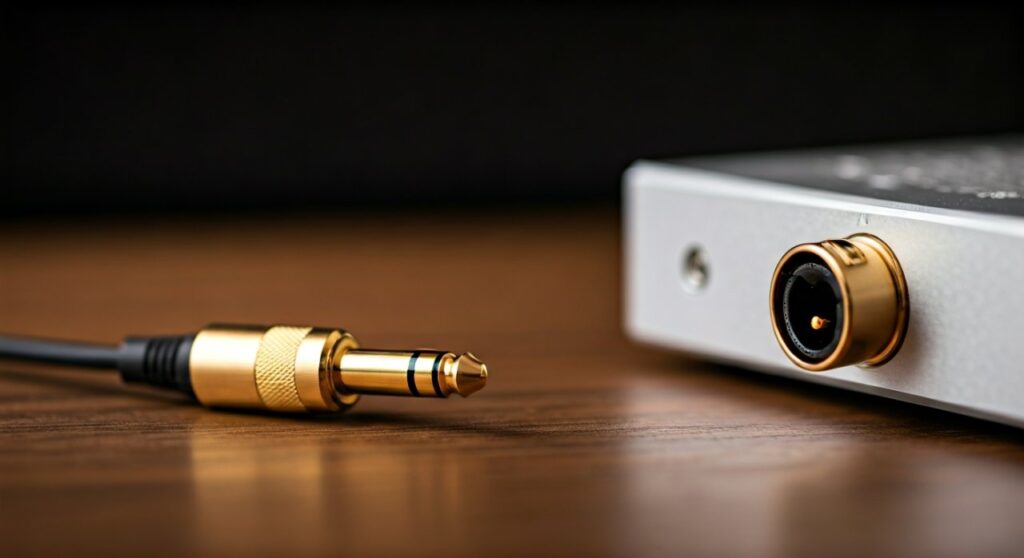
- 4.4mm Pentaconn: Developed by Sony, this is becoming the new industry standard for portable and high-end desktop gear. It is more durable than smaller plugs.
- 2.5mm TRRS: Once common in Astell&Kern players, this plug is notoriously fragile. Avoid it if you have the option for 4.4mm.
- Dual 3-pin XLR: Rare, usually found only on ultra-high-end “summit-fi” amplifiers.
| Feature | Single-Ended (3.5mm/6.35mm) | Balanced (4.4mm/XLR) |
|---|---|---|
| Signal Wires | 3 (L, R, Shared Ground) | 4 (L+, L-, R+, R-) |
| Voltage | Standard | Typically Double (2x) |
| Noise Rejection | Minimal | High (via CMRR) |
| Stereo Separation | Good | Superior |
| Complexity | Simple / Universal | Complex / Gear Dependent |
Step 3: Selecting a Balanced DAC and Amplifier
To hear the difference, your entire signal chain must be balanced. If you plug a balanced headphone into a single-ended amp using an adapter, you gain zero benefits.
What to Look For in a Balanced Amp
When shopping for a Balanced Amp, look for “Fully Balanced” or “Differential” circuitry. Some cheaper amps have a balanced output (the 4.4mm hole) but the internal circuitry is actually single-ended. This is known as a “balanced-lite” approach and won’t offer the full noise-rejection benefits.
Recommended Balanced Gear for Beginners:
- Desktop: FiiO K7, Schiit Magnius/Modius stack, or the TOPPING DX7 Pro+.
- Portable: Qudelix-5K, IFi Hip-DAC 3, or THX Onyx.
Step 4: The Cable Upgrade
Once you have the headphones and the amp, you need the bridge: the Balanced Cable.
- Material Matters: While “silver vs. copper” is a heated debate, the most important factor is the quality of the shielding and the solder points.
- Don’t Overspend: You don’t need a $500 cable to hear if balanced headphones are better. Brands like Hart Audio Cables, Linsoul, or Periapt offer high-quality balanced cables for under $60.
- Length: Keep the cable as short as reasonably possible, though balanced connections are much more forgiving of long cable runs than single-ended ones.
Step 5: Testing and Evaluation
Now that you are set up, how do you actually tell if it’s better? Don’t just listen for “volume.” Because balanced amps output more power, they will naturally be louder at the same dial position. Loudness is often mistaken for quality.
What to Listen For:
- The Black Background: Turn your amp up with no music playing. A balanced setup should have a “blacker” background (less hiss or hum).
- Instrument Separation: Listen to a complex orchestral piece or a busy jazz track. Can you “place” the instruments more precisely?
- Bass Control: High-impedance headphones like the Beyerdynamic DT 1990 Pro often show tighter, more controlled bass when given the extra voltage of a balanced output.
Is it Worth the Investment? Expert Perspective
As an audio professional who has tested hundreds of configurations, my stance is nuanced. Are balanced headphones better? Technically, yes. Is the improvement life-changing? It depends on your gear.
If you are using Planar Magnetic headphones (which love current) or 300-ohm Dynamic drivers, going balanced is one of the most cost-effective ways to “unlock” their full potential. The extra headroom allows the drivers to handle transient peaks (like a sudden drum hit) without clipping or losing detail.
However, if you are using sensitive IEMs, a balanced connection might actually introduce more hiss if the amp isn’t high-quality, simply because the power output is too high for the tiny drivers.
Common Myths About Balanced Audio
- Myth 1: It makes the music “faster.” Balanced audio doesn’t change the speed of electricity; it changes the signal-to-noise ratio.
- Myth 2: All balanced cables sound better. A poorly made balanced cable will sound worse than a high-quality single-ended cable.
- Myth 3: You can “adapt” single-ended to balanced. You can NEVER use an adapter to plug a single-ended headphone into a balanced amp output. This will short the amplifier and likely kill it.
The Verdict: Who Should Go Balanced?
You should go balanced if:
- You own high-impedance (150+ ohms) or low-sensitivity headphones.
- You hear an audible “hum” or “hiss” from your PC or environment.
- You want the absolute best stereo imaging and soundstage width.
- You have the budget for a dedicated DAC/Amp stack.
You should stick to Single-Ended if:
- You primarily use easy-to-drive headphones or IEMs.
- You want maximum compatibility with smartphones and laptops.
- You are on a strict budget (the price-to-performance ratio of SE is often higher).
Câu hỏi thường gặp (FAQs)
Can I use a balanced cable with any headphones?
No. Your headphones must have a detachable cable and separate internal wiring for the left and right drivers. If the drivers share a common ground wire inside the housing, they cannot be used with a balanced cable.
Why is my balanced connection so much louder?
Balanced amplifiers typically provide 6dB more gain than single-ended outputs. This is because they use two amplifiers per channel instead of one, effectively doubling the voltage delivered to the transducers.
Does a balanced connection improve sound quality on Spotify?
Yes, but the benefits are related to the hardware’s electrical performance, not the file format. Even with compressed audio like Spotify, a balanced setup will provide better separation and a lower noise floor, though the difference is more apparent with High-Res Lossless files.
Is 4.4mm Pentaconn better than 4-pin XLR?
In terms of audio quality, they are identical. The 4.4mm Pentaconn is simply more compact and suitable for portable devices, while 4-pin XLR remains the standard for heavy-duty desktop equipment due to its locking mechanism.
Can a balanced amp damage my headphones?
Only if the power output is significantly higher than what your headphones are rated for. Most modern amps have gain switches. Always start with the volume at zero when switching to a balanced connection to avoid a sudden “blast” of power.