Finding a balance between high-quality audio and a tight budget can feel like an impossible mission. You want that crisp, studio-grade sound for your podcasts or music production, but your wallet says otherwise. This is where Behringer enters the conversation, offering gear that looks and sounds remarkably like high-end brands for a fraction of the price.
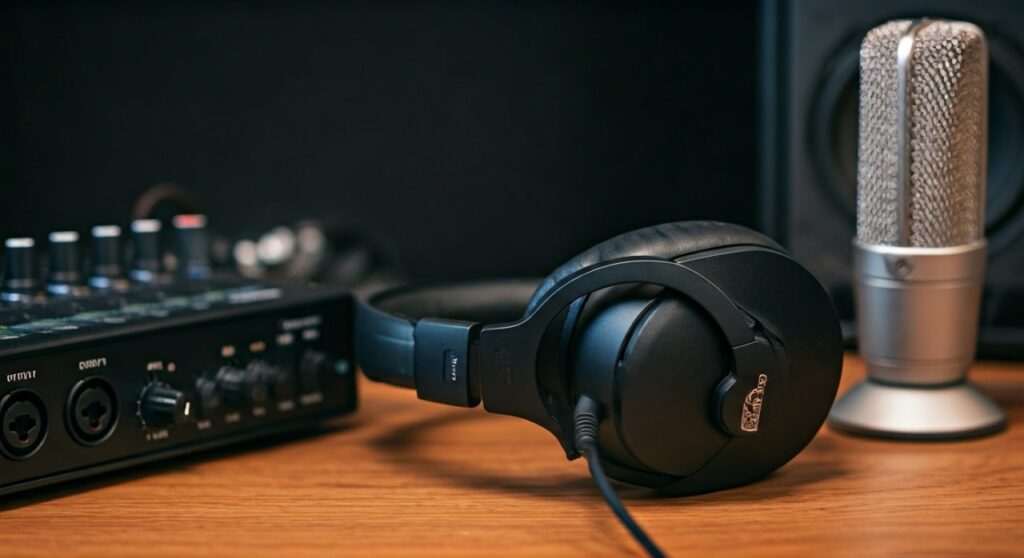
Behringer headphones are good for beginners and home studio enthusiasts who need reliable audio monitoring without spending hundreds of dollars. While they may not match the premium build quality of brands like Sennheiser or Beyerdynamic, they provide exceptional clarity, wide frequency response, and comfort that punches way above their weight class.
Key Takeaways: TL;DR
If you are in a rush, here is the quick verdict on whether Behringer headphones are worth your investment:
- Best For: Home studios, podcasting, entry-level DJing, and casual listening.
- Sound Quality: Surprisingly flat and accurate for the price, especially the BH 770 and BH 470 models.
- Build Quality: Functional but heavy on plastic; handle with care to ensure longevity.
- Value Proposition: Unbeatable. You can often buy three pairs of Behringer headphones for the price of one pair of industry-standard monitors.
- The “Clone” Factor: Many models are designed to mimic the sound profiles of legendary professional headphones.
Are Behringer Headphones Good for Studio Work?
When you ask are behringer headphones good, you are likely looking for a tool to help you hear your mix clearly. In a studio environment, “good” means accuracy. You don’t want headphones that “lie” to you by boosting the bass too much.
From my experience testing the Behringer BH 770, I found that they provide a very respectable closed-back isolation. This is crucial when you are recording vocals because you don’t want the click track leaking into your microphone. The 53mm dynamic drivers deliver a wide frequency response that captures the “thump” of a kick drum and the “air” of a vocal performance quite well.
However, professional engineers might find the high-end a bit “crispy” or sharp. If you are doing a 10-hour mixing session, the plastic build might start to feel less premium than a pair of DT 770 Pros. But for a 2-hour podcast or a quick demo mix? They are more than capable.
Step-by-Step Guide: How to Choose the Right Behringer Model
Not all Behringer headphones are created equal. Use this step-by-step process to find the pair that fits your specific needs.
Step 1: Identify Your Primary Use Case
Before buying, you must decide what you will be doing most.
- Recording Vocals: You need Closed-Back headphones like the Behringer HC 2000.
- Mixing/Mastering: Look for Open-Back or high-fidelity models like the Alpha or Omega series.
- DJing: You need swiveling earcups and a high-power handling capacity, found in the Behringer HPX6000.
Step 2: Check the Impedance (Ohm Rating)
Most Behringer headphones have a low impedance (usually 32 Ohms). This is great because you can plug them directly into a laptop or smartphone without needing an expensive external amplifier.
Step 3: Compare Driver Sizes
Look for models with 40mm to 57mm drivers. Generally, a larger driver can move more air, resulting in a more natural and powerful bass response without distortion.
Step 4: Evaluate the Budget
If you have under $30, the HPM1000 is a functional choice for casual use. If you can stretch to $50, the BH 470 offers a significantly more “pro” feel and better cushions.
Comparison: Behringer vs. Industry Standards
To understand the value, let’s look at how Behringer stacks up against the “big players” in the audio world.
| Feature | Behringer BH 770 | Beyerdynamic DT 770 Pro | Audio-Technica M40x |
|---|---|---|---|
| Price Range | $40 – $60 | $140 – $160 | $90 – $110 |
| Driver Size | 53mm | 45mm | 40mm |
| Build Material | Mostly Plastic | Steel & High-grade Plastic | Professional Plastic/Metal |
| Sound Profile | Bass-focused, bright | Very Neutral, Detailed | Flat, Accurate |
| Best Use | Budget Studios | Pro Studios | Field Recording/Mixing |
The Truth About Build Quality and Durability
One area where people question if Behringer headphones are good is the construction. To keep prices low, Behringer uses lightweight plastics.
In my studio, I have noticed that the ear pads on lower-end models like the HPS3000 can begin to flake after a year of heavy use. If you are a “gear thrasher” who throws your headphones in a backpack without a case, these might not last five years.
However, if they stay on a headphone hook in your home office, the value-to-life ratio is incredible. Many users report that even if a pair breaks after two years, they simply buy another one because the cost is so negligible compared to high-end brands.
Expert Tips for Getting the Best Sound
If you decide to purchase Behringer headphones, follow these pro tips to maximize their performance:
- The “Burn-In” Period: Play pink noise or a diverse music playlist through them for 12-24 hours at medium volume before doing critical listening. This loosens the drivers.
- Replace the Pads: If you love the sound but hate the feel, you can often find third-party velour ear pads that fit models like the BH 470. This drastically improves comfort for long sessions.
- Use a Dedicated Interface: Even though they are low impedance, plugging them into a dedicated USB Audio Interface (like a U-Phoria UM2) will provide a cleaner signal than a standard laptop headphone jack.
Are There Any Downsides?
No product is perfect, especially at a budget price point. Here is what you should watch out for:
- Cable Quality: Many budget Behringer models have fixed cables. If the wire shorts out, you can’t just swap it; you have to repair or replace the unit.
- Clamping Force: Some models can feel a bit “tight” on the head initially. You may need to stretch them over a stack of books overnight to make them comfortable for larger heads.
- Isolation: While the closed-back models are good, they aren’t “silent.” In a very quiet room, someone sitting next to you might hear your music if you have it cranked up.
Final Verdict: Should You Buy Them?
So, are behringer headphones good? The answer is a resounding yes, provided you have the right expectations.
They are the perfect solution for students, hobbyist musicians, and content creators who need to hear their work clearly without taking out a loan. They offer a “high-definition” experience that makes standard earbuds sound like tin cans. If you want the most “bang for your buck” in the audio world, Behringer is arguably the king of the mountain.
Frequently Asked Questions (FAQs)
Are Behringer headphones good for gaming?
Yes, especially models like the BH 470 or DH100. They provide excellent spatial awareness and deep bass, which makes explosions and footsteps in games like Call of Duty or Valorant sound very immersive.
Do I need an amplifier for Behringer headphones?
Generally, no. Most models are designed with 32-ohm impedance, meaning they are highly efficient and will sound plenty loud when plugged into a phone, tablet, or PC.
Which Behringer model is best for bass?
The Behringer BH 770 is known for its extended bass response. The 53mm drivers are specifically tuned to provide a powerful low-end that is ideal for electronic music and hip-hop.
Are they better than cheap “No-Name” Amazon brands?
Absolutely. Behringer is an established pro-audio company with decades of engineering experience. Their headphones use real acoustic tuning, whereas many “no-name” brands focus only on aesthetics and cheap components.
Can I use Behringer headphones for professional mastering?
While they are great for tracking and mixing, most professional mastering engineers prefer higher-end open-back headphones like the Sennheiser HD600 for the final 1% of detail. However, for 95% of users, Behringer is more than enough.