Why Big Headphones are Better for Your Ear Health
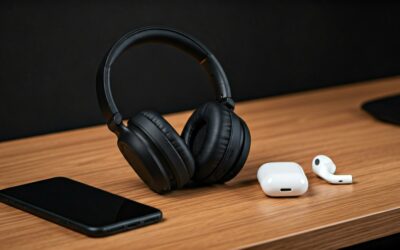
Yes, big headphones (specifically over-ear models) are generally better for your ears than smaller earbuds or in-ear monitors. They are safer because they sit further away from the eardrum, offer superior passive noise isolation, and distribute sound pressure more evenly across the outer ear. By blocking out external noise more effectively, they allow you to listen at lower, safer volumes, which is the primary factor in preventing Noise-Induced Hearing Loss (NIHL).
While no headphone is 100% “safe” if used at maximum volume, the physical design of large-format headphones provides a natural buffer that earbuds lack. In this guide, we will explore the scientific and practical reasons why switching to a larger form factor could save your hearing in the long run.
Key Takeaways: Ear Health & Headphone Choice
If you are in a hurry, here is the essential breakdown of why over-ear headphones outperform earbuds regarding safety:
| Feature | Over-Ear (Big) Headphones | In-Ear Earbuds | Impact on Ear Health |
|---|---|---|---|
| Distance to Eardrum | Further away (Safe) | Very close (Risky) | Reduced sound pressure on the eardrum. |
| Noise Isolation | High (Physical Seal) | Moderate to Low | Lower volume is needed to hear clearly. |
| Pressure Build-up | Low (Vented designs) | High (Sealed canal) | Reduces risk of acoustic trauma. |
| Bacteria Risk | Low (Outer ear) | High (Inside canal) | Minimizes ear infections and wax buildup. |
| Long-term Comfort | High (Padded cups) | Low (Can cause soreness) | Encourages better listening habits. |
The Science: Why Are Big Headphones Better for Your Ears?
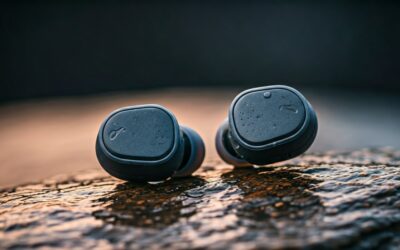
To understand why size matters, we have to look at how sound enters your ear. In-ear headphones (earbuds) act like a piston, pushing sound waves directly into the ear canal. This creates a concentrated “jet” of sound pressure that hits the tympanic membrane (eardrum) with high intensity.
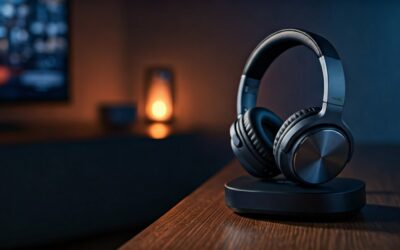
Big headphones, or circumaural headphones, encompass the entire ear. This design allows sound to resonate within the space between the headphone driver and your ear, mimicking how we hear sounds in the natural world. This “open” space allows some of the air pressure to dissipate, reducing the direct impact on the delicate hair cells in your cochlea.
Furthermore, because over-ear headphones cover the entire pinna (the outer ear), they utilize your ear’s natural anatomy to funnel sound. This results in a more natural frequency response, meaning you don’t feel the need to “crank up the bass” to feel the music, a common habit that leads to permanent hearing damage.
Step-by-Step Guide: How to Transition to Big Headphones for Better Hearing
If you are switching from earbuds to over-ear headphones, follow these steps to ensure you are maximizing the health benefits.
Step 1: Choose “Closed-Back” for Noisy Environments
If you work in a loud office or commute, choose Closed-Back Over-Ear Headphones. These have a solid outer shell that prevents sound from leaking in or out. The better the seal, the less likely you are to raise the volume to drown out the world.
Step 2: Look for Active Noise Cancellation (ANC)
Active Noise Cancellation is a lifesaver for ear health. Sony WH-1000XM5 or Bose QuietComfort Ultra are excellent examples. These devices use microphones to “cancel” external noise, allowing you to enjoy music at 50% volume even on a loud airplane.
Step 3: Check the Padding and Clamping Force
Ear health isn’t just about hearing; it’s about physical comfort. Ensure the ear pads are made of high-quality memory foam or protein leather. If the “clamping force” is too tight, it can cause temporomandibular joint (TMJ) pain or headaches.
Step 4: Calibrate Your “Safe Volume”
Once you have your big headphones, set your volume in a quiet room to a comfortable level. Mark this as your “maximum.” Because these headphones block so much noise, you will find that a lower setting sounds much “fuller” than it did on your old earbuds.
Step 5: Practice the 60/60 Rule
Even with the best over-ear headphones, you must be disciplined. Audiologists recommend the 60/60 rule: Listen at no more than 60% volume for no more than 60 minutes at a time. This gives your auditory nerves time to recover.
Comparing Sound Pressure: Big Headphones vs. Earbuds
When you use earbuds, the sound is magnified by the small volume of the ear canal. This is known as Real-Ear-to-Coupler Difference (RECD). Essentially, a sound that measures 80dB on a speaker might feel like 90dB inside your ear canal when using earbuds.
Big headphones mitigate this through:
- Larger Drivers: 40mm to 50mm drivers produce a wider soundstage.
- Air Volume: The air trapped in the cup acts as a cushion.
- Dispersion: Sound hits the outer ear first, which is the body’s natural defense mechanism.
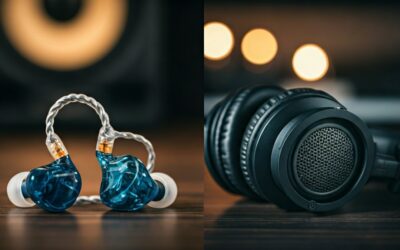
By using large-format headphones, you are essentially giving your eardrums “breathing room.” This is why professional studio engineers, who spend 8-10 hours a day listening, almost exclusively use over-ear monitors rather than in-ears.
The Hidden Danger of Earbuds: Hygiene and Infections
Beyond hearing loss, big headphones are superior for general ear hygiene. In-ear monitors (IEMs) and earbuds like Apple AirPods push earwax deeper into the canal. This can lead to:
- Cerumen Impaction: Hardened wax that blocks hearing.
- Otitis Externa: Also known as “swimmer’s ear,” an infection caused by trapped moisture and bacteria.
- Fungal Growth: The dark, warm environment created by a sealed earbud is a breeding ground for fungi.
Over-ear headphones allow the ear canal to “breathe.” Since nothing is inserted into the canal, the natural migration of wax out of the ear is not interrupted. For individuals prone to ear infections, making the switch is an absolute necessity.
Expert Tips for Maximizing Ear Safety with Headphones
As someone who has tested hundreds of audio products, I have learned that the hardware is only half the battle. Your habits define your ear health.
- Use Volume Limiters: Most smartphones (iOS and Android) have “Headphone Safety” settings. Set a hard limit at 85 decibels.
- Invest in Quality: Cheap big headphones often have “tinny” sound. This causes users to increase volume to hear details. Higher-end brands like Sennheiser, Beyerdynamic, or Audio-Technica provide clarity at low volumes.
- Monitor “Ear Fatigue”: If your ears feel “clogged” or you hear a slight ringing (tinnitus) after a session, you have already pushed too far. Stop immediately.
- Open-Back for Home Use: If you are in a quiet room, Open-Back headphones are the gold standard for ear health. They allow air and sound to pass through the ear cups, preventing any pressure build-up whatsoever.
Frequently Asked Questions (FAQs)
Can big headphones still cause hearing loss?
Yes. If you play music at 100% volume (which can exceed 100-110dB), you can sustain permanent damage in minutes. The design of big headphones makes it easier to listen safely, but it does not make high volumes “safe.”
Are over-ear headphones better for kids?
Absolutely. Children’s ear canals are smaller, making the sound pressure from earbuds even more intense. Over-ear headphones with built-in volume limiters (capped at 85dB) are the safest choice for young listeners.
Do big headphones cause “cauliflower ear” or physical damage?
No. Cauliflower ear is caused by blunt force trauma (like wrestling). However, very heavy headphones with a high clamping force can cause soreness on the scalp or outer ear. Always ensure a proper fit.
Is Noise Cancellation (ANC) actually safe for your ears?
Yes, ANC is very safe. It works by producing an “anti-noise” frequency that cancels out background sound. It does not add harmful pressure to the eardrum; rather, it allows you to keep your music at a lower, healthier volume.
Why do my ears get hot in big headphones?
This is a common trade-off. Because over-ear headphones create a seal, they trap heat. To combat this, look for headphones with velour pads or cooling gel inserts if you plan on wearing them for several hours.