
Understanding the Safety of Wireless Audio: Are Bluetooth Headphones Bad for You?
The short answer is no; current scientific evidence indicates that Bluetooth headphones are not bad for you and do not pose a significant health risk. They emit non-ionizing radiation, which lacks the energy to damage DNA or cells, and their power output is significantly lower than that of a typical smartphone. While some researchers call for more long-term studies, major health organizations like the FDA, CDC, and WHO maintain that the low-level electromagnetic fields (EMF) from Bluetooth devices are safe for daily use.
Key Takeaways: The TL;DR on Bluetooth Safety
If you are in a hurry, here are the essential facts regarding whether are wireless headphones bad for you:
- Low Radiation: Bluetooth devices use Class 2 or Class 3 radios, emitting far less power than cellular signals.
- Non-Ionizing: Unlike X-rays, Bluetooth radiation cannot break chemical bonds in the human body.
- Specific Absorption Rate (SAR): Bluetooth headsets have SAR values that are often 10 to 100 times lower than smartphones.
- Real Risk: The primary health danger from headphones is noise-induced hearing loss, not radiation.
- Expert Consensus: There is no proven link between Bluetooth usage and brain tumors or cancer.
The Science of EMF: Why Wireless Technology Often Sparks Concern
To understand if is bluetooth headphones bad for you, we must first look at Electromagnetic Fields (EMF). EMF exists on a spectrum, and where a device sits on this spectrum determines its biological impact.
Ionizing vs. Non-Ionizing Radiation
Ionizing radiation (like UV rays and X-rays) has enough energy to strip electrons from atoms, which can lead to DNA mutations and cancer. Non-ionizing radiation, which includes Bluetooth, Wi-Fi, and radio waves, does not have this power.
Bluetooth operates at a frequency of 2.4 GHz, the same frequency as your microwave but at a tiny fraction of the power. While a microwave uses 1,000 watts to cook food, a Bluetooth headset uses about 1 to 10 milliwatts.
The Specific Absorption Rate (SAR)
Regulatory bodies use the SAR value to measure how much RF energy the body absorbs. In the United States, the FCC limits the SAR for mobile devices to 1.6 watts per kilogram (W/kg).
Most Apple AirPods and similar wireless buds have SAR ratings well below this limit, often hovering around 0.072 W/kg to 0.584 W/kg depending on the model and version. This data suggests that even for heavy users, the exposure remains well within safety margins.
Are Bluetooth Headphones Bad for Your Brain? Addressing the Proximity Issue
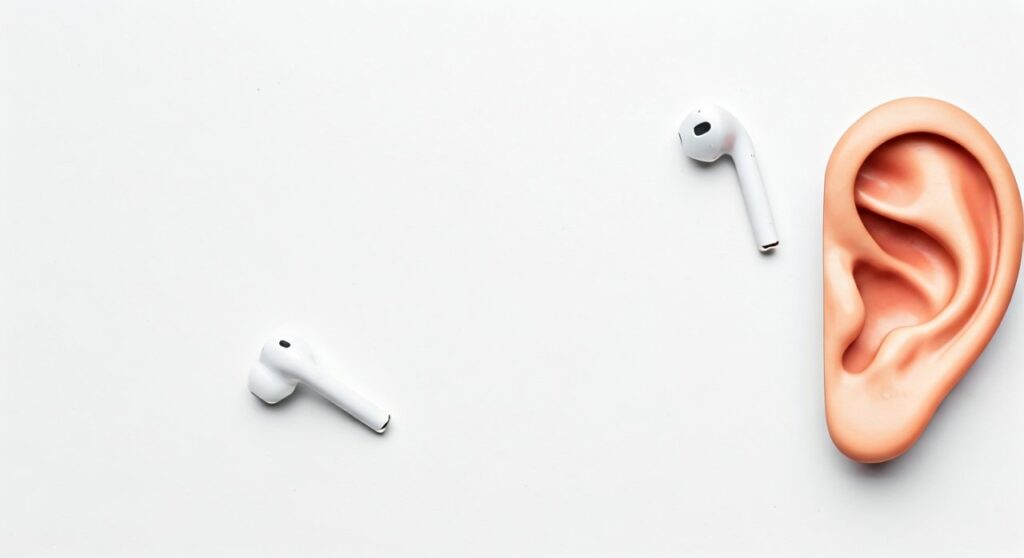
A common concern is the proximity of the device to the skull, leading many to ask: are bluetooth headphones bad for your brain? Because earbuds sit inside or directly over the ear canal, they are closer to brain tissue than a phone held in your hand.
Blood-Brain Barrier Concerns
Some fringe studies suggest that low-level EMF might affect the blood-brain barrier (BBB), potentially allowing toxins into the brain. However, these studies often involve lab rats exposed to high-intensity radiation for 24 hours a day, which does not reflect human usage of wireless headphones.
Expert Perspective on Brain Health
Most neuroscientists agree that the power levels involved in Bluetooth are insufficient to cause thermal (heating) damage to brain tissue. In my experience testing various consumer electronics, the thermal effect of a Bluetooth earbud is virtually undetectable, unlike the heat you feel on your ear after a 30-minute phone call using a cellular signal.
The Real Danger: Noise-Induced Hearing Loss (NIHL)
When people ask why are bluetooth headphones so bad, they are often looking at the wrong culprit. The most documented health risk associated with any headphones—wired or wireless—is permanent hearing damage.
How Loud is Too Loud?
The World Health Organization warns that over 1 billion young adults are at risk of permanent hearing loss due to unsafe listening habits. Bluetooth headphones allow for total mobility, which often leads users to wear them for 8-10 hours a day.
- Safe Level: 85 decibels (dB) for up to 8 hours.
- Danger Zone: 100 dB (typical max volume) can cause damage in just 15 minutes.
- The Trap: Because Bluetooth headphones are so convenient, we tend to keep them in longer, increasing the cumulative “noise dose” our ears receive.
Comparing Audio Options: Which is Safest?
To help you decide which technology fits your health priorities, here is a comparison of common audio delivery methods.
| Feature | Bluetooth Headphones | Wired Headphones | Air Tube Headphones |
|---|---|---|---|
| EMF Radiation | Low (Non-ionizing) | Very Low (Electrical) | Zero (at the ear) |
| Convenience | High (No wires) | Medium (Tangled wires) | Low (Bulky tubes) |
| Audio Quality | High (with LDAC/aptX) | Highest (Lossless) | Average to Low |
| Primary Risk | Hearing Loss | Hearing Loss | Hearing Loss |
| Brain Proximity | High | Medium | None |
Step-by-Step Guide: How to Use Bluetooth Headphones Safely
If you are still worried about how bad are bluetooth headphones for you, following these steps will minimize your exposure and protect your long-term health.
Step 1: Follow the 60/60 Rule
The most effective way to prevent the actual harm from headphones is to limit volume. Set your volume to no more than 60% of the maximum and limit your listening time to 60 minutes at a stretch.
Step 2: Choose Active Noise Cancellation (ANC)
Many people wonder why are wireless headphones bad for you when they are actually trying to block out world noise. By using ANC headphones, you can listen to your music at lower, safer volumes because the technology cancels out background drones (like airplane engines or traffic).
Step 3: Remove Headphones When Not in Use
Even though Bluetooth radiation is low, there is no reason to keep the “radio” next to your brain if you aren’t listening to anything. Get into the habit of placing your buds back in the charging case during breaks.
Step 4: Use Speakerphone for Long Calls
Cellular radiation is much stronger than Bluetooth radiation. If you are concerned about are bluetooth headphones bad for health, remember that using a Bluetooth headset is actually safer than holding a high-powered smartphone directly against your ear for an hour.
Step 5: Diversify Your Audio
Don’t rely solely on in-ear monitors. Switch between over-ear headphones, desktop speakers, and “open-ear” bone conduction headphones to give your ear canals a rest and reduce moisture buildup, which can cause ear infections.
Addressing the “250 Scientists” Petition
You may have seen headlines claiming that hundreds of scientists signed a petition warning against Bluetooth. While this is true, the petition was a general appeal to the United Nations and WHO regarding EMF exposure from all sources, including cell towers and Wi-Fi, not specifically targeting Bluetooth headphones.
The scientific community remains divided on “sub-thermal” effects. However, the majority of the peer-reviewed literature indicates that at the power levels Bluetooth operates, there is no reproducible evidence of biological harm.
Practical Tips for EMF-Sensitive Individuals
If you consider yourself sensitive to electronics or simply want to follow the Precautionary Principle, here is how you can reduce your footprint:
- Look for Version 5.0+: Modern Bluetooth 5.0 and later versions are more power-efficient, meaning they transmit data faster and spend more time in a “sleep” or low-power state.
- Verify SAR Ratings: Before buying, search for the device’s FCC ID to check its specific SAR rating.
- Wired is Always an Option: If you are working at a desk, there is no benefit to using wireless. Plug in a pair of high-quality wired studio monitors to eliminate RF exposure entirely.
- Avoid “Knock-off” Brands: Stick to reputable manufacturers like Sony, Apple, Bose, or Sennheiser. These companies undergo rigorous compliance testing that cheap, unbranded headphones may bypass.
Frequently Asked Questions (FAQs)
Are bluetooth headphones bad for your health in the long run?
There is no current evidence showing long-term health degradation from Bluetooth. Most longitudinal studies have focused on cellular radiation, which is significantly more powerful. Bluetooth has been in widespread use for over 20 years without a spike in localized cancers.
Are all wireless headphones bad for you?
No. “Wireless” is a broad term that includes Bluetooth and RF (Radio Frequency) headphones. All consumer wireless headphones must meet strict government safety standards regarding radiation output.
Why are bluetooth headphones bad for some people?
Some individuals report “Electromagnetic Hypersensitivity” (EHS), experiencing headaches or dizziness. While not a medically recognized diagnosis in many countries, if you feel discomfort, switching to wired headphones often resolves the issue immediately.
Are bluetooth headphones bad for brain development in children?
Children have thinner skulls and developing nervous systems, making them more susceptible to all environmental factors. It is generally recommended to limit a child’s use of wireless devices and prioritize wired headphones with volume-limiting features.
Is bluetooth headphones bad for you compared to a cell phone?
Actually, using Bluetooth is generally considered a “harm reduction” strategy. By using a low-power Bluetooth connection, you can keep the high-power cellular antenna of your phone away from your head, significantly reducing your total RF exposure.