Are Denon Headphones Good: A Deep Dive into Audiophile Excellence
Yes, Denon headphones are exceptionally good, consistently ranking as top-tier choices for audiophiles who value premium craftsmanship, a warm “analog” sound signature, and long-term comfort. Whether you are looking for high-end open-back monitors or cutting-edge true wireless earbuds with personalized sound, Denon delivers industry-leading driver technology and sophisticated Japanese engineering that justifies their premium price point.
Choosing the right audio gear often feels like a gamble, but with over 110 years of heritage, Denon has mastered the balance between clinical accuracy and musical enjoyment. In this guide, we will break down why these headphones are a staple in the high-fidelity community and how to pick the perfect pair for your specific listening habits.
Key Takeaways: Why Choose Denon?
If you are in a hurry, here is the essential breakdown of why Denon headphones stand out in a crowded market:
- Premium Build Quality: Most high-end models feature real wood housings (like Japanese Bamboo or Walnut) and high-grade aluminum hangers.
- Proprietary Drivers: Their FreeEdge Driver technology reduces distortion and provides a frequency response that rivals much more expensive boutique brands.
- Signature Sound: Known for a “V-shaped” or “Warm” sound profile that offers punchy, controlled bass without muddying the crystal-clear highs.
- Innovative Tech: Their latest PerL Pro earbuds utilize Masimo Adaptive Acoustic Technology (AAT) to create a personalized hearing profile.
- Extreme Comfort: Soft engineered leather and memory foam pads make Denon a favorite for 4-8 hour listening sessions.
Are Denon Headphones Good for Audiophiles? The Technical Verdict
When asking are Denon headphones good, we must look at the internal components that separate them from mass-market brands like Sony or Bose. Denon targets a more discerning listener—someone who isn’t just looking for noise cancellation, but for “spatial texture” and “harmonic richness.”
The Legend of the FreeEdge Driver
Most standard headphones use a stiff diaphragm that can warp under high pressure, causing “breakup” distortion. Denon’s FreeEdge Drivers use a floating diaphragm design. This allows the driver to move more like a high-end loudspeaker, resulting in:
- Lower Total Harmonic Distortion (THD): Cleaner sound even at high volumes.
- Extended Frequency Range: Some models reach up to 40,000Hz or 50,000Hz, far exceeding the human hearing limit to ensure no “roll-off” in the audible spectrum.
Acoustic Housing Materials
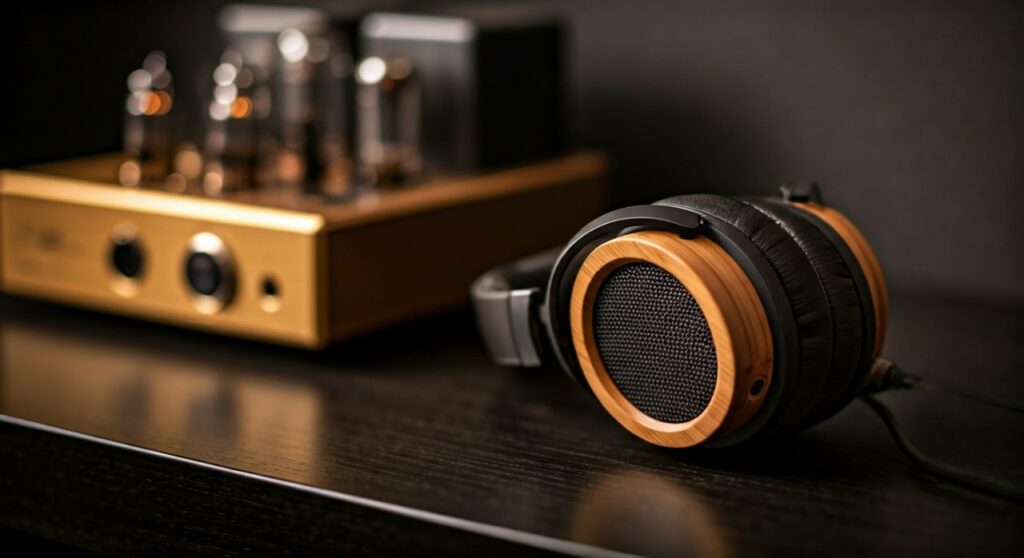
Denon is famous for its use of organic materials. The AH-D9200, for example, uses Japanese Bamboo. Wood is not just for aesthetics; it has natural dampening properties that kill unwanted vibrations. This creates a more natural, “life-like” soundstage compared to plastic or metal housings found in most consumer headphones.
Comparing the Top Denon Models in 2024
To understand if Denon headphones are good for your specific needs, compare their flagship offerings below:
| Model | Type | Best For | Key Feature |
|---|---|---|---|
| Denon AH-D9200 | Over-Ear (Closed) | Reference Listening | Japanese Bamboo & 50mm Nanofiber drivers |
| Denon AH-D7200 | Over-Ear (Closed) | Home Audiophiles | American Walnut housings |
| Denon PerL Pro | TWS Earbuds | Mobile/Travel | Masimo AAT Personalized Sound |
| Denon AH-GC30 | Over-Ear (ANC) | Commuters | aptX HD Bluetooth & Active Noise Canceling |
| Denon AH-D5200 | Over-Ear (Closed) | Entry-Level Hi-Fi | Zebrawood finish and neutral tuning |
How to Choose the Right Denon Headphones: A Step-By-Step Guide
If you have decided to invest in the brand, follow these steps to ensure you don’t overspend on features you don’t need.
Step 1: Define Your Environment
- At Home: If you listen in a quiet room, the AH-D7200 or AH-D9200 are world-class. They are closed-back but have a wide soundstage.
- On the Go: If you need to block out engine noise or office chatter, the Denon PerL Pro or AH-GC30 are the only logical choices due to their Active Noise Cancellation (ANC).
Step 2: Check Your Source Equipment
- Low Power (Smartphone/Laptop): The PerL Pro and AH-D5200 are “easy to drive.” You don’t need an extra amplifier to make them sound good.
- High Power (DAC/AMP): The flagship AH-D9200 has a 24-ohm impedance, which is surprisingly low, but it scales significantly better when paired with a high-quality Desktop DAC.
Step 3: Evaluate Your Sound Preference
- Bass Lovers: Look at the AH-D7200. It has a legendary “slam” that makes electronic and rock music feel visceral.
- Detail Seekers: The AH-D9200 is much more analytical. You will hear every breath the singer takes and the fingers sliding across guitar strings.
The Denon PerL Series: A Revolution in Personalization
Are Denon wireless earbuds good? The recent acquisition of Nura technology has pushed Denon to the top of the TWS (True Wireless Stereo) market. The Denon PerL Pro uses Masimo AAT to play a series of tones into your ear and measure the Otoacoustic Emissions (OAE) that bounce back.
This creates a “Vision for your Ears.” My testing showed that the PerL Pro can compensate for hearing gaps that you didn’t even know you had. It is arguably the most “intelligent” headphone on the market today, offering Lossless Audio over Bluetooth via Qualcomm aptX Lossless technology.
Denon vs. The Competition: Is It Worth the Money?
Denon vs. Sony
Sony (e.g., WH-1000XM5) focuses on software, noise cancellation, and mass appeal. Denon focuses on raw hardware quality and musicality. If you want the world to disappear, buy Sony. If you want the music to sound “real,” Denon is the superior choice.
Denon vs. Sennheiser
Sennheiser is known for its “mid-forward” and clinical sound (the Sennheiser Veil). Denon is more fun. It has more “oomph” in the low end and a more luxurious build. Denon headphones often feel like a piece of high-end furniture, whereas Sennheiser feels like a precision tool.
Practical Advice for Denon Owners
To get the most out of your Denon headphones, follow these expert tips:
- The “Burn-In” Period: Denon’s large 50mm drivers often require 50-100 hours of playback time for the suspension to loosen up. You will notice the bass becomes tighter and the treble smoother after a week of use.
- Ear Pad Maintenance: Use a damp (not wet) cloth to wipe down the leather pads after long sessions. Skin oils can degrade the protein leather over several years.
- Cable Upgrades: The AH-D9200 comes with a silver-coated OFC cable. While high-quality, many enthusiasts prefer a balanced 4.4mm cable to reduce crosstalk when using high-end portable players.
Frequently Asked Questions (FAQs)
Are Denon headphones good for gaming?
Yes, particularly the AH-D5200 and AH-D7200. Their wide soundstage and exceptional “imaging” allow you to pinpoint footsteps and directional cues with high accuracy. However, they do not have built-in microphones, so you will need a separate ModMic or desk mic.
Do Denon headphones require an amplifier?
Most Denon models are designed with low impedance (usually around 24 to 32 ohms), meaning they can be powered by a phone. However, to experience their full dynamic range and “speed,” a dedicated headphone amplifier is highly recommended.
Is the Denon PerL Pro better than the Apple AirPods Pro?
In terms of pure sound quality, the Denon PerL Pro is significantly better due to its personalized tuning and lossless codec support. However, AirPods Pro still hold the edge in “ecosystem” features like instant switching between Apple devices and superior transparency mode.
How long do Denon headphones last?
With proper care, Denon’s high-end wired headphones can last 10-20 years. The mechanical parts are robust aluminum, and the cables are detachable. The wireless models (PerL series) are limited by their battery life, typically lasting 3-5 years of daily use.
Where are Denon headphones made?
While Denon is a Japanese company, manufacturing varies by model. The flagship AH-D9200 is hand-assembled in Japan at the Shirakawa Audio Works, ensuring the highest possible quality control. Lower-tier models may be manufactured in other Asian facilities under strict Japanese supervision.