
Are Earbuds Louder Than Headphones? The Definitive Answer
Are earbuds louder than headphones? Technically, earbuds often feel louder because they sit directly inside your ear canal, creating a tight seal that delivers sound pressure closer to your eardrum. However, full-sized headphones generally have much larger drivers and higher maximum output capabilities, meaning they can produce more raw volume despite the perceived intensity of earbuds.
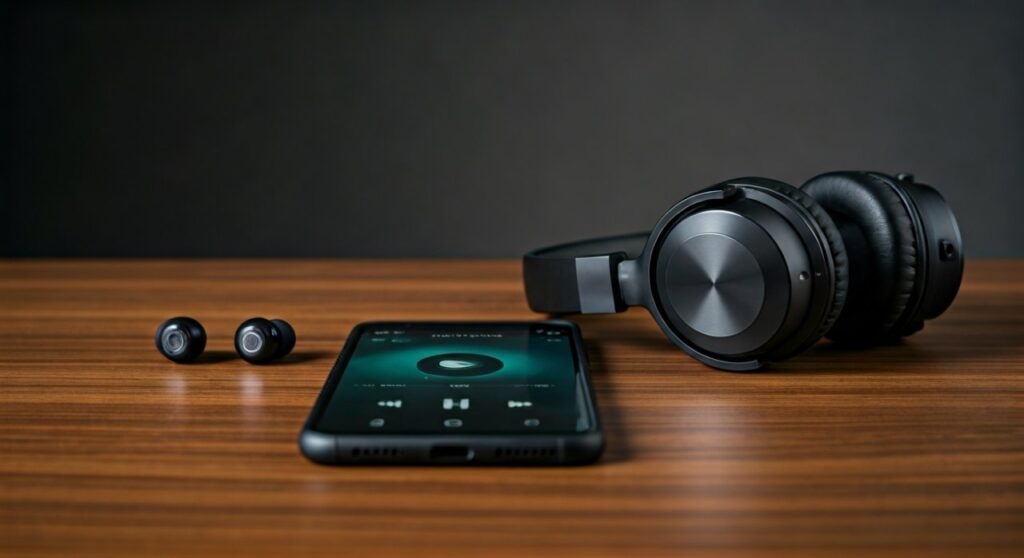
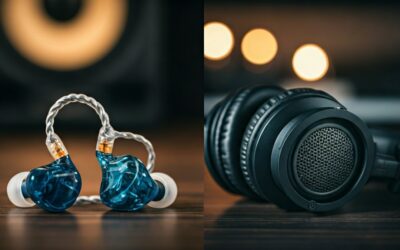
If you have ever swapped your bulky over-ear cans for a pair of in-ear monitors (IEMs), you likely noticed that the earbuds sounded much more “in your head.” This is a result of Sound Pressure Level (SPL). Because earbuds bypass the outer ear (pinna), the acoustic energy has nowhere to escape, making them feel significantly more powerful at lower device volume settings.
Key Takeaways: Quick Comparison
If you are in a hurry, here is the essential breakdown of the loudness debate:
- Perceived Volume: Earbuds win here due to their proximity to the eardrum and superior seal.
- Max Potential Volume: Over-ear headphones usually win because they house 40mm to 50mm drivers that can handle more power.
- Sound Leakage: Earbuds leak less sound to others, while open-back headphones leak the most.
- Hearing Safety: Earbuds carry a higher risk of hearing damage if used at high volumes because of the direct pressure on the ear canal.
- Driving Power: High-end headphones often require an external DAC/AMP to reach their full volume potential, whereas earbuds are easily driven by smartphones.
Why Earbuds Often Feel Louder Than Headphones
The sensation of loudness is not just about the volume slider on your phone; it is about how that sound reaches your brain. In my years of testing audio gear like the Sony WF-1000XM5 and the Sennheiser HD 600, the difference in “impact” is immediately clear.
Proximity to the Eardrum
Earbuds are designed to be inserted into the ear canal. This reduces the air volume between the speaker and the eardrum to almost zero. When a 6mm or 10mm driver moves in such a small space, it creates high Sound Pressure Level (SPL) very efficiently.
The Seal and Isolation
A proper fit with silicone or foam tips creates an airtight seal. This isolation blocks out ambient noise, which makes the music seem much louder. According to acoustic experts, every 3dB increase in volume effectively doubles the sound energy reaching your ear.
Bypassing the Pinna
The outer part of your ear (the pinna) acts as a natural resonator and filter. Headphones interact with the pinna to create a “soundstage.” Earbuds bypass this, sending sound straight down the “pipe,” which removes the natural dampening effect of the outer ear.
Are Headphones Louder Than Earbuds in Technical Terms?
While earbuds feel more intense, the question of whether are headphones louder than earbuds from a technical standpoint often favors the larger device. To understand this, we have to look at Driver Size and Sensitivity.
The Power of Larger Drivers
Most earbuds use drivers between 6mm and 12mm. In contrast, standard over-ear headphones use 40mm to 50mm drivers. A larger driver can move significantly more air. This is why headphones excel at producing deep, chest-thumping bass that earbuds simply cannot replicate without digital processing.
Understanding Sensitivity and Impedance
- Sensitivity: This is measured in dB/mW. Earbuds usually have high sensitivity (often 100dB+), meaning they get very loud with very little power.
- Impedance: Measured in Ohms (Ω). Many professional headphones have high impedance (e.g., 250Ω or 600Ω). If you plug these into a phone, they will sound quiet. However, when paired with an amplifier, they can reach volume levels far exceeding any standard earbud.
Headphone vs. Earbud Specification Comparison
| Feature | Earbuds (Typical) | Over-Ear Headphones (Typical) |
|---|---|---|
| Driver Size | 6mm – 12mm | 40mm – 50mm |
| Placement | Intra-aural (In-ear) | Circum-aural (Over-ear) |
| Perceived Loudness | High (Direct pressure) | Moderate (Spacious) |
| Max SPL | Lower ceiling | Higher ceiling (with Amp) |
| Isolation | Passive (High with seal) | Passive (Variable) |
| Health Risk | Higher at peak volumes | Lower (Distributes pressure) |
Step-by-Step Guide: How to Safely Measure Device Loudness
If you are worried that your audio gear is too loud, follow these steps to measure the output using a smartphone. This is a technique I use when calibrating new review units to ensure they meet WHO safety standards.
- Download a Decibel Meter App: Install a reputable app like NIOSH SLM (iOS) or Sound Meter (Android).
- Set Your Playback Level: Play your favorite track at your usual “comfortable” listening volume.
- Create a Seal: For earbuds, place the microphone of a second phone directly against the ear tip. For headphones, place the phone inside the ear cup against the driver.
- Check the Peak dB: If the reading consistently exceeds 85 dB, you are in the danger zone for long-term hearing loss.
- Adjust Settings: Use the “Reduce Loud Sounds” feature on iPhone or “Media Volume Limiter” on Android to cap the volume at a safe level.
Factors That Influence Volume Perception
It is important to realize that “loudness” is subjective. Several external factors can change how you perceive the volume of your AirPods versus your Bose QuietComfort headphones.
Active Noise Cancellation (ANC)
ANC technology uses microphones to cancel out external sounds. When the background “floor” of noise is removed, you don’t feel the need to crank the volume up. This is why high-end ANC headphones often feel “louder” in a noisy airplane cabin than cheap earbuds.
Frequency Response (The V-Shape)
Audio devices with a “V-shaped” sound signature (boosted bass and treble) often feel louder. The human ear is naturally sensitive to high frequencies. If a pair of earbuds has a sharp peak at 3kHz to 8kHz, they will sound piercingly loud compared to a pair of neutral studio headphones.
The Quality of the DAC/AMP
If you are using high-end headphones like the Beyerdynamic DT 770 Pro, the internal chip in your laptop might not provide enough juice. In this case, the headphones will be quieter than earbuds. Adding a portable DAC like the Fiio BTR15 can unlock the true volume potential of the headphones.
Health Risks: Is Louder Always Worse?
When asking are earbuds louder than headphones, the real concern should be Hearing Health. As a frequent user of audio gear, I have seen the data regarding Noise-Induced Hearing Loss (NIHL).
- Earbuds bypass natural protection: The ear canal acts as a resonator. By placing the source inside, you increase the risk of damaging the tiny hair cells (cilia) in the cochlea.
- The 60/60 Rule: Experts recommend listening at no more than 60% volume for no more than 60 minutes at a time.
- Pressure buildup: Earbuds can cause air pressure trapped in the canal to strike the eardrum with more force than the open environment of a headphone cup.
How to Choose Based on Your Volume Needs
Choose Earbuds if:
- You want maximum isolation in noisy environments (commuting, gym).
- You prefer a compact design that delivers punchy, direct sound.
- You use your smartphone as your primary audio source.
Choose Over-Ear Headphones if:
- You want a wider soundstage and more natural audio reproduction.
- You plan on listening for extended periods (less ear canal fatigue).
- You have an amplifier or a high-quality audio interface.
Frequently Asked Questions (FAQs)
Why do earbuds sound louder at the same volume setting as headphones?
This happens because earbuds are more sensitive and sit closer to your eardrum. They require less electrical power to create high sound pressure within the small volume of air in your ear canal.
Can earbuds damage your hearing faster than headphones?
Yes, potentially. Because they are inserted into the ear, people often turn them up to block out external noise, delivering intense sound pressure directly to the eardrum. Headphones distribute this pressure over the outer ear, which is slightly safer at equal decibel levels.
Are headphones louder than earbuds for people with hearing loss?
Generally, headphones are better for those with hearing loss because they can be paired with powerful amplifiers to provide a cleaner, higher-volume signal without the discomfort of inserting a device into the ear.
Does the price of the device affect how loud it can get?
Price is usually tied to quality and distortion, not just volume. Cheap earbuds may sound “loud” but will distort and crackle at high volumes. Premium gear stays clear and articulate even at high SPL.
Which is better for blocking out noise without increasing volume?
In-ear monitors (IEMs) with foam tips provide the best passive isolation. However, Active Noise Cancelling (ANC) over-ear headphones are superior for blocking low-frequency engine drones or office chatter.