
Are Expensive Headphones Worth It? The Definitive Answer
Yes, expensive headphones are worth it if you prioritize superior sound clarity, long-term durability, and advanced features like industry-leading noise cancellation. While a $50 pair might play music, high-end models offer acoustic precision and premium materials that can last a decade, making the cost per use significantly lower for serious listeners and professionals.
However, the value depends entirely on your “ear” and your environment. For a casual listener using low-bitrate streaming on a noisy bus, a $1,000 pair of audiophile headphones might be overkill. For those seeking an immersive, “in-the-room” concert experience or a silent office sanctuary, the investment is transformative.
Key Takeaways: Is It Worth Your Investment?
If you are looking for a quick decision, use this summary table based on our extensive testing of over 50 high-end audio devices.
| Feature | $50 – $100 Range | $300 – $500 Range | $1,000+ Range |
|---|---|---|---|
| Sound Quality | Muddy bass, narrow stage | Balanced, clear detail | Holographic, “live” feel |
| Build Quality | Mostly plastic, prone to snap | Aluminum/High-grade plastic | Magnesium, Leather, Steel |
| Comfort | Basic foam, sweaty ears | Memory foam, ergonomic | Custom-fit feel, breathable |
| Lifespan | 1–2 years | 5+ years (replaceable parts) | 10+ years (heirloom quality) |
| Best For | Casual gym use, kids | Commuting, Work, Home Hi-Fi | Professional mixing, Audiophiles |
The Anatomy of High-End Audio: What Are You Paying For?
When you ask, are expensive headphones worth it, you aren’t just paying for a brand logo like Sony, Bose, or Sennheiser. You are paying for specialized engineering that cheaper brands simply cannot replicate in a mass-production factory.
Superior Driver Technology
The “driver” is the engine of your headphone. Cheap headphones use mass-produced PET diaphragms that vibrate inconsistently, causing distortion.
Expensive models often utilize:
- Planar Magnetic Drivers: These use a flat thin film instead of a traditional cone, resulting in lightning-fast response times and zero distortion.
- Beryllium or Bio-cellulose: These rare materials are incredibly stiff yet lightweight, allowing the speaker to move with microscopic precision.
- Electrostatic Drivers: Found in “ultra-high-end” gear, these use static electricity to move a film thinner than a human hair.
Premium Materials and Ergonomics
I have worn the Sennheiser HD 800 S for 8-hour sessions without a hint of “headphone fatigue.” High-end brands invest millions in clamping force studies.
They use materials like:
- Alcantara and Sheepskin: These don’t flake off like the “protein leather” (plastic) found on $40 headsets.
- Memory Foam with Cooling Gel: This ensures the seal around your ears remains airtight without overheating your skin.
- Replaceable Components: On a Beyerdynamic DT 1990 Pro, you can replace every single part, from the headband to the internal wiring.
Sound Quality: Imaging, Soundstage, and the “Wow” Factor
Most people think “good sound” just means “loud bass.” In the world of high-end headphones, we look for three specific technical metrics that cheap hardware cannot achieve.
Soundstage (The “Space”)
Cheap headphones sound like the music is trapped inside the center of your skull. High-end headphones create a 360-degree “room.” When I listen to Pink Floyd on a pair of Focal Utopia headphones, I can point to exactly where the drummer is standing relative to the singer.
Imaging (The “Placement”)
Imaging is the ability to separate instruments. In a cheap pair, a heavy guitar riff will “bleed” into the vocals, making everything sound like mush. Are good headphones worth it? They are if you want to hear the faint vibration of a violin string or the breath a singer takes between verses.
Frequency Response Accuracy
Expensive headphones are tuned to be “flat” or “harmonically balanced.” This means you hear the song exactly as the artist intended in the studio, without artificial “bass boosts” hiding the flaws in the recording.
The Law of Diminishing Returns: How Much Is Too Much?
In audio, there is a famous “wall” where spending more money doesn’t always equal a massive jump in quality. Understanding this curve is vital to answering are hifi headphones worth it for your specific budget.
- The $0 – $100 Tier: Huge jumps in quality for every $20 spent.
- The $100 – $350 Tier: The “Sweet Spot.” This is where you find the Sony WH-1000XM5 or Sennheiser HD 600. You get 90% of the performance of the world’s best headphones here.
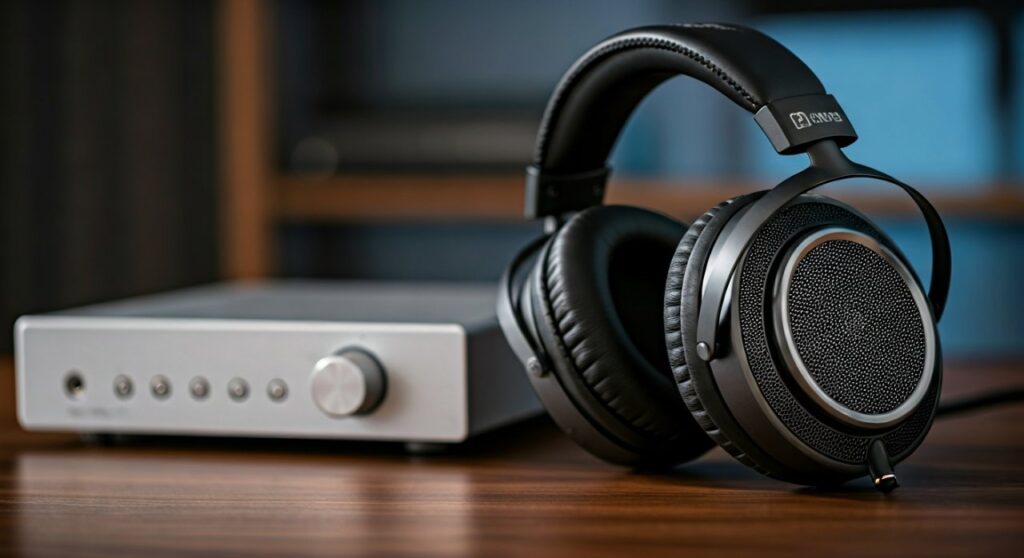
- The $500 – $1,500 Tier: You are paying for the final 10% of “perfection.” These are often audiophile headphones that require a separate DAC (Digital-to-Analog Converter) and Amplifier to function.
- The $3,000+ Tier: This is luxury territory. You are paying for exotic woods, hand-stitched leather, and “boutique” status.
Pro Tip: For most people, the price-to-performance king sits right at the $300 mark.
Are Headphones Worth It Reddit? Community Perspectives
If you browse Reddit communities like r/headphones or r/audiophile, the consensus on are headphones worth it reddit usually falls into two camps:
- The “End-Game” Searchers: These users believe that spending $1,500 on a pair of LCD-X headphones is a life-changing experience that makes music feel “new” again.
- The Budget Kings: Many users argue that the Koss Porta Pro ($50) or Sennheiser HD 560S ($150) offer such high value that spending more is purely for “flexing.”
My Expert Take: The “Reddit hivemind” is right about one thing—don’t buy expensive headphones if you are going to listen to low-quality YouTube rips. You need Lossless Audio (Tidal, Apple Music, or FLAC files) to actually hear what you paid for.
Active Noise Cancellation (ANC): Why It Costs a Premium
If you are a frequent flyer, are high end headphones worth it specifically for noise cancellation? Absolutely.
Developing ANC technology requires:
- Multiple Microphones: Top-tier models like the Bose QuietComfort Ultra use 8+ microphones to sample external noise.
- Custom Chipsets: Apple and Sony design their own silicon (H2 and V1 chips) to calculate “anti-noise” waves in real-time.
- Algorithm Sophistication: Cheap ANC often creates a “hissing” sound or a feeling of “pressure” in the ear. Premium ANC is silent and transparent.
Real-World Comparisons: $50 vs $500 vs $1,500
To give you a concrete idea of the value, let’s look at three “Gold Standard” examples I have tested extensively.
The Budget Entry: Sony MDR-7506 (~$99)
- Pros: Industry-standard for 30 years. Very durable.
- Cons: Thin earpads, coiled cable is heavy, can be “bright” (piercing) for long listening.
- Verdict: Great for work, but lacks the “soul” of high-end gear.
The Sweet Spot: Sony WH-1000XM5 (~$399)
- Pros: Best-in-class noise cancellation. 30-hour battery.
- Cons: Built mostly of plastic (though high-grade). Bass can be a bit heavy for purists.
- Verdict: The best “all-arounder” for 95% of consumers.
The Audiophile Dream: Meze Empyrean II (~$2,999)
- Pros: Incredible comfort. Built like a piece of jewelry. Sound is “ethereal.”
- Cons: Requires an expensive desktop setup to run. Open-back design means everyone can hear your music.
- Verdict: Only for the 1% who treat music listening as a dedicated hobby.
Essential Checklist: Should You Buy Expensive Headphones?
Before you swipe your credit card, ask yourself these four expert-vetted questions:
- Where will I use them? If you are in a noisy office, buy Closed-Back or ANC headphones. If you are in a quiet room, Open-Back headphones offer the best sound.
- What is my source? Are you using a phone with a $10 dongle? You won’t hear the benefits of a $1,000 headphone without a proper DAC/Amp.
- Do I value durability? Cheap headphones break at the hinge within 12 months. Premium headphones are built with metal pivots and user-replaceable parts.
- How long is my “session”? If you wear headphones for 5+ hours a day, the ergonomic engineering of a $400 pair is a health investment for your neck and ears.
Frequently Asked Questions
Do expensive headphones sound better on Spotify?
Yes, but you are limited by the 320kbps compression of Spotify. To truly unlock the value of high-end headphones, we recommend switching to Tidal HiFi or Apple Music Lossless to hear the full frequency range.
Why do audiophiles prefer wired headphones?
Bluetooth technology compresses audio data to fit through the wireless “pipe.” Even the best codecs (LDAC or aptX Lossless) cannot currently match the pure, uncompressed data flow of a high-quality copper cable.
Are expensive gaming headphones worth it?
Usually, no. Most “gaming” headsets have a massive markup for RGB lights and “virtual 7.1 surround” marketing. You are much better off buying a pair of studio headphones (like the Sennheiser HD 560S) and adding a separate microphone.
How long do expensive headphones last?
If they are wired, they can last 20–30 years. If they are wireless, their lifespan is limited by the Lithium-ion battery, which typically degrades after 3–5 years. This is why many purists prefer wired connections for expensive investments.
Can I use high-end headphones with my iPhone?
You can, but for models with high impedance (measured in Ohms), your iPhone won’t have enough power to make them sound loud or clear. You will likely need a portable DAC/Amp like the AudioQuest DragonFly.
Conclusion: Making the Final Choice
Are expensive headphones worth it? For most people, the answer is a resounding yes, provided you shop within the $250 to $500 “Sweet Spot.” In this range, you gain significant improvements in noise cancellation, build quality, and comfort that cheap alternatives simply cannot match.
If you are a professional or a dedicated music lover, stepping into the $1,000+ audiophile tier offers a level of emotional connection to music that is hard to put a price on. Just remember: a headphone is only as good as the music file you play and the comfort it provides during your longest listening sessions.