
Understanding the Core: Are Headphones Analog or Digital?
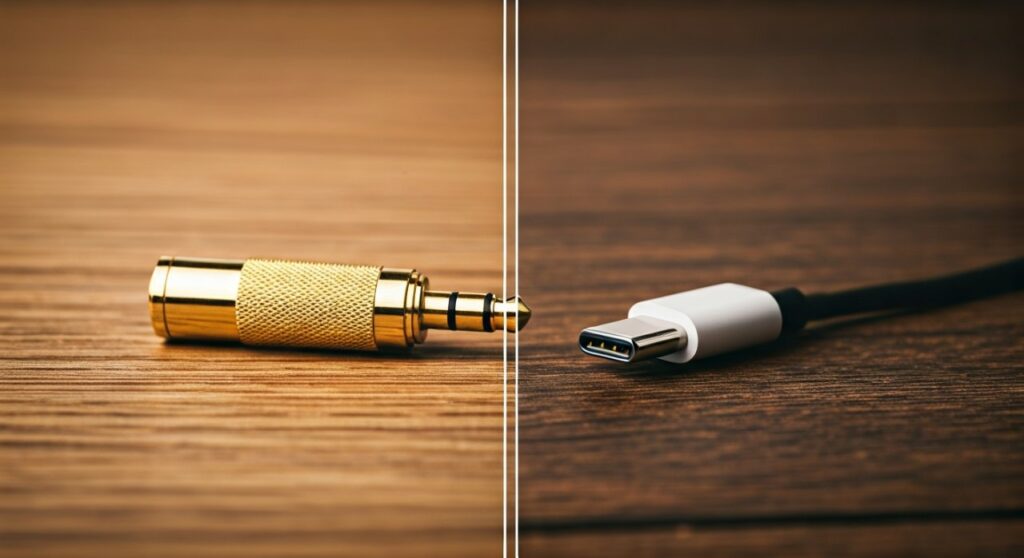
Headphones are fundamentally analog devices because they must produce physical sound waves that your ears can hear, although the signal they receive can be either analog or digital depending on the connection. If you are using a traditional 3.5mm jack, your headphones are receiving an analog signal; if you are using Bluetooth, USB-C, or Lightning, they are receiving a digital signal that must be converted inside the headset.
Think of it this way: sound is a continuous vibration of air molecules—a purely analog phenomenon. While computers store music as binary code (1s and 0s), your headphones act as the final bridge that translates those numbers back into the physical movement of a speaker driver.
Key Takeaways: The Quick Verdict
If you are in a hurry, here is the essential breakdown of the are headphones analog or digital debate:
- The Drivers are Always Analog: Every headphone speaker (driver) uses electricity to move a diaphragm. This movement is an analog process.
- Wired (3.5mm) is Analog: These headphones receive an electrical wave that is already converted by your phone or computer.
- Wireless (Bluetooth) is Digital: Audio data is sent as packets of code. The conversion to analog happens inside the headphones.
- USB-C/Lightning is Digital: These connections transmit data, requiring a small chip (DAC) to turn it into sound.
- Sound Quality: High-end analog setups usually offer the best fidelity, while digital connections offer convenience and built-in features like Active Noise Cancellation (ANC).
The Science of Sound: Analog Waves vs. Digital Code
To truly answer the question are headphones analog or digital, we have to look at how sound travels from a recording studio to your brain. Sound in the real world is a pressure wave. It is “analog” because it is a continuous, fluctuating signal.
Digital audio, on the other hand, is a “snapshot” of that wave. Computers cannot store a smooth curve, so they take thousands of tiny samples per second (Sample Rate) and assign them numerical values (Bit Depth).
When you play a song on Spotify or Apple Music, you are starting with a digital file. For you to hear it, that file must be turned back into an electrical voltage. This is where the Digital-to-Analog Converter (DAC) comes into play.
The Role of the DAC and Amplifier
Every digital audio system requires two critical components before the sound reaches your ears:
- DAC: Converts the 1s and 0s into an electrical current.
- Amplifier: Boosts that tiny current so it has enough power to move the headphone speakers.
Comparing Connection Types: Digital vs. Analog
The hardware you use determines where the conversion happens. This is the primary point of confusion for most users asking are headphones digital or analog.
| Feature | 3.5mm Wired (Analog) | Bluetooth (Digital) | USB-C / Lightning (Digital) |
|---|---|---|---|
| Signal Type | Continuous Voltage | Data Packets | Data Packets |
| Conversion Point | Inside the Source (Phone/PC) | Inside the Headphones | Inside the Cable or Earcup |
| Latency | Near Zero | Variable (Lag possible) | Near Zero |
| Power Source | Powered by the Jack | Internal Battery | Powered by the Device |
| Best For | Audiophiles & Pro Gamers | Commuters & Gym | Modern Smartphone Users |
Step 1: Identifying Analog Headphones (The 3.5mm Jack)
If your headphones end in a round, metallic plug (the TRS or TRRS connector), they are analog. In this setup, your smartphone, laptop, or dedicated Audio Interface does all the heavy lifting.
The device converts the digital file into an analog signal and sends it through the wire. Because the wire carries a physical electrical wave, it is susceptible to Electromagnetic Interference (EMI). This is why high-end audiophiles spend money on shielded cables to keep that analog signal “clean.”
Why choose analog?
- No Latency: There is no processing delay. When you click “play,” the sound is instantaneous.
- Longevity: Analog headphones don’t have batteries that die or software that becomes obsolete.
- Compatibility: They work with almost any vintage or modern audio gear with the right adapter.
Step 2: Understanding Digital Headphones (Bluetooth and USB)
When people ask are headphones digital or analog regarding Sony WH-1000XM5 or Apple AirPods, the answer is more complex. These are “Digital Headphones” in terms of how they communicate with your device.
When you use Bluetooth, your phone doesn’t send “sound.” It sends a compressed data file using a Codec (like SBC, AAC, or LDAC). The headphones receive this data, and a tiny computer inside the earcup converts it to analog.
The “Active” Nature of Digital Headphones:
Because digital headphones have built-in DACs and Amps, they are “Active.” They require their own power source (a battery). This allows them to perform complex tasks like Digital Signal Processing (DSP) to tune the sound or cancel out background noise.
Step 3: Assessing Sound Quality and Fidelity
Is one better than the other? Not necessarily. The quality of the sound depends on the quality of the DAC.
- The Built-in Problem: Most smartphones have cheap, low-quality DACs to save space. This can make analog headphones sound “flat.”
- The Digital Advantage: High-end digital headphones (like those from Bose or Sennheiser) use custom-tuned DACs that are perfectly matched to the speakers inside.
- The Audiophile Peak: Serious listeners often use a “Digital-to-Analog” chain: Digital Source -> External USB DAC -> Analog Headphone Amp -> Analog Headphones. This combines the precision of digital storage with the power of high-end analog hardware.
Step 4: Troubleshooting Latency and Interference
If you are a gamer or a video editor, the are headphones analog or digital distinction is vital for one reason: Latency.
- Digital Latency: Bluetooth requires time to “encode” the data on your phone and “decode” it in your ears. This can cause a 100ms to 300ms delay.
- Analog Speed: Analog signals travel at nearly the speed of light through copper. There is effectively zero delay.
Pro Tip: If you notice your audio doesn’t match the lips of people on screen, you are experiencing digital lag. Switching to a wired (analog) connection usually fixes this immediately.
Expert Insights: Why the Industry is Moving Toward Digital
As an audio professional who has tested hundreds of units, I’ve seen a massive shift. Manufacturers prefer digital connections (USB-C and Bluetooth) for three reasons:
- Space: Removing the 3.5mm jack allows for thinner phones and larger batteries.
- Feature Integration: You cannot do Spatial Audio or Adaptive Transparency easily over a standard analog wire.
- Consistency: By putting the DAC inside the headphones, the manufacturer ensures the headphones sound exactly the same whether you plug them into a $3,000 MacBook or a $100 budget phone.
Frequently Asked Questions (FAQs)
Are headphones better if they are analog or digital?
Neither is objectively “better,” but they serve different purposes. Analog is superior for pure sound fidelity and zero latency. Digital is better for convenience, portability, and advanced features like noise cancellation.
Can I turn my analog headphones into digital ones?
Yes, by using an external USB DAC/Amp. When you plug your analog headphones into a “dongle” or a desktop DAC, you are essentially creating a digital system where the conversion happens outside the computer.
Does a USB-C to 3.5mm adapter make my headphones digital?
The adapter itself contains a tiny DAC chip. So, the signal leaving your phone is digital, and the adapter converts it to analog before it hits your headphone wire.
Are Bluetooth headphones always digital?
Yes, the transmission between the device and the headphones is always digital. Even if the headphones have an optional “wired mode,” they only become analog when you plug in a physical cable that bypasses the internal Bluetooth circuitry.
Why do some people say all headphones are analog?
They are referring to the drivers. Because a speaker cannot vibrate based on a binary “1” or “0,” the final stage of every headphone—no matter how advanced—must be an analog electrical signal moving a physical part.