
Are Headphones Tax Deductible? The Professional’s Guide to Business Expenses
Yes, headphones are tax deductible if they are considered an “ordinary and necessary” expense for your trade or profession. To qualify, you must primarily use them for work-related tasks, and the deduction amount depends on your employment status—specifically whether you are self-employed (1099) or a W-2 employee.
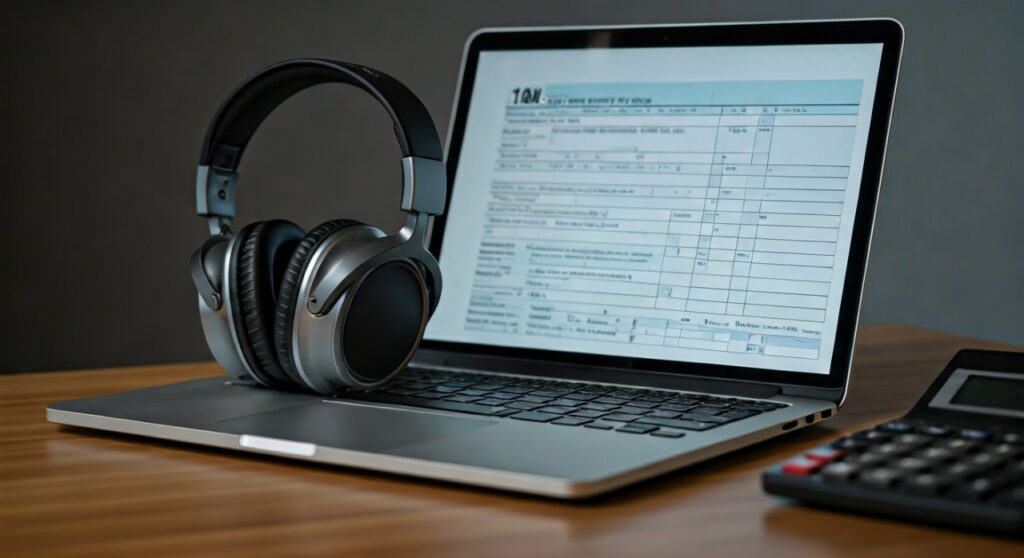
For many remote workers and creators, high-quality audio is no longer a luxury but a functional requirement. If you are a freelancer, business owner, or certain types of performing artists, you can typically deduct the full or partial cost of headphones like the Sony WH-1000XM5 or Apple AirPods Max on your federal tax return. However, due to the Tax Cuts and Jobs Act (TCJA), most W-2 employees can no longer claim these unreimbursed business expenses on federal returns until at least 2025.
Key Takeaways: TL;DR
- Self-Employed (1099): Fully deductible if used 100% for business; pro-rated if used for personal enjoyment.
- W-2 Employees: Generally not deductible on federal returns, though some states (like California or New York) may allow it.
- The “Ordinary and Necessary” Rule: The IRS requires that the expense be common in your industry and helpful for your work.
- Section 179: You can often deduct the entire cost in the year of purchase rather than depreciating it over time.
- Documentation: Always keep your digital receipts and a log of business vs. personal use to survive an IRS audit.
Who Can Claim Headphones as a Tax Deduction?
The ability to deduct hardware like headphones depends almost entirely on how you earn your income. The Internal Revenue Service (IRS) distinguishes strictly between business owners and employees.
Freelancers and Small Business Owners (1099)
If you are a freelancer, independent contractor, or a sole proprietor, you are in the best position. You report your income and expenses on Schedule C (Form 1040). In this scenario, headphones are categorized as Office Expenses or Supplies.
As someone who has consulted for numerous digital nomads, I’ve seen that the key is “business percentage.” If you use your Bose QuietComfort headphones 80% for Zoom calls and 20% for the gym, you can only deduct 80% of the cost.
W-2 Employees
Since 2018, the federal “unreimbursed employee business expense” deduction has been suspended for most people. If you work a standard 9-to-5 and your boss doesn’t pay for your gear, you usually cannot claim it on your federal taxes.
Exceptions exist for specific groups:
- Armed Forces reservists.
- Qualified performing artists.
- Fee-basis state or local government officials.
- Employees with impairment-related work expenses.
Students and Educators
Students generally cannot deduct headphones as a tuition expense unless the school specifically requires a specific model as a condition of enrollment (rare). However, Educators can use the Educator Expense Deduction to claim up to $300 for unreimbursed classroom supplies, which can include headphones used for remote teaching.
Understanding the “Ordinary and Necessary” Requirement
To pass an IRS inquiry, your purchase must meet two criteria defined in Publication 535:
- Ordinary: The expense is common and accepted in your field of trade. For a Podcast Producer, high-end studio monitors are ordinary. For a construction worker, noise-canceling headphones for safety might be ordinary.
- Necessary: The expense is helpful and appropriate for your business. It doesn’t have to be “indispensable,” but it must serve a clear professional purpose, such as blocking out noise in a co-working space to maintain productivity.
| Profession | Use Case | Deductibility Status |
|---|---|---|
| Software Engineer | Focused coding & Scrum meetings | High (Business use %) |
| Professional Gamer | Stream audio & Team communication | High (Business expense) |
| Transcriptionist | Hearing clear audio for typing | Essential (100% deductible) |
| Sales Representative | Client calls & VOIP | High (Communication tool) |
| Casual Listener | Listening to music while idling | Non-deductible |
Step-by-Step Guide: How to Properly Deduct Headphones
Following a strict protocol ensures you maximize your return while staying compliant with tax laws.
Step 1: Determine Business Use Percentage
Be honest about your usage. If the headphones live on your desk and never leave your office, they are likely 100% business. If you take them on vacation, you must estimate the split. Pro-tip: Use a simple spreadsheet to log your hours for a “test week” to justify your percentage.
Step 2: Choose Your Deduction Method
For equipment under $2,500, you can often use the De Minimis Safe Harbor election. This allows you to deduct the full cost in the year of purchase rather than dealing with complex Depreciation schedules (Form 4562).
Step 3: Categorize the Expense
On your Schedule C, you have a few options for where to place the cost:
- Line 18 (Office Expense): Best for general office gear.
- Line 22 (Supplies): Appropriate if the headphones are considered a consumable part of your kit.
- Line 27a (Other Expenses): Use this if you want to be more specific (e.g., “Audio Monitoring Equipment”).
Step 4: Archive the Receipt
A bank statement is often not enough. The IRS wants to see the itemized receipt showing the brand (e.g., Sennheiser), the date, and the amount paid. Store a digital copy in Google Drive or Evernote.
Special Scenarios: Content Creators and Medical Needs
For YouTubers and Podcasters
In the creator economy, headphones are “Tools of the Trade.” If you are reviewing headphones on a YouTube channel, they are 100% deductible as Inventory or Research Materials. If you use them to monitor audio during a recording, they are Equipment.
Medical Tax Deductions
Can headphones be a medical deduction? Generally, no. However, if a doctor prescribes a specific type of specialized audio equipment to treat a diagnosed hearing impairment, it might qualify under Medical and Dental Expenses (Schedule A). This is a high bar to clear and requires significant medical documentation.
Common Pitfalls to Avoid
- Mixing Personal and Business: Don’t buy the most expensive AirPods on your business card if you only use them for the gym. This is a “red flag” for auditors.
- Missing the State Level: Even if you can’t deduct them federally as an employee, states like Pennsylvania or California may have different rules for state income tax.
- Ignoring Reimbursement: If your employer offers a stipend or reimbursement for home office gear, you cannot claim the deduction. You can only deduct what you paid for out of your own pocket.
Frequently Asked Questions (FAQs)
Are noise-canceling headphones tax deductible for remote workers?
Yes, if you are self-employed. If you work in a noisy environment and require Bose or Sony noise-canceling technology to perform your job duties, they qualify as a necessary business expense.
Can I deduct headphones if I only use them for Zoom calls?
Yes. If your primary use for the headphones is professional communication via Zoom, Microsoft Teams, or Slack, the portion of the cost allocated to those calls is deductible for business owners.
Is there a limit to how much I can spend on deductible headphones?
There is no hard “price limit,” but the expense must be “reasonable.” Buying a $5,000 pair of audiophile headphones for basic data entry might trigger an audit, as it may not be seen as “ordinary” for that specific role.
What if I bought the headphones last year?
You must claim the deduction in the tax year the expense was incurred. If you missed it, you might need to file an Amended Return (Form 1040-X), though this is usually only worth the effort for very expensive equipment.
Do gaming headsets count as headphones for tax purposes?
Yes. For streamers, professional gamers, or even customer service reps who prefer the integrated microphone of a gaming headset like a HyperX or Logitech G Pro, the same “ordinary and necessary” rules apply.