
Are Headphones with Higher Ohms Better? The Truth Behind the Numbers
Whether are headphones with higher ohms better depends entirely on your audio source and your listening goals. Higher impedance headphones (typically 250 ohms or more) can offer superior clarity and lower distortion, but they require a dedicated headphone amplifier to reach usable volume levels. If you are plugging directly into a smartphone or laptop, low-impedance headphones are actually the “better” choice for performance and efficiency.
Key Takeaways: High vs. Low Impedance
If you are in a hurry, here is the essential breakdown of the “ohms” debate:
- Audio Quality: High-ohm headphones generally use thinner, lighter voice coil wires, leading to a more precise transient response and less harmonic distortion.
- Power Needs: High-impedance models (like the Sennheiser HD 600) need high voltage to drive them. Low-impedance models (like Apple AirPods or Sony WH-1000XM5) run perfectly on battery-powered devices.
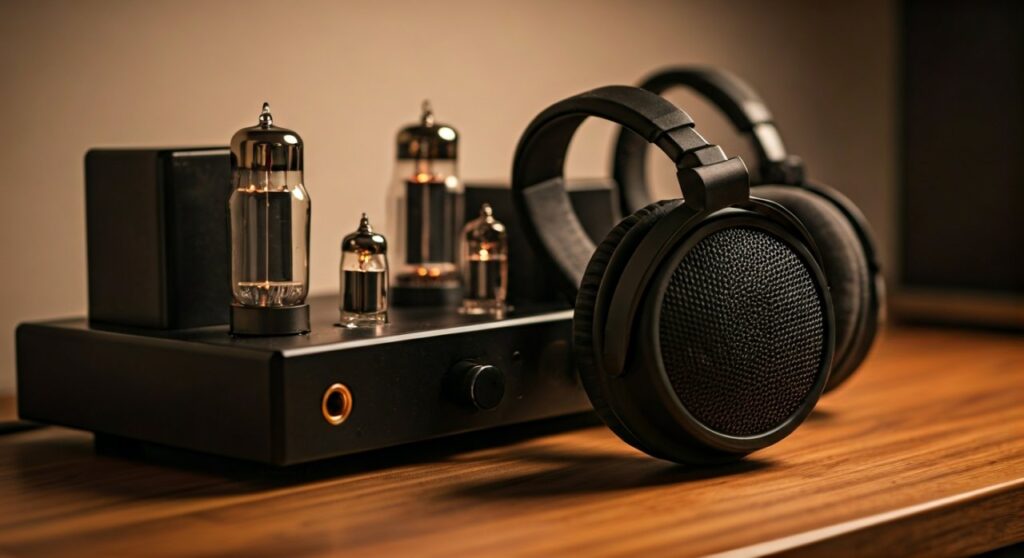
- The “Hiss” Factor: High-ohm headphones are naturally better at filtering out the “background hiss” (electronic noise floor) from powerful tube amps.
- The Verdict: Higher ohms are “better” for critical studio listening and home hi-fi setups, while lower ohms are “better” for portability and convenience.
Understanding the Concept of Impedance (Ohms)
To answer are headphones with higher ohms better, we must first define what impedance actually is. In the world of electronics, Impedance is the measure of opposition that a circuit presents to a current when a voltage is applied. In headphones, this is measured in Ohms (Ω).
Think of it like a garden hose. A high-impedance headphone is like a narrow hose that requires high water pressure (Voltage) to get a steady stream. A low-impedance headphone is like a wide hose that allows water to flow easily even with low pressure.
Most consumer headphones range from 16 to 32 ohms. Professional studio or audiophile headphones often range from 250 to 600 ohms. When you ask are high ohm headphones better, you are really asking if the extra “resistance” provides a sonic benefit that outweighs the inconvenience of needing more power.
Why Some Audiophiles Claim Higher Ohms are Better
There is a technical reason why the “higher is better” myth exists. It boils down to the construction of the voice coil inside the headphone driver.
Reduced Moving Mass
In a high-impedance headphone, the voice coil is made of much thinner wire. This allows for more windings (turns of wire) with less overall weight. Because the moving parts are lighter, the driver can react faster to electrical signals. This results in better detail retrieval and a “faster” sound.
Higher Damping Factor
The damping factor is the ability of an amplifier to control the motion of the headphone driver. High-impedance headphones naturally create a better relationship with the amplifier’s output impedance. This prevents the driver from vibrating uncontrollably after a sound stops, leading to “tighter” bass and a cleaner soundstage.
Protection Against Electronic Noise
If you plug a low-impedance earbud into a high-powered O2 Amplifier or a vintage receiver, you might hear a constant “hissing” sound. This is the noise floor of the amp. High-ohm headphones act as a natural barrier to this noise, ensuring you only hear the music.
The Comparison: High Impedance vs. Low Impedance
| Feature | Low Impedance (16Ω – 32Ω) | High Impedance (100Ω – 600Ω) |
|---|---|---|
| Primary Device | Smartphones, Laptops, Tablets | Desktop Amps, Studio Consoles |
| Volume Level | Very loud on mobile devices | Very quiet/thin on mobile devices |
| Sound Detail | Standard / Good | Exceptional / Transparent |
| Voice Coil | Heavier, thicker wire | Lighter, thinner wire |
| Background Hiss | More noticeable on high-power gear | Effectively filtered out |
| Example Models | Audio-Technica M50x (38Ω) | Beyerdynamic DT 880 (600Ω) |
Step-by-Step Guide: How to Determine the Best Impedance for Your Setup
If you are wondering are higher ohm headphones better for your specific situation, follow this guide to match your gear correctly.
Step 1: Identify Your Primary Listening Device
Look at what you will be plugging your headphones into most of the time.
- Mobile/Portable: If you use an iPhone (with a dongle), an Android phone, or a Nintendo Switch, stick to headphones under 50 ohms.
- Desktop/Home: If you have a dedicated DAC/Amp stack (like the Schiit Magni or JDS Labs Atom), you can easily handle 250 ohms to 600 ohms.
Step 2: Check the “Sensitivity” Rating
Impedance isn’t the only factor. You must also check the Sensitivity (measured in dB/mW). A headphone can have high impedance but high sensitivity, making it slightly easier to drive than you’d expect. However, usually, if a headphone is 300 ohms, you will need an external power source regardless of sensitivity.
Step 3: Evaluate Your Music Quality
Are higher ohms better if you only listen to low-quality YouTube rips? Probably not. The extra detail provided by high-impedance drivers will only highlight the flaws and compression in poor audio files. To truly benefit from high-ohm gear, use Lossless Audio (FLAC, Tidal HiFi, or Apple Lossless).
Step 4: Budget for an Amplifier
If you decide that are high ohm headphones better for your needs, you must budget for an amplifier. A Beyerdynamic DT 990 Pro (250 Ohm) will sound flat, tinny, and lifeless if plugged directly into a laptop motherboard. You need an amp to provide the “swing” in voltage required to move those high-resistance coils.
Are Higher Ohms Better for Gaming?
In the gaming community, the question of are higher ohms better is frequently debated.
- Imaging and Soundstage: High-impedance open-back headphones (like the Sennheiser HD 660S) offer incredible imaging. This allows you to hear exactly where an enemy’s footsteps are coming from.
- Console Limitations: If you plug high-ohm headphones into a PS5 DualSense controller or an Xbox controller, the volume will be incredibly low. The controller simply doesn’t have the battery power to drive a 250-ohm load.
Expert Tip: For console gaming, stick to low-impedance “Gaming Headsets” or use a USB DAC like the Creative Sound BlasterX G6 to bridge the gap.
Common Misconceptions About Headphone Impedance
“Higher Ohms Always Means Louder”
This is a common mistake. In reality, it is the opposite. Because high-ohm headphones resist the flow of current, they are much quieter than low-ohm headphones when used on the same device.
“Low Impedance Means Poor Quality”
Not at all. Many world-class Planar Magnetic headphones (like those from Audeze) have relatively low impedance but are incredibly difficult to drive because they require high current rather than high voltage. Furthermore, many high-end In-Ear Monitors (IEMs) used by professional musicians on stage have very low impedance for compatibility with wireless belt packs.
“You Can’t Use High Ohm Headphones Without an Amp”
You can plug them in, and you will hear sound. However, you will likely have to max out the volume slider, and the bass will sound “loose” or non-existent. You aren’t getting the performance you paid for.
The Historical Context: Why Do 600 Ohm Headphones Exist?
In the early days of radio and recording studios, engineers would often plug multiple pairs of headphones into the same output. If those headphones had low impedance, the total load on the amplifier would drop too low, potentially damaging the equipment or causing massive distortion. By making headphones 600 ohms, studios could chain many pairs together safely. Today, this is less of a concern, but the high-impedance standard remains because of the sonic benefits mentioned earlier.
Frequently Asked Questions
Will high-ohm headphones damage my phone?
No. High-ohm headphones will not damage your phone. They simply won’t get very loud. However, using very low-impedance headphones on a massive, high-voltage vintage amplifier can potentially blow out the drivers if you aren’t careful with the volume knob.
Are 80 ohm headphones a good middle ground?
Yes! The 80-ohm version of the Beyerdynamic DT 770 Pro is considered the “sweet spot” for many. It is high enough to benefit from better coil construction but low enough that most modern laptops and high-quality motherboards can drive them to decent volumes without a dedicated amp.
Do I need an amp for 32-ohm headphones?
Generally, no. Most 32-ohm headphones are designed for “plug and play” use with consumer electronics. However, a small portable DAC/Amp like the Fiio BTR5 can still improve the sound quality by providing a cleaner signal than your phone’s built-in hardware.
Is there a difference between 250 ohm and 600 ohm versions of the same headphone?
Yes, but it is subtle. The 600-ohm versions usually have a slightly smoother treble and a more “refined” sound, but they are incredibly demanding. Unless you have a high-end tube amp, the 250-ohm version is usually the more practical choice for enthusiasts.
Why are most Bluetooth headphones low impedance?
Bluetooth headphones have their own built-in amplifiers and batteries. To maximize battery life and minimize the size of the internal components, manufacturers use low-impedance drivers that require very little voltage to operate efficiently.