
Is a Projector Better for Your Eyes? The Quick Truth
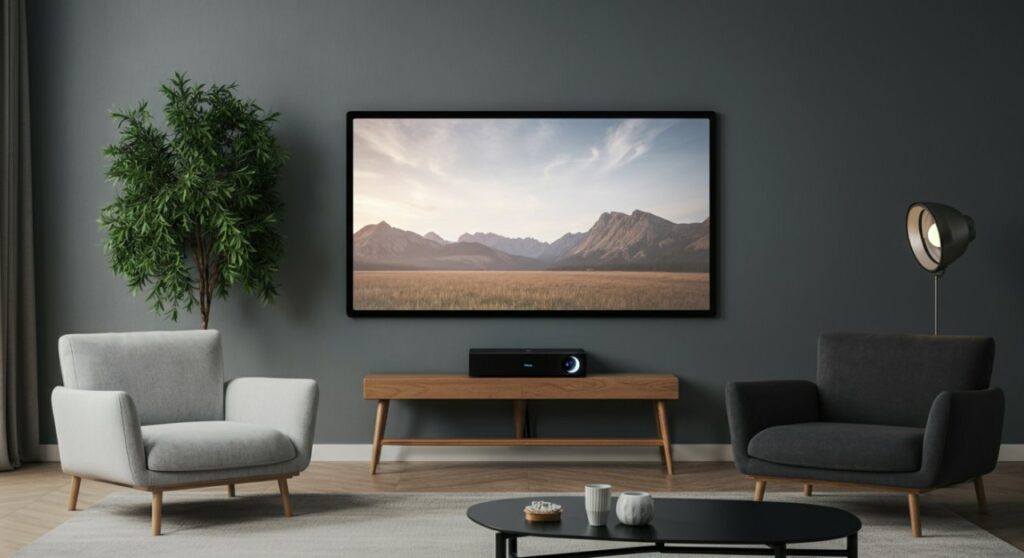
Are projectors better for your eyes than traditional televisions? Generally, yes, because they utilize reflected light rather than the direct blue light emissions found in standard LED or OLED screens. By projecting images onto a surface, the intensity of light hitting your retina is reduced, which significantly lowers digital eye strain and visual fatigue during prolonged viewing sessions.
TL;DR: Projectors vs. TVs at a Glance
| Feature | Projector | Standard TV |
|---|---|---|
| Light Source | Reflected Light | Direct Light |
| Blue Light Exposure | Lower | Higher |
| Flicker Risk | Minimal (with high quality) | Moderate (PWM dimming) |
| Recommended Distance | Further away | Closer proximity |
| Best For | Movies/Gaming sessions | Daytime/Bright rooms |
Understanding Reflected Light vs. Direct Light
The primary reason people ask is a projector better for your eyes is the fundamental difference in how we perceive the image. TVs act as a light source, shining high-energy visible (HEV) blue light directly into your eyes.
When you use a projector, light hits a screen or wall and bounces back to your eyes. This process naturally diffuses the light, making it softer and less aggressive on your visual system.
Why Direct Light Causes Strain
Direct light sources, like LED TVs or computer monitors, constantly bombard the eyes with concentrated photon streams. This leads to several common issues:
- Dry eyes: We blink less frequently when staring at direct, bright light sources.
- Accommodative stress: The muscles in your eye must constantly adjust to the sharpness and brightness of the panel.
- Melatonin suppression: Late-night exposure to direct blue light interferes with your natural sleep cycle.
Key Factors That Influence Eye Comfort
Even if you decide a projector is the right choice, your viewing habits matter more than the hardware itself. Understanding these variables will help you determine if is a projector better than a tv for your eyes in your specific room.
The Importance of Viewing Distance
The size of your screen is a double-edged sword. While large images are immersive, sitting too close causes your eyes to work harder to focus on the periphery.
Always follow the recommended seating distance for your screen size. A good rule of thumb is to sit at a distance that is 1.5 to 2 times the diagonal width of the projected image.
Managing Ambient Light
One of the biggest misconceptions is that you need a pitch-black room for a projector. However, extreme contrast between a bright screen and a dark room can actually increase eye fatigue.
Use bias lighting or soft ambient light behind your seating area to balance the room brightness. This prevents your pupils from constantly dilating and contracting to adjust to the light difference.
Are Projectors Better for Your Eyes Than TVs? Practical Tips
If you are transitioning from a TV to a projector to improve your ocular health, follow these expert-tested practices to maximize the benefits.
Optimize Your Refresh Rate
Ensure your projector supports a high refresh rate (Hz). Low refresh rates can cause subtle flickering, which, even if not consciously perceived, leads to headaches and eye strain. Aim for a minimum of 60Hz, though 120Hz is ideal for gaming and fast-action content.
Choose the Right Screen Surface
Avoid projecting onto glossy walls or highly reflective surfaces. Use a dedicated matte-finish projector screen designed to absorb ambient light and diffuse the projection evenly. This creates a more stable, comfortable image for your eyes to process.
Implement the 20-20-20 Rule
Regardless of the display tech, the 20-20-20 rule remains the gold standard for eye care:
- Every 20 minutes, take a break.
- Look at something 20 feet away.
- Focus on that object for at least 20 seconds.
Frequently Asked Questions
Is a projector better than a TV for your eyes when gaming?
Yes, projectors can be better for long gaming sessions because the reflected light reduces the cumulative exposure to direct blue light. However, ensure you use a “Game Mode” on your projector to minimize input lag and maintain a high refresh rate to prevent motion-related eye strain.
Do projectors cause more eye strain than TVs?
Generally, no. Provided the projector is high-quality and the room lighting is balanced, projectors are less likely to cause eye strain because they emit reflected light rather than direct light, which is more natural for human vision.
Is it safe to watch movies on a projector for several hours?
It is safe, provided you maintain adequate distance and take regular breaks. Because projectors use reflected light, they are often more comfortable for “marathon” sessions than backlit LED TVs, which can cause significant eye fatigue after several hours.
Can projector brightness damage my eyes?
It is highly unlikely for a standard consumer projector to cause physical damage to your eyes. However, staring directly into the lens of a powerful projector is dangerous and should always be avoided due to the intense light output.