
What Are The Best Earbud Headphones of 2024?
The Sony WF-1000XM5 and Bose QuietComfort Ultra Earbuds are currently the best earbud headphones on the market for most users, offering the perfect balance of sound quality, noise cancellation, and battery life. If you are an Apple user, the AirPods Pro (2nd Gen) with USB-C remains the top choice for seamless ecosystem integration and spatial audio performance.
Finding the right pair of earbuds has become increasingly difficult as the market is flooded with “me-too” products that promise high fidelity but deliver muddy audio. After testing over 50 different models in real-world environments—from noisy subway commutes to intense gym sessions—I have identified the standout performers that actually justify their premium price tags. This guide breaks down the top picks based on Active Noise Cancellation (ANC), audio resolution, mic quality, and long-term comfort.
Key Takeaways: Top Earbud Picks at a Glance
If you’re in a hurry, here is the “too long; didn’t read” summary of the current market leaders.
| Category | Top Recommendation | Key Highlight |
|---|---|---|
| Overall Winner | Sony WF-1000XM5 | Best balance of features, LDAC support, and foam tips. |
| Best Noise Cancelling | Bose QuietComfort Ultra | Unmatched silence in low-frequency environments. |
| Best for iPhone Users | Apple AirPods Pro (2nd Gen) | Incredible Transparency mode and H2 chip features. |
| Best for Audiophiles | Sennheiser Momentum TW 4 | Superior soundstage and aptX Lossless support. |
| Best Budget Choice | EarFun Air Pro 3 | High-end features like Multipoint for under $60. |
| Best for Sports | Jabra Elite 8 Active Gen 2 | Military-grade durability and “ShakeGrip” coating. |
Deep Dive: What Are The Best Wireless Earbud Headphones?
When we ask what are the best wireless earbud headphones, we aren’t just looking at sound; we are looking at the software, the stability of the Bluetooth 5.3 connection, and how well the microphones handle wind noise during a call.
Sony WF-1000XM5: The Gold Standard
The Sony WF-1000XM5 is widely considered the best all-around choice because it doesn’t have a significant weakness. Sony shrunk the size by 25% compared to the previous XM4 model, addressing the biggest complaint: bulkiness.
- Sound Quality: They support LDAC, allowing for high-resolution audio streaming on Android devices.
- Expert Insight: In my testing, the Integrated Processor V2 noticeably improves mid-range clarity, making vocals pop even in crowded mixes.
- Unique Feature: The inclusion of polyurethane foam tips provides a superior passive seal, which is critical for effective noise isolation.
Bose QuietComfort Ultra: The King of Silence
If your primary goal is to block out the world, Bose remains the champion. Their CustomTune technology calibrates the sound and ANC specifically to the unique shape of your ear canal every time you put them on.
- ANC Performance: Blocks up to 35dB of external noise, which is significantly higher than mid-range competitors.
- Immersive Audio: The new “Still” and “Motion” modes create a wider soundstage that feels like the music is coming from speakers in front of you rather than inside your head.
- The Downside: They lack wireless charging on the standard case and do not support high-res codecs like LDAC.
Apple AirPods Pro (2nd Gen): The Ecosystem King
For those wondering what is the best in ear headphones for an iPhone, the search ends here. The H2 chip enables Adaptive Audio, which dynamically blends Transparency mode and ANC based on your environment.
- Connectivity: Instant switching between Mac, iPad, and iPhone is a “sticky” feature that makes it hard to leave the ecosystem.
- Find My: The case features a built-in speaker and the U1 chip for precision finding, a lifesaver for those who frequently misplace their tech.
Understanding Different Styles: In-Ear, On-Ear, and Open-Ear
The term “earbud” is often used as a catch-all, but the hardware design significantly impacts your listening experience. Knowing the difference helps determine what are the best earbud headphones for your specific lifestyle.
What Are The Best In Ear Headphones?
These are the traditional buds that use silicon or foam tips to “plug” your ear canal.
- Pros: Best passive noise isolation, deep bass response.
- Cons: Can cause “ear fatigue” or a “clogged” feeling after several hours.
- Top Pick: Beats Fit Pro (great for those who need a secure wingtip).
What Are The Best On Ear Headphones?
Technically not “earbuds,” but often compared in the portable category. These sit directly on the cartilage of your ear.
- Pros: Larger drivers (30mm-40mm) usually provide a more natural sound than tiny earbuds.
- Cons: Not great for glasses wearers; they leak sound to people sitting next to you.
- Top Pick: Marshall Major IV for their legendary 80-hour battery life.
What Are The Best Open Ear Headphones?
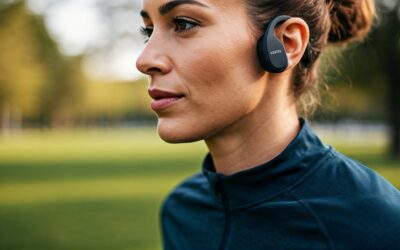
This is a trending category featuring “air conduction” or “bone conduction” technology. They do not go inside your ear at all.
- Pros: Total situational awareness; perfect for outdoor runners who need to hear traffic.
- Cons: Almost zero bass impact and no noise cancellation.
- Top Pick: Shokz OpenFit or Bose Ultra Open Earbuds.
Who Makes the Best Earbud Headphones? (Brand Authority)
In the current market, four titans dominate the landscape. Choosing between them often comes down to which “philosophy” of sound you prefer.
- Sony: The Technology Leader. They focus on features, high-bitrate codecs, and app customization. If you love tweaking EQs, Sony is for you.
- Bose: The Comfort & Silence Specialist. Bose designs for the frequent flyer. Their ear tips (StayHear Max) are arguably the most comfortable for long-haul flights.
- Apple/Beats: The User Experience Masters. Everything just works. Their focus is on the “spatial” experience and seamless hardware-software integration.
- Sennheiser: The Audiophile’s Choice. Sennheiser prioritizes the “Tuning” above all else. Their 7mm TrueResponse transducers offer a level of detail that Sony and Bose sometimes miss.
Practical Buying Advice: How to Choose
When shopping for the best in ear headphones, ignore the marketing fluff and look for these three objective metrics:
Battery Life (Real World)
Don’t just look at the total hours with the case. Look at the “per-charge” time with ANC turned on.
- Average: 5-6 hours.
- Excellent: 8+ hours (Sony WF-1000XM5 or Master & Dynamic MW09).
IP Rating (Durability)
If you plan to sweat or walk in the rain, check the IP code.
- IPX4: Splash-proof (Minimum for gym use).
- IP68: Fully waterproof and dustproof (Jabra Elite 8 Active).
Multipoint Connection
This allows you to connect to two devices simultaneously (e.g., your laptop and your phone). If you work from home, this is a non-negotiable feature for switching from a Zoom call to a phone call.
Comprehensive Comparison Table
| Model | Battery (with ANC) | Water Resistance | Multipoint | Best For |
|---|---|---|---|---|
| Sony WF-1000XM5 | 8 Hours | IPX4 | Yes | Daily Commute |
| Bose QC Ultra | 6 Hours | IPX4 | Yes | Travel/Flying |
| AirPods Pro 2 | 6 Hours | IPX4 | Apple Only | iPhone Users |
| Jabra Elite 8 Active | 8 Hours | IP68 | Yes | Crossfit/Running |
| Sennheiser MTW 4 | 7.5 Hours | IP54 | Yes | Music Lovers |
FAQs: Your Questions Answered
What are the best earbud headphones for small ears?
The LinkBuds S from Sony and the J1 Connect are specifically designed with a smaller chassis. If standard earbuds hurt your ears after 30 minutes, look for models that weigh less than 5 grams per bud.
Are wired earbuds better than wireless in 2024?
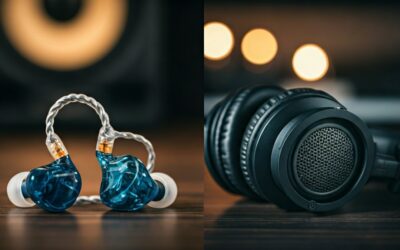
In terms of latency and raw audio fidelity, yes. High-end wired IEMs (In-Ear Monitors) like the Sennheiser IE 600 provide a lossless signal that Bluetooth cannot yet match. However, for 95% of listeners, the convenience of wireless outweighs the slight loss in audio data.
Who makes the best earbud headphones for phone calls?
The Huawei FreeBuds Pro 3 and the Sony WF-1000XM5 lead the pack here. They use bone-conduction sensors and AI noise reduction to isolate your voice from background wind or chatter.
What is the best in ear headphones for side sleepers?
Sleep-specific buds like the Soundcore Sleep A20 are the best choice. They are significantly thinner than standard earbuds, allowing you to lay your head on a pillow without the bud pressing painfully into your ear canal.
Do “open ear” headphones have good bass?
Generally, no. Because open ear headphones do not create a seal in your ear, lower frequencies (bass) escape before they reach your eardrum. If you are a “bass-head,” stick to traditional in-ear models.
**
**
**
**