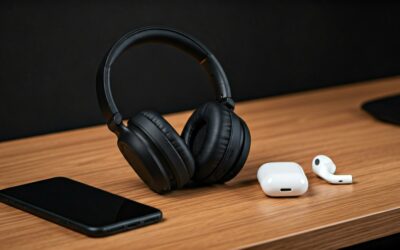

Yes, can headphones cause headaches? The short answer is a definitive yes. Wearing headphones for extended periods can trigger various types of headaches, most commonly external compression headaches caused by physical pressure or tension-related pain from excessive volume and poor ergonomics.
Key Takeaways: How to Prevent Headphone Headaches
If you are in a rush, here is a quick summary of why your headset might be hurting you and how to fix it immediately:

- Clamping Force: Over-ear headphones that are too tight compress the cutaneous nerves, leading to steady, dull pain.
- The 60/60 Rule: Limit volume to 60% and usage to 60 minutes at a time to prevent acoustic strain.
- ANC Sensitivity: Some users experience “pressure” from Active Noise Cancellation (ANC), which the brain interprets as a middle-ear imbalance.
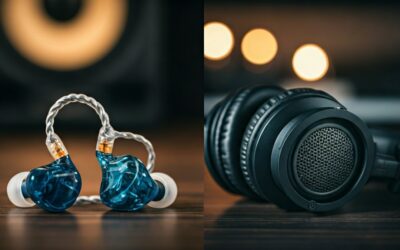
- Fit Matters: Swap out heavy over-ear models for lightweight in-ear monitors (IEMs) or open-back headphones to reduce physical load.
| Cause of Headache | Symptom Description | Quick Solution |
|---|---|---|
| Physical Pressure | Dull ache around temples or ears | Stretch the headband or use softer pads |
| High Volume | Throbbing pain, ringing (Tinnitus) | Lower volume below 85 decibels |
| ANC Technology | Feeling of “ear pressure” or nausea | Turn off ANC or switch to passive isolation |
| Poor Posture | Neck stiffness and base-of-skull pain | Adjust monitor height and take “posture breaks” |
Understanding Why Can Headphones Cause Headaches
To solve the problem, we first need to look at the biological and mechanical reasons why can wearing headphones cause headaches. As someone who has tested hundreds of audio devices, I have found that the issue is rarely the “sound” itself, but rather how the hardware interacts with your anatomy.
External Compression Headaches
This is the most frequent culprit. When a headset has a high clamping force, it puts continuous pressure on the supraorbital and auriculotemporal nerves. This is a clinical condition known as an external compression headache.
It feels like a tight band is being wrapped around your head. If you notice a “dent” in your hair or red marks around your ears after a session, your headphones are likely too tight.
Acoustic Strain and Sound Pressure
When you blast music, the air pressure inside your ear canal increases. Your eardrum and the tiny bones in your middle ear have to work overtime to process these intense vibrations. Over time, this exhaustion manifests as a tension headache.
The “Silent” Pressure of Noise Cancellation
Many people ask, can noise cancelling headphones cause headaches? The answer lies in how ANC works. These headphones emit an “anti-noise” frequency to cancel out background sounds.
For some users, the brain perceives this lack of low-frequency sound as a change in barometric pressure (similar to being in an airplane). This can lead to dizziness, nausea, and localized headaches.
Can Wireless and Bluetooth Headphones Cause Headaches?
A common concern in the digital age is whether can wireless headphones cause headaches due to radiation or electromagnetic fields (EMF). While the World Health Organization (WHO) continues to study long-term effects, the current consensus is that the “headaches” reported from Bluetooth use are often psychological or related to the weight of the batteries.
Wireless headphones are generally heavier than wired ones because they house:
- Built-in Amplifiers
- Lithium-ion Batteries
- Bluetooth Receivers
This extra weight increases the load on your cervical spine. If you lean your head forward while wearing heavy Bluetooth headphones, you are putting up to 60 pounds of pressure on your neck, which leads to cervicogenic headaches.
Do Headphones Cause Headaches? A Look at Different Types
Not all headphones are created equal. Depending on your sensitivity, one style might be significantly better for you than another.
Over-Ear Headphones (Circumaural)
These offer the best sound quality but the highest risk of compression headaches. If the padding is too firm, it presses against the temporal bone.
- Expert Tip: Look for headphones with memory foam ear cushions and an adjustable suspension headband to distribute weight evenly.
On-Ear Headphones (Supra-aural)
These are often the worst offenders. Because they sit directly on the cartilage of the ear, they restrict blood flow and compress the outer ear. I personally find that on-ear models cause pain within 30 minutes of use.
In-Ear Headphones (Earbuds)
While they eliminate head pressure, can headphones give you headaches if they go inside the ear? Yes, through ear canal irritation. If the silicone tips are too large, they create a vacuum effect that causes “internal” pressure headaches.
Step-by-Step Guide: How to Stop Headphone Headaches
If you love your music but hate the pain, follow this professional protocol to fix the issue.
Step 1: Optimize the Physical Fit
Before buying a new pair, try to “break in” your current ones.
- Place your headphones over a stack of books slightly wider than your head.
- Leave them overnight to slightly stretch the metal or plastic headband.
- Ensure the ear cups are centered; if they sit too low, they pull on the top of your head.
Step 2: Calibrate Your Volume Levels
Most smartphones have a “Headphone Safety” setting.
- Go to your settings and set a Volume Limit of 85 dB.
- Use an app like Decibel X to measure how loud your headphones actually are.
- If you can’t hear someone talking to you from three feet away, your volume is too high.
Step 3: Implement the 20-20-20 Rule (For Audio)
Just as we use this rule for eyes, use it for ears. Every 20 minutes, take your headphones off for 20 seconds. Every hour, take a 10-minute break to let your tympanic membrane (eardrum) rest.
Step 4: Check Your Ergonomics
If you are gaming or working, your headache might be coming from your neck.
- Ensure your chin is tucked and your ears are aligned with your shoulders.
- If you find yourself hunching, switch to lightweight earbuds or external speakers for a few hours.
When Should You See a Doctor?
While most headphone-induced pain is temporary, you should seek professional advice if you experience:
- Sudden Hearing Loss: Even if it’s temporary.
- Chronic Tinnitus: A persistent ringing or buzzing in the ears.
- Vertigo: Feeling like the room is spinning after removing your headset.
- Sharp, Stabbing Pain: Pain that persists for hours after you stop wearing headphones.
Frequently Asked Questions
Can Bluetooth headphones cause headaches more than wired ones?
There is no clinical evidence that Bluetooth signals cause headaches. However, Bluetooth headphones are typically heavier due to internal batteries, which can lead to increased neck strain and physical tension.
Why do my ears feel “stuffy” after wearing noise-cancelling headphones?
This is often called “ANC Pressure.” The noise-canceling circuit filters out low-frequency sounds, tricking your brain into thinking there is a pressure imbalance between your inner and outer ear.
How do I know if my headphones are too tight?
If you feel a dull ache at the temples, see red indentations on your skin, or feel immediate relief the second you take them off, the clamping force is too high.
Can wearing headphones cause headaches if I wear glasses?
Yes. Headphones often press the stems of your glasses into your temples. To fix this, look for “glasses-friendly” ear cushions that feature a relief cut-out for eyewear.
Are open-back headphones better for headaches?
Generally, yes. Open-back headphones allow air and sound to escape, reducing the “trapped” air pressure sensation. They also tend to be lighter and more breathable, preventing heat build-up.