
Can Headphones Cause Vertigo? The Short Answer
Yes, headphones can cause vertigo, dizziness, and a sense of imbalance, particularly if used at high volumes or for extended periods. This phenomenon occurs because headphones can affect the vestibular system located in your inner ear, which is responsible for maintaining balance. Factors such as excessive sound pressure, Active Noise Cancellation (ANC) technology, and even physical pressure on the ear canal can send conflicting signals to your brain, leading to a “spinning” sensation.
Key Takeaways: Vertigo and Headphone Use
If you are in a hurry, here are the essential facts regarding how headphones impact your equilibrium:
- Primary Cause: Overstimulation of the inner ear (vestibular system) by high decibel levels.
- ANC Impact: Active Noise Cancellation can create a sensation of pressure that triggers dizziness in sensitive individuals.
- The 60/60 Rule: Experts recommend listening at 60% volume for no more than 60 minutes at a time.
- Ear Canal Pressure: Tight-fitting in-ear monitors (IEMs) can create a vacuum effect, disrupting the eardrum’s position.
- Immediate Fix: Stop use immediately, hydrate, and focus on a stationary object if you feel the room spinning.
Understanding the Connection: How Headphones Disrupt Balance
To understand why can headphones cause vertigo, we must look at the anatomy of the ear. Your ear isn’t just for hearing; it contains the semicircular canals filled with fluid. When you move, this fluid shifts, telling your brain where you are in space.
When you wear headphones, several factors can disrupt this delicate balance:
- Acoustic Overload: Extremely loud music creates intense vibrations. These vibrations can “leak” into the balance portion of the inner ear, causing a condition known as Tullio Phenomenon, where sound induces vertigo.
- Pressure Changes: Closed-back headphones and earbuds seal the ear canal. This traps air and increases pressure against the tympanic membrane (eardrum), which can indirectly irritate the vestibular nerves.
- Neural Fatigue: Listening to complex audio for hours causes the brain to work harder to process sound, leading to a state of sensory overload that manifests as lightheadedness.
The Role of the Vestibular System
The vestibular system is your body’s internal gyroscope. When headphones provide “fake” spatial cues—such as 3D spatial audio—your eyes tell your brain you are sitting still, but your ears perceive movement. This sensory conflict is the exact same mechanism that causes motion sickness.
Can Noise Cancelling Headphones Cause Vertigo?
A very specific question often arises: can noise cancelling headphones cause vertigo? The answer is a resounding yes for a significant portion of the population.
Active Noise Cancellation (ANC) works by using microphones to pick up external low-frequency noise and then producing an “anti-noise” wave to cancel it out. While this is great for focus, it has side effects:
- The “Pressure” Sensation: Many users report a feeling of “eardrum suck” or a heavy pressure in their ears when ANC is turned on.
- False Signals: The brain may interpret the lack of low-frequency sound as a change in atmospheric pressure, similar to a plane taking off.
- Vestibular Trigger: For those prone to vestibular migraines, this artificial silence and pressure can trigger a full-blown vertigo episode.
In my experience testing dozens of flagship ANC models, the “closeness” of the soundstage in high-end noise-canceling sets is the most common culprit for post-listening nausea.
Step-by-Step Guide: How to Prevent Vertigo While Using Headphones
If you frequently experience dizziness after using your gear, follow this professional protocol to mitigate the risk.
Step 1: Implement the 60/60 Rule
Audiologists worldwide suggest the 60/60 rule as the gold standard for ear health.
- Set your device volume to no more than 60% of its maximum.
- Remove your headphones every 60 minutes to allow your inner ear to “reset” its pressure levels.
Step 2: Calibrate Your ANC Settings
If you use noise-canceling headphones, don’t always use the “Maximum” setting.
- Open your headphone’s companion app (e.g., Sony Headphones Connect or Bose Music).
- Adjust the ANC level to “Ambient” or “Low” when in quiet environments.
- This reduces the intensity of the “anti-noise” waves hitting your eardrum.
Step 3: Switch Your Headphone Type
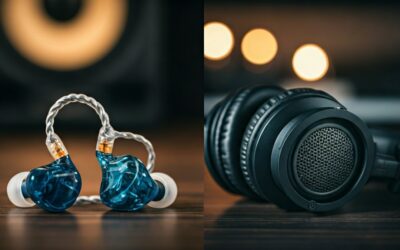
Not all headphones affect the ear the same way. If you use In-Ear Monitors (IEMs), the physical seal might be the problem.
- Try Open-Back headphones. These allow air to move freely, preventing pressure buildup.
- Consider Bone Conduction headphones (like Shokz). These bypass the eardrum entirely by sending vibrations through the cheekbones, which is much safer for those with vestibular sensitivity.
Step 4: Equalize Your Audio
High-frequency sounds (treble) and heavy sub-bass can be more taxing on the inner ear.
- Use an Equalizer (EQ) to roll off the extreme highs and lows.
- A “Flatter” sound profile reduces the mechanical stress on the cochlea and vestibular system.
Comparing Headphone Types and Vertigo Risk
| Headphone Type | Pressure Level | Vertigo Risk | Best Use Case |
|---|---|---|---|
| In-Ear (IEMs) | High (Vacuum seal) | High | Commuting, short bursts |
| On-Ear | Moderate | Medium | Casual listening |
| Over-Ear (Closed) | Moderate | Medium | Studio work, office |
| Over-Ear (Open) | Low (Breathable) | Low | Critical listening at home |
| Bone Conduction | None (External) | Very Low | Running, vestibular issues |
Symptoms to Watch Out For
It is important to distinguish between simple fatigue and a serious vestibular issue caused by headphones. If you experience the following, stop use immediately:
- True Vertigo: The sensation that the room is spinning or tilting.
- Tinnitus: A persistent ringing or buzzing in the ears after taking headphones off.
- Disequilibrium: Feeling “drunk” or unsteady on your feet.
- Aural Fullness: The feeling that your ears are “clogged” or underwater.
- Hyperacusis: Sensitivity to normal everyday sounds.
Expert Perspective: Why the Fit Matters
As someone who has consulted with audio engineers, the clamping force of a headset is often overlooked. If a headset is too tight, it can compress the temporal bone and the temporomandibular joint (TMJ).
Because the ear canal is situated right behind the jaw joint, excessive pressure here can lead to inflammation. This inflammation can affect the Eustachian tube, which regulates ear pressure. If the tube cannot open and close correctly, you will feel dizzy. Always ensure your headphones have plush pads and an adjustable headband that doesn’t “crush” your skull.
Actionable Advice for Sufferers
If you are currently feeling dizzy from headphone use, follow these steps to recover:
- Grounding: Sit on the floor. Feeling the solid ground helps the brain override the false signals from the inner ear.
- Hydration: Inner ear fluid balance is heavily dependent on hydration. Drink a glass of water immediately.
- Visual Fixation: Pick one unmoving object across the room and stare at it for 2 minutes.
- Jaw Release: Gently massage the area just in front of your ears to release any tension caused by the headphone’s clamping force.
- Consult a Professional: If vertigo persists for more than 24 hours, see an ENT (Ear, Nose, and Throat) specialist or a Vestibular Rehabilitation Therapist.
Frequently Asked Questions (FAQs)
Can noise cancelling headphones cause vertigo even if the music is off?
Yes. Even without music, the ANC technology emits a continuous anti-noise signal. This creates the “pressure” sensation that can disturb the vestibular system and cause dizziness in sensitive users.
How long does headphone-induced vertigo last?
In most cases, the dizziness should fade within 15 to 30 minutes of removing the headphones. However, if you have triggered a vestibular migraine, the symptoms could last for several hours or even a day.
Are earbuds worse for vertigo than over-ear headphones?
Generally, yes. Earbuds (IEMs) insert directly into the ear canal and create an airtight seal. This increases the direct sound pressure on the eardrum and prevents air pressure equalization, making them more likely to cause balance issues.
Can spatial audio or 360-degree sound cause dizziness?
Absolutely. Spatial audio uses software to mimic how sound bounces off walls and ears. This can create a “mismatch” where your brain thinks sound sources are moving around you while your body is stationary, leading to motion sickness.
What is the safest type of headphone for someone prone to vertigo?
Bone conduction headphones are the safest choice. Since they do not sit inside or over the ear canal, they do not create pressure changes or block ambient sounds, leaving the vestibular system undisturbed.