
Can You Wear Headphones in an MRI? The Quick Answer
The short answer is no, you cannot wear your personal headphones (like AirPods, Bose, or Sony wireless headsets) inside an MRI machine. Standard headphones contain metal components and permanent magnets that are extremely dangerous near the powerful magnetic field of an MRI scanner, potentially causing hardware failure, image distortion, or even serious ear burns.
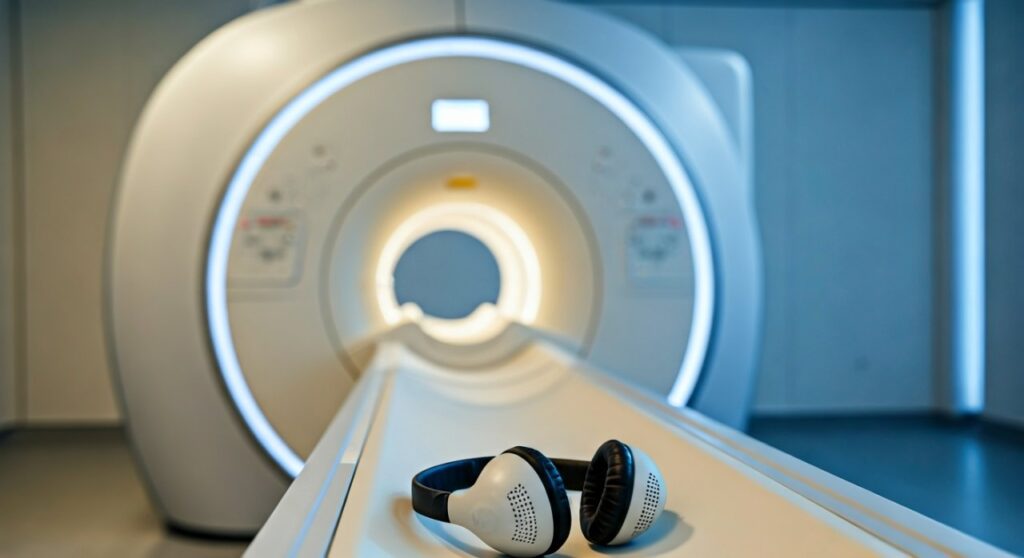
However, most diagnostic imaging centers provide specialized MRI-safe pneumatic headphones. These devices use air pressure rather than electricity to transmit sound, allowing you to listen to music or talk to the radiologic technologist safely during your procedure.
Key Takeaways: Safety and Sound in the MRI Suite
If you are preparing for a scan, keep these essential points in mind regarding ear protection and audio:
- Strict Prohibition: Never bring Bluetooth, wired, or noise-canceling consumer electronics into the Zone IV (the magnet room).
- Safety Risk: Standard headphones can become projectiles or cause RF heating, leading to skin burns.
- Facility Provided: Clinics offer MRI-compatible headsets made of plastic and medical-grade tubing.
- Noise Levels: MRI machines produce sounds reaching 120 decibels (dB); some form of ear protection is mandatory.
- Communication: MRI-safe headphones allow the technician to give you breathing instructions or check on your comfort.
Why Personal Headphones Are a Hazard in the MRI Room
The Magnetic Resonance Imaging (MRI) environment is one of the most controlled spaces in a hospital. To understand why you can’t wear your favorite Beats or Sennheisers, you have to look at the physics of the static magnetic field (B0) and Radiofrequency (RF) pulses.
The Missile Effect
Most consumer headphones contain ferromagnetic materials like iron, nickel, or cobalt. The MRI magnet is always “on” and is roughly 30,000 to 60,000 times stronger than the Earth’s magnetic field. If you wear metal-containing headphones, the magnet can pull them off your head with enough force to turn them into a dangerous missile, potentially injuring you or damaging the $3 million scanner.
Radiofrequency (RF) Heating
MRI machines use RF pulses to tip hydrogen protons in your body. Metal objects, including the thin copper wiring in standard headphones, can act as antennae. These wires can absorb the RF energy and heat up rapidly. There have been documented cases of patients receiving second and third-degree burns from non-approved wires touching their skin during a scan.
Image Artifacts
Even if the headphones don’t fly off or burn you, the metal will cause magnetic susceptibility artifacts. This creates a “black hole” or distortion in the digital image, making it impossible for the radiologist to provide an accurate diagnosis.
Electronic Malfunction
The intense electromagnetic interference (EMI) will instantly fry the delicate circuitry in active noise-canceling (ANC) headphones and Bluetooth chips. Your expensive electronics will likely be rendered useless after just a few seconds of exposure.
How MRI-Safe Headphones Actually Work
Since the “thumping” and “clanging” of the gradient coils can be as loud as a jet engine, clinics must provide an alternative. This is where Pneumatic Audio Systems come into play.
| Feature | Standard Headphones | MRI-Safe Pneumatic Headphones |
|---|---|---|
| Material | Metal, Magnets, Copper Wire | Plastic, Vinyl, Rubber |
| Sound Transmission | Electrical signals through wire | Air pressure through hollow tubes |
| Connectivity | Bluetooth / 3.5mm Jack | Acoustic transducers outside the room |
| Noise Protection | Electronic Noise Canceling | Physical barrier + Earplugs |
| Safety Status | MRI Unsafe | MRI Conditional |
Unlike your home speakers, MRI-safe headphones operate like a stethoscope. A speaker located in a shielded cabinet outside the magnet room pushes air through long, flexible plastic tubes. This air vibrates a diaphragm inside the ear cup on your head, creating sound without any metal or electricity near your ears.
Step-by-Step: How to Use Headphones During Your Scan
If you want to ensure the best experience, follow this protocol when you arrive at the imaging center:
Step 1: Complete the Screening Form
Be honest about any metal in your body, but also mention if you have a high sensitivity to noise. This alerts the MRI Technologist to prioritize the best-fitting MRI-safe headset for you.
Step 2: Request Music Options
Most modern systems are integrated with Pandora, Spotify, or iHeartRadio. You can often ask for a specific genre—like Classical, Jazz, or Lo-fi—to help lower your heart rate and combat claustrophobia.
Step 3: Proper Placement
The technologist will place the pneumatic headphones over your ears. If you are also wearing foam earplugs (which is recommended for double protection), the volume will be turned up higher so you can still hear the music clearly.
Step 4: Test the Intercom
Before the table slides into the bore, the technician will speak to you through the headphones. Ensure you can hear their voice clearly. This is vital for “breath-hold” instructions during Abdominal MRIs or Cardiac scans.
Step 5: Stay Still
Even though you are listening to music, you must remain perfectly still. Moving your head to the beat of a song will cause motion blur, potentially requiring a re-scan of the entire sequence.
The Benefits of Listening to Music in the MRI
Wearing the provided MRI-compatible audio gear isn’t just about entertainment; it is a clinical tool for patient comfort and data quality.
- Anxiety Reduction: Studies show that patients who listen to music during a scan report lower levels of cortisol and are less likely to experience panic attacks in the confined space.
- Time Perception: Music helps the 30-45 minute scan time seem to pass much faster.
- Communication Bridge: The headphones act as a two-way communication channel. If you feel uncomfortable, you can speak, and the tech will hear you through the built-in bore microphone.
- Hearing Protection: Prolonged exposure to 100+ dB without protection can lead to temporary tinnitus or hearing shifts. The headphones serve as a physical earmuff.
What If You Can’t Wear Headphones?
In some cases, specifically during a Head MRI or Cervical Spine MRI, a plastic “cage” called a Head Coil is placed over your face. This device is an antenna used to capture high-resolution images of the brain.
Sometimes, the Head Coil is too tight to accommodate large pneumatic headphones. In these scenarios, the technologist will provide:
- Slim-profile Earplugs: High-grade foam plugs that offer up to 30dB NRR (Noise Reduction Rating).
- MRI-Safe Earbuds: Small, non-electronic plastic inserts connected to the same pneumatic tubes.
- Visual Systems: Some high-end facilities use MRI-safe goggles or mirrors that allow you to watch movies or nature scenes instead of listening to music.
Expert Advice for a Stress-Free Scan
As someone who has spent years in clinical environments, I recommend a “double-up” strategy. Ask the technician for foam earplugs and the pneumatic headphones to be placed over them.
This combination provides the maximum decibel reduction while still allowing the music to vibrate through your ear canal. If you have a favorite playlist, ask the staff if they can plug in your phone outside the room in the control booth—many centers are happy to accommodate this if their system allows for an auxiliary input.
Frequently Asked Questions (FAQs)
Can I wear my AirPods if I promise not to turn them on?
No. Even if the AirPods are off, they contain lithium-ion batteries and tiny magnets. These will react to the MRI scanner’s magnetic field, causing them to heat up or be pulled toward the magnet, potentially causing injury.
Do MRI headphones sound as good as my home theater?
Unfortunately, no. Because the sound is traveling through air tubes, it often sounds “hollow” or lacks bass. However, the goal is distraction and protection, not high-fidelity audio.
Are there any “wireless” MRI headphones?
There are specialized Fiber Optic audio systems used in research settings. These use light signals to transmit sound and are entirely non-metallic. However, they are very expensive and are not yet standard in most local hospitals.
What happens if I accidentally wear my headphones into the MRI?
If you walk into Zone IV with headphones, you will immediately feel a strong tugging sensation. The MRI Technologist should stop you before you reach the bore. If they reach the magnet, they will likely be destroyed, and the scan will be stopped to check for safety hazards.
Can I wear my hearing aids during an MRI?
No. Hearing aids must be removed before entering the MRI room. The magnetic field will permanently damage the delicate microphones and processors in the device.
**
**
**
**