

Can You Wear Headphones While Riding a Bike? The Essential Safety and Legal Guide
You can technically wear headphones while riding a bike, but your ability to do so legally and safely depends entirely on your local laws and the type of audio equipment you choose. In many regions, wearing dual earbuds is strictly prohibited to ensure cyclists maintain situational awareness of traffic, sirens, and pedestrians. To ride safely, experts recommend using bone conduction headphones, keeping one ear open, or utilizing transparency mode to stay connected to your environment.
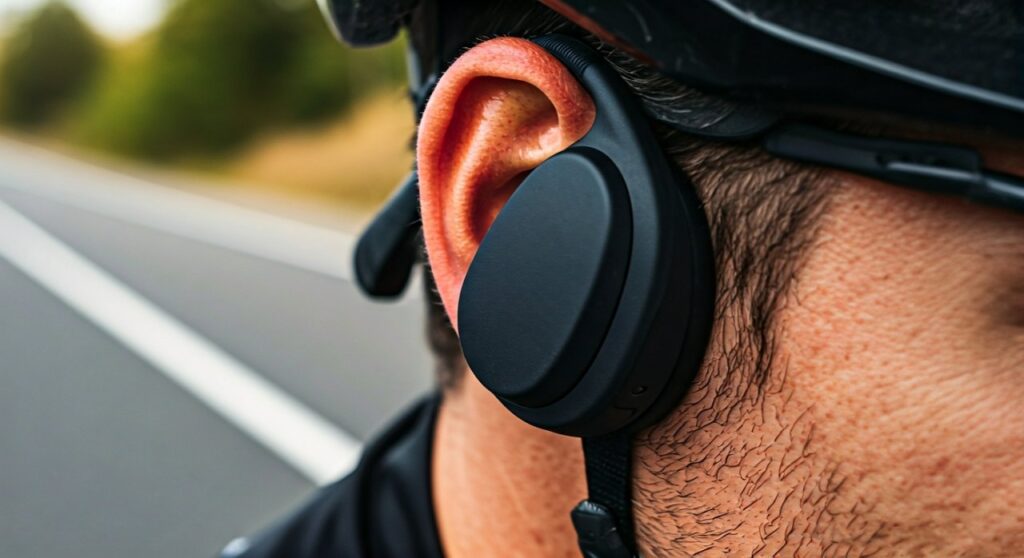
While the rhythm of your favorite playlist can boost your pedaling cadence, blocking out the world around you is a significant safety risk. This guide breaks down the legalities, the best gear for cyclists, and a step-by-step protocol for staying safe while enjoying your audio.
Key Takeaways: Riding Safely with Audio
- Legal Check: Always verify state or local ordinances; some areas ban all headphones, while others allow one earbud.
- Audio Choice: Bone conduction headphones are the gold standard for cycling as they leave the ear canal completely open.
- Volume Control: Never set volume so high that you cannot hear a car horn or a person speaking nearby.
- Tech Features: If using earbuds, look for Ambient Mode or Transparency Mode to pipe in external sounds.
- One-Ear Rule: If using traditional buds, keep the “traffic-side” ear (usually the left in the US/UK) open.
Is It Illegal to Wear Headphones While Riding a Bike?
One of the most common questions cyclists ask is: is it illegal to wear headphones while riding a bike? The answer isn’t a simple yes or no because it varies significantly by jurisdiction.
Understanding Regional Laws
In the United States, laws are determined at the state level. For example, in California and Florida, it is illegal to operate a bicycle while wearing headsets or earplugs in both ears. However, you are typically allowed to wear a single earbud in one ear.
In contrast, states like New York have specific restrictions where cyclists must keep at least one ear free. Across the pond in the United Kingdom, there is no specific law making it illegal to ride a bike with headphones, but you could be charged with “careless cycling” if the police believe the headphones contributed to an accident.
Why the Laws Exist
Legislators focus on auditory cues. As a cyclist, you rely on your ears to detect:
- Approaching vehicles from your blind spots.
- Emergency sirens (police, fire, ambulance).
- Mechanical issues with your bike (chain clicks, tire rubbing).
- Verbal warnings from other trail users (“On your left!”).
The Safety Risks: Why Situational Awareness Matters
When you ask, “can you ride a bike with headphones?” the safety aspect is more critical than the legal one. Research into auditory masking suggests that loud music can delay a cyclist’s reaction time to road hazards by several seconds.
The Danger of Noise Cancellation
Modern Active Noise Cancellation (ANC) is a miracle for air travel but a hazard for cycling. ANC is designed to phase out low-frequency sounds—exactly the frequency produced by car engines and rolling tires. Wearing Noise-Canceling Headphones while cycling creates a “sensory vacuum” that significantly increases the risk of collisions.
Expert Insight: The OODA Loop
In professional cycling circles, we talk about the OODA Loop (Observe, Orient, Decide, Act). Sound is the fastest way to “Observe” a vehicle you cannot see. If you remove the auditory input, your “Orient” phase is delayed, which can be the difference between a close call and a serious injury.
Comparative Table: Audio Options for Cyclists
| Gear Type | Pros | Cons | Safety Rating |
|---|---|---|---|
| Bone Conduction | Ears are 100% open; hear everything. | Lower bass response; wind noise. | Excellent |
| Single Earbud | Legal in most states; cheap. | Lacks stereo depth; can fall out. | Good |
| Transparency Mode | Electronic passthrough of sound. | Battery drain; wind can distort mic. | Fair |
| Over-Ear Headphones | High fidelity; comfortable. | Extremely dangerous; blocks all sound. | Danger |
| Bluetooth Speaker | Full awareness; no ear blockage. | Can annoy others; bulky. | Excellent |
How to Safely Wear Headphones While Cycling: A Step-by-Step Guide
If you decide that you can you wear headphones while riding a bike in your area, follow these steps to minimize risk.
Step 1: Verify Local Legislation
Before heading out, search for “[Your State/City] bicycle headphone laws.” Ensure you aren’t risking a fine. If the law says one ear only, choose your non-traffic side ear for the bud.
Step 2: Choose “Open-Ear” Technology
Invest in Bone Conduction Headphones like those from Shokz (formerly AfterShokz). These sit on your cheekbones and vibrate the inner ear directly, leaving your ear canal wide open to hear the environment.
Step 3: Configure Your Device Settings
If you are using one earbud, go into your smartphone settings:
- iOS/Android: Search for “Mono Audio” in Accessibility.
- Why? This merges left and right channels into one earbud so you don’t miss half of the song or podcast.
Step 4: The “Conversation” Volume Test
Before you start pedaling, set your volume. You should still be able to hear someone talking to you at a normal volume from three feet away. If you can’t hear them, your music is too loud for the road.
Step 5: Disable Noise Cancellation
If your earbuds have ANC, turn it off. Switch to Transparency or Ambient mode. This uses external microphones to pump road noise back into your ears.
Top Recommended Audio Gear for Cyclists
As an experienced rider who has logged thousands of miles, I’ve tested nearly every configuration. Here are the top picks for those wondering is it legal to wear headphones while cycling and how to do it right.
Shokz OpenRun Pro (Bone Conduction)
This is the industry standard. Because they don’t cover your ears, you remain fully aware of your surroundings. They are sweat-proof and have a long battery life, making them perfect for long-distance road cycling.
Sony LinkBuds (Open-Ring Design)
Unlike traditional buds, the Sony LinkBuds have a literal hole in the middle. This allows physical sound to pass through naturally while you listen to your media. They are a great middle ground between bone conduction and traditional buds.
Bose Frames (Audio Sunglasses)
These combine UV protection with tiny speakers near your temples. They provide a “personal bubble” of sound without anything touching or entering your ears.
The Environmental Factor: Where You Ride Matters
The answer to “can you ride a bike with headphones” changes based on your terrain.
- Busy Urban Centers: Avoid headphones entirely or use a small Bluetooth handlebar speaker. The density of unpredictable traffic requires 100% of your senses.
- Isolated Gravel Paths: If there are no cars and few people, lower-risk audio (like a single bud) is generally acceptable.
- Group Rides: It is considered poor etiquette (and dangerous) to wear headphones during a group ride. You need to hear the “calls” of the riders around you (e.g., “Car up,” “Hole,” “Slowing”).
Frequently Asked Questions (FAQs)
Is it illegal to wear headphones while riding a bike in the UK?
Currently, it is not specifically illegal in the UK to wear headphones while cycling. However, the Highway Code advises against it. If you are involved in an accident, wearing headphones could be used as evidence of “careless cycling,” leading to fines or legal liability.
Can I wear AirPods while cycling?
Yes, but it is highly recommended to use AirPods Pro or AirPods Max in Transparency Mode. If you have standard AirPods, consider wearing only one (usually the right ear in countries that drive on the right) to keep your “traffic ear” open to road sounds.
Do bone conduction headphones count as “headphones” in restricted states?
This is a legal gray area. Most laws in states like California specify “earplugs” or “headsets” that cover or go into the ear. Since bone conduction leaves the ear canal open, many cyclists argue they do not violate the letter of the law. However, a strict officer might still issue a citation.
Does wearing headphones affect my balance on a bike?
For most people, no. However, very tight-fitting earbuds or over-ear headphones can occasionally affect the pressure in the inner ear (the vestibular system), which governs balance. If you feel dizzy, remove the headphones immediately.
What is the safest way to listen to music on a bike?
The safest method is using a Bluetooth speaker mounted to your handlebars or frame. This ensures your ears are completely unobstructed, allowing for maximum situational awareness while still enjoying your music or navigation prompts.