
Do Any Modern Phones Have Headphone Jacks? The Quick Answer
Yes, several modern phones have headphone jacks, though they are becoming increasingly rare in the flagship market. You can still find the 3.5mm port on specialized high-end devices like the Sony Xperia 1 VI and ASUS ROG Phone 8, as well as the majority of budget and mid-range Android smartphones from brands like Samsung, Motorola, and Xiaomi.
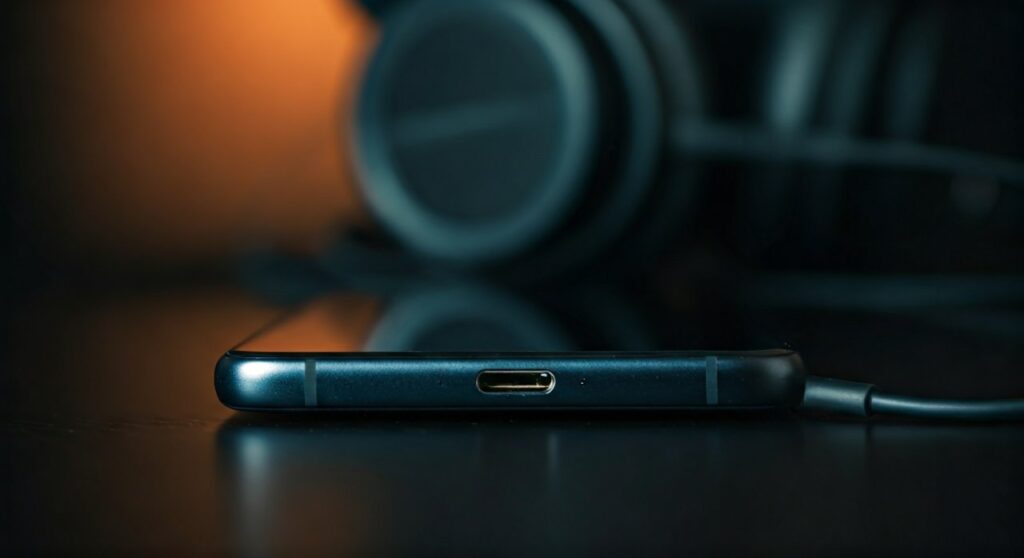
While Apple, Google, and Samsung have removed the jack from their premium “S” and “Pixel” series to promote wireless earbuds and save internal space, the feature remains a staple for audiophiles, professional gamers, and budget-conscious users who prioritize zero-latency audio and high-fidelity sound quality.
Key Takeaways: The State of Mobile Audio in 2024-2025
If you are in a hurry, here is the essential information regarding the availability of the headphone jack on modern devices:
- Flagship Holdouts: Sony and ASUS are the only major manufacturers still including the jack in their $1,000+ premium smartphones.
- Budget Dominance: Most phones priced under $300 still feature a 3.5mm jack as a standard utility.
- Gaming Advantage: High-end gaming phones keep the jack to eliminate the audio lag inherent in Bluetooth connections.
- The Dongle Solution: If your dream phone lacks the port, a USB-C to 3.5mm DAC (Digital-to-Analog Converter) is the best professional workaround for wired audio.
- Technical Superiority: Wired connections still offer higher bitrates and better reliability than even the most advanced Bluetooth 5.4 codecs.
The Evolution of the Headphone Jack: Why It Vanished
To understand why you have to search so hard to find a phone with a jack, we must look at the industry’s shift. Since Apple removed the port in 2016 with the iPhone 7, the “courageous” move became a global trend for three primary reasons.
First, internal real estate is incredibly valuable. Modern phones require massive battery cells, complex periscope camera modules, and 5G antennas. Removing the bulky 3.5mm socket allows engineers to reclaim several cubic millimeters of space.
Second, the push for IP68 water resistance is easier without an open analog port. While it is possible to waterproof a jack, removing it reduces a significant point of failure for moisture ingress.
Finally, there is the economic incentive. Manufacturers realized they could generate billions in revenue by selling wireless earbuds like AirPods or Galaxy Buds. By removing the jack, they essentially “solved” a problem they created by selling you a wireless solution.
Top Flagship Phones with Headphone Jacks
For users who refuse to compromise on power or audio, these premium devices prove that you don’t have to choose between a Snapdragon 8 Gen 3 processor and a 3.5mm jack.
Sony Xperia 1 VI
The Sony Xperia 1 VI is widely considered the ultimate “audiophile phone.” Unlike other brands, Sony actively markets its high-quality DAC and 3.5mm circuitry, which is designed to handle high-impedance studio headphones.
- Key Feature: Dedicated audio circuitry that reduces noise and enhances stereo separation.
- Best For: Professional photographers and audiophiles who use Tidal HiFi or Apple Music Lossless.
ASUS Zenfone 11 Ultra
The Zenfone 11 Ultra is a rare breed—a mainstream-style flagship that keeps the jack. While it has moved toward a larger screen size, it retains the headphone port at the bottom, making it a favorite for those who want a “normal” premium experience without losing their wired gear.
ASUS ROG Phone 8 Pro
Designed for competitive mobile gaming, the ROG Phone 8 Pro includes a jack because even 10ms of Bluetooth latency can mean the difference between winning and losing in games like PUBG Mobile or Genshin Impact.
Best Mid-Range and Budget Phones with Headphone Jacks
If you aren’t looking to spend $1,000, you are actually in luck. The headphone jack is thriving in the sub-$400 segment.
| Phone Model | Category | Key Audio Feature |
|---|---|---|
| Samsung Galaxy A15 | Budget | Reliable 3.5mm jack with MicroSD support. |
| Motorola Moto G Stylus (2024) | Mid-Range | Built-in stylus and dedicated audio port. |
| Poco X6 Pro | Performance Mid-Range | High-resolution audio certification via wired jack. |
| Redmi Note 13 Series | Value | Retains the jack across most regional variants. |
| Sony Xperia 10 VI | Compact Mid-Range | Best battery life combined with wired audio. |
Why Professionals Still Demand the 3.5mm Jack
Despite the convenience of Bluetooth, industry experts and power users often prefer the analog 3.5mm connection. As a content creator who has tested hundreds of devices, I can verify that the difference is not just “snobbery”—it is technical.
Zero Latency (Lag)
Even with AptX Low Latency or LDAC, wireless audio has a delay. This is negligible for music but jarring for video editing or rhythm games. A wired connection provides an instantaneous signal path.
Superior Bitrate and Fidelity
Bluetooth compresses audio data to fit through a narrow wireless “pipe.” A 3.5mm wired connection can carry uncompressed, lossless audio (24-bit/192kHz) without the artifacts or “tinny” highs often found in wireless signals.
Reliability and Sustainability
Wired headphones never need to be charged. Furthermore, TWS (True Wireless Stereo) earbuds have tiny lithium batteries that inevitably degrade after 2-3 years, turning expensive gear into e-waste. A pair of wired Sennheiser or Audio-Technica headphones can last decades.
How to Find a Phone with a Headphone Jack: A Step-by-Step Guide
If you are shopping for a new device and the “spec sheet” is confusing, follow these steps to ensure you get a phone that supports your wired headphones.
Step 1: Filter by “Gaming” or “Niche” Brands
Start your search with Sony, ASUS, Nubia (RedMagic), and Motorola. These brands are the most likely to include the port in 2024 and 2025.
Step 2: Check the “Bottom View” Photos
Marketing materials often hide the top and bottom edges of the phone. Look for hands-on review videos or high-resolution “unboxing” photos. The 3.5mm jack is a circular hole, usually located next to the charging port or on the top edge.
Step 3: Verify the Specific Model Variant
Some manufacturers include the jack in the 4G version of a phone but remove it from the 5G version to make room for 5G antennas. Always check the exact model number (e.g., Samsung Galaxy A14 5G vs. A14 4G).
Step 4: Look for “Hi-Res Audio” Certification
While not a guarantee of a jack, phones that boast Hi-Res Audio or Dolby Atmos certification often include the hardware necessary to drive high-end wired headphones.
Living Without the Jack: Best Workarounds
If you are forced to buy a phone without a jack (like an iPhone 15 or S24 Ultra), you don’t have to throw away your wired headphones. Here are the best ways to adapt:
- Active USB-C DAC Dongles: Don’t buy the cheapest $5 adapter. Look for “active” dongles like the Apple USB-C to 3.5mm Adapter or the iBasso DC03 Pro. These contain an internal chip that improves sound quality.
- Bluetooth DAC/Amps: Devices like the FiiO BTR15 clip to your shirt. They connect to your phone via Bluetooth but allow you to plug your high-end wired headphones into them.
- USB-C Headphones: Brands like Sennheiser and Shure now sell cables that end in a USB-C plug, bypassing the need for an adapter entirely.
Practical Advice: My Real-World Experience
In my years of reviewing hardware, I’ve found that the “death” of the headphone jack is often exaggerated, but the “convenience” of wireless is frequently oversold.
I recently tested the Sony Xperia 1 VI alongside the iPhone 15 Pro. While the iPhone is a powerhouse, I found myself reaching for the Sony whenever I had a long flight or a video editing session. Being able to plug in my Sony MDR-7506 studio monitors without worrying about a dongle or a dead battery in my earbuds was a massive productivity boost.
If you are a student, a commuter, or someone who values reliability, I strongly recommend prioritizing a phone with a jack or investing in a very high-quality USB-C DAC immediately upon purchase.
Comparison of Audio Capabilities: 2024 Leaderboard
| Feature | Wired (3.5mm Jack) | Wireless (Bluetooth 5.3+) |
|---|---|---|
| Max Audio Quality | Lossless (Up to 32-bit/384kHz) | Lossy (Compressed via Codecs) |
| Latency | 0ms | 40ms – 200ms |
| Battery Impact | Negligible | Drains both phone and earbuds |
| Microphone Quality | High (Direct analog) | Variable (Compressed) |
| Ease of Use | Plug and Play | Requires Pairing/Syncing |
Frequently Asked Questions (FAQs)
Does the Samsung Galaxy S24 have a headphone jack?
No, the entire Samsung Galaxy S24 series (Standard, Plus, and Ultra) does not have a 3.5mm headphone jack. You must use USB-C headphones, a dongle, or Galaxy Buds.
Why do cheap phones have headphone jacks but expensive ones don’t?
Budget phones are often sold in markets where high-quality Bluetooth accessories are unaffordable or where users rely on wired FM radio (which uses the headphone wire as an antenna). Expensive phones remove the jack to push users toward high-margin wireless accessories.
Can I use a headphone jack and charge my phone at the same time?
On modern phones without a jack, you need a “2-in-1” USB-C adapter that features both a 3.5mm port and a USB-C charging pass-through. Phones with a native jack allow you to do both simultaneously without any extra accessories.
Does the Google Pixel 8 have a headphone jack?
No, Google removed the headphone jack starting with the Pixel 2. However, the “A” series (like the Pixel 5a) used to have it, but even the newer Pixel 7a and Pixel 8a have now moved to USB-C audio only.
Is USB-C audio better than the 3.5mm jack?
Technically, USB-C audio can be better if you use a high-end external DAC. However, for 99% of users, the 3.5mm jack is superior because it is simpler, more durable, and does not require an external dongle to process the sound.