
The Short Answer: Do Binaural Beats Work Without Headphones?
To get straight to the point: No, binaural beats do not work as intended without headphones. For the brain to perceive a binaural beat, it must receive two distinct frequencies—one in the left ear and one in the right ear—simultaneously. When you use speakers, the sound waves mix in the air before reaching your ears (a phenomenon called acoustic crosstalk), which prevents the brain from creating the “third tone” necessary for brainwave entrainment.
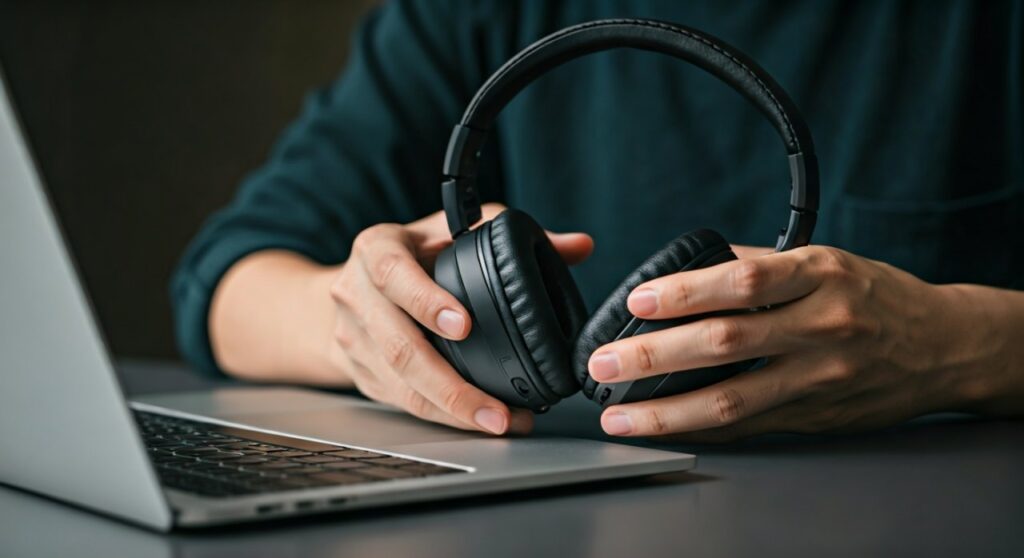
If you are looking for the cognitive benefits of brainwave entrainment without wearing a headset, you should look into isochronic tones instead. While binaural beats require stereo separation, isochronic tones use a single pulsating beat that can be processed effectively through open-air speakers.
Key Takeaways: Binaural Beats and Audio Requirements
| Feature | Binaural Beats | Isochronic Tones |
|---|---|---|
| Headphones Required? | Yes (Mandatory) | No (Optional) |
| How it Works | Two different tones create a mental “third” beat. | A single tone turns on and off rapidly. |
| Best For | Deep meditation, sleep, and intense focus. | Working in groups or sleeping without gear. |
| Audio Type | Stereo separation is critical. | Mono or Stereo works fine. |
| Effectiveness | High (Internalized brain response). | High (Direct auditory stimulus). |
Why Stereo Separation is Non-Negotiable
To understand why do binaural beats work without headphones is a question with a “no” answer, we have to look at the physics of sound. The term “binaural” literally means “two ears.”
When you wear headphones, you are providing a controlled environment. If the left ear hears 200 Hz and the right ear hears 210 Hz, your brain’s superior olivary complex processes the difference. It then “hears” a phantom 10 Hz pulse. This is the binaural beat.
The Problem of Acoustic Crosstalk
When you play these same frequencies through speakers, the sound from the left speaker travels to both your left and right ears. The same happens with the right speaker. This creates a “muddy” mix of frequencies in the physical space of your room. Your brain no longer receives two isolated signals, so the neural synchronization never happens.
Exploring the Science: How Your Brain Processes Beats
The effectiveness of binaural beats relies on the Frequency Following Response (FFR). This is a naturally occurring phenomenon where the brain begins to mimic the frequency of an external stimulus.
The Five Key Brainwave States
By using the correct frequency via headphones, you can guide your brain into specific states:
- Delta (1-4 Hz): Deep, dreamless sleep and physical healing.
- Theta (4-8 Hz): Deep relaxation, meditation, and REM sleep.
- Alpha (8-14 Hz): “Flow state,” light relaxation, and creativity.
- Beta (14-30 Hz): High-level focus, analytical thinking, and alertness.
- Gamma (30-100 Hz): Peak concentration and cognitive processing.
Without headphones, you are simply listening to two slightly dissonant humming sounds. You might feel some relaxation from the ambient background music, but you won’t achieve the specific neurological entrainment associated with these brainwave states.
Step-by-Step Guide: How to Use Binaural Beats Properly
If you want to experience the true power of this technology, following a specific protocol is essential. Here is how I personally set up my sessions for maximum efficacy.
Step 1: Select Your High-Quality Audio Source
Avoid low-bitrate YouTube rips if possible. Look for Lossless (FLAC) or high-quality 320kbps MP3 files. Compression can sometimes artifacts that interfere with the subtle frequency differences.
Step 2: Choose the Right Headphones
While any stereo headphones will “work,” the experience varies wildly based on comfort:
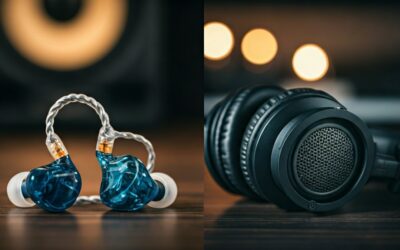
- Over-Ear Headphones: Best for focus and noise isolation.
- Sleep Headphones (Headband Style): Essential if you are using binaural beats for insomnia.
- In-Ear Monitors (IEMs): Good for portability but can be uncomfortable for long sessions.
Step 3: Find a Distraction-Free Environment
Binaural beats are a “passive-active” tool. While the audio does the work, your environment needs to allow your brain to surrender to the frequency. Dim the lights and put your phone on Do Not Disturb.
Step 4: Set the Volume to a “Comfortable Minimum”
A common mistake is turning the volume up too high. The binaural beat should be an undercurrent, not a loud thumping. If you can hear the frequency clearly but it isn’t jarring, you’ve found the “sweet spot.”
Step 5: Consistency is Key
Expert researchers suggest that brainwave entrainment is a skill. Your brain gets better at following the frequency the more often you do it. Aim for at least 15-30 minutes per day for two weeks to see significant shifts in mood or focus.
The Best Alternative: Using Isochronic Tones Without Headphones
If you find headphones uncomfortable or have a medical condition that prevents their use (such as Tinnitus or ear infections), isochronic tones are your solution.
What are Isochronic Tones?
Unlike binaural beats, which use a continuous tone with a frequency shift, isochronic tones use a single pitch that is manually turned on and off at specific intervals.
Why they work without headphones:
- They don’t rely on the brain “calculating” a difference between two ears.
- The pulse is distinct and audible in a physical room.
- They provide a much stronger Frequency Following Response for many users.
Comparing the Experience
In my experience testing both, binaural beats feel more “internalized” and “hypnotic,” whereas isochronic tones feel more “external” and “rhythmic.” If you are working in an office and want to use speakers, isochronic tones are the only effective choice.
Expert Tips for Maximizing Your Results
Having used these tools for over a decade for both productivity and sleep, here are my “pro-tips” for getting the most out of your audio sessions:
- Hydration Matters: Brainwave entrainment involves electrical activity. Being dehydrated can lead to mild “audio headaches” after a long session. Drink a glass of water before you start.
- Avoid Driving: Never listen to Delta or Theta frequencies while driving or operating heavy machinery. The relaxation effect can be as potent as a mild sedative.
- Combine with Visualization: If you are using Alpha beats for creativity, try a “creative visualization” exercise while listening. The audio acts as an anchor for your thoughts.
- Check for “Stereo” in Your Settings: If you are using a PC, ensure “Mono Audio” is turned OFF in your accessibility settings. If mono is on, the beats will be neutralized even with headphones on.
Potential Side Effects and Safety Precautions
While generally safe for most people, binaural beats are a form of neurological stimulation. You should exercise caution if:
- You have Epilepsy: Rapidly pulsing frequencies can, in rare cases, trigger seizures in those with photosensitive or auditory-sensitive epilepsy.
- You have a Pacemaker: While unlikely, the electromagnetic frequencies of some high-end headphones could theoretically interfere with medical devices.
- You are Pregnant: There is no conclusive data suggesting harm, but it is always best to consult a doctor before starting any new neurological stimulation routine.
Frequently Asked Questions
Can I use just one earbud for binaural beats?
No. Binaural beats require both ears to receive different signals to create the mental “beat.” If you use only one earbud, you will only hear a flat, single tone, and no entrainment will occur.
Do noise-canceling headphones affect binaural beats?
Generally, no. Active Noise Cancellation (ANC) focuses on external low-frequency sounds and usually does not interfere with the internal frequencies being played through the drivers. Many users find ANC actually improves the experience by removing environmental distractions.
Are binaural beats a scam?
No, they are backed by decades of peer-reviewed research in auditory neuroscience. However, they are not “magic.” They are a tool to assist in reaching mental states, similar to how a metronome helps a musician keep time.
Why do I get a headache after listening?
This is often caused by having the volume too high or your brain being unaccustomed to the stimulation. Start with shorter sessions (5-10 minutes) and keep the volume at a level where you could still hold a conversation.
What is the best frequency for studying?
Beta waves (14-30 Hz) are generally considered the best for intense study and analytical work. If the task requires more creative problem-solving, Alpha waves (8-14 Hz) are often more effective.