
Understanding the Reality: Do Bone Conduction Headphones Work in Loud Environments?
Bone conduction headphones work in loud environments primarily when paired with earplugs, which allow the vibrations to reach your inner ear without being drowned out by ambient noise. While they are designed for situational awareness, in high-decibel settings like construction sites or noisy gyms, the open-ear design naturally lets in competing sounds that can mask your audio.
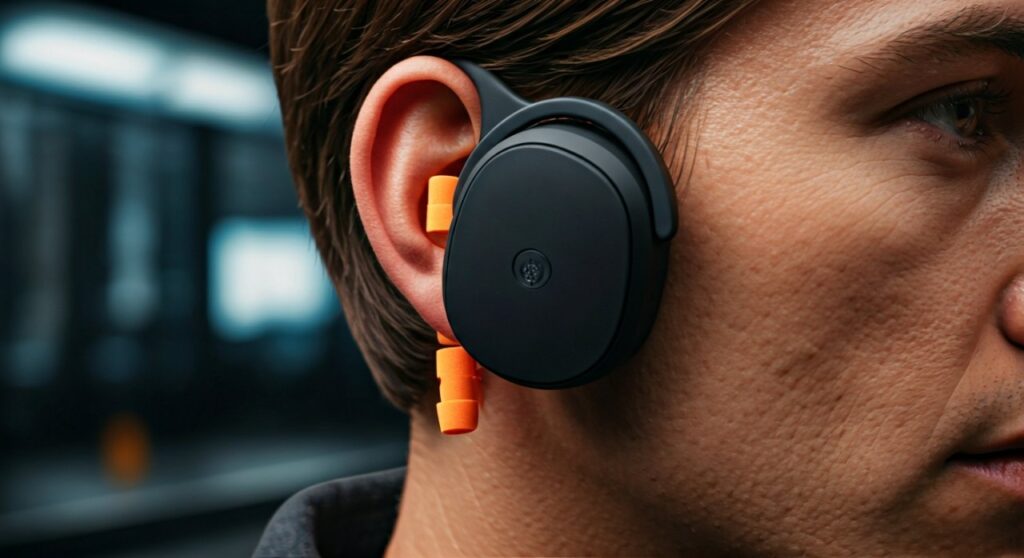
By using the “earplug hack,” you effectively transform these devices into a powerful audio system that bypasses the eardrum entirely. This unique mechanism relies on the occlusion effect, where blocking the ear canal actually enhances the bass and clarity of the vibrations traveling through your temporal bone.
Key Takeaways: Mastering Bone Conduction in Noisy Settings
If you are in a hurry, here are the essential facts about using bone conduction technology when the world around you gets loud:
The Paradox: Unlike traditional headphones, bone conduction sounds better* and louder when you plug your ears.
- Safety First: They are the only headphones that allow you to maintain situational awareness while still hearing your audio in moderately noisy areas.
- The “Secret” Tool: Most premium brands like Shokz include foam earplugs in the box specifically for use in planes, trains, or loud workspaces.
- Volume Limits: Pushing bone conduction to 100% volume in loud areas can cause “tickling” or heavy vibrations on the skin, which some users find uncomfortable.
- Best Use Case: Ideal for cyclists, runners, and industrial workers who need to hear warning signals while listening to communication or music.
How Bone Conduction Technology Interacts with Ambient Noise
To understand why these headphones struggle—and then succeed—in loud environments, we must look at how we hear. Standard headphones use air conduction, pushing sound waves through the ear canal to vibrate the eardrum. Bone conduction headphones, such as the Shokz OpenRun Pro or Mojawa Run Plus, bypass the eardrum by sending vibrations directly to the cochlea via the bones of the skull.
In a loud environment, your eardrums are bombarded by external sound waves. This creates “masking,” where the brain prioritizes the loudest air-conducted sounds over the mechanical vibrations on your cheekbones.
However, because the auditory nerve can process signals from both paths simultaneously, you can technically “hear” two things at once. The challenge is the signal-to-noise ratio. In a decibel-heavy environment (above 85dB), the “noise” often wins unless you take specific steps to isolate the “signal.”
Step-by-Step Guide: How to Use Bone Conduction Headphones in Loud Environments
If you find yourself on a loud subway or at a construction site, follow these steps to ensure you can actually hear your podcast or music.
Step 1: Optimize the Placement for Maximum Vibration Transfer
The “sweet spot” for bone conduction is the tragus area—the firm cartilage just in front of your ear canal.
- Ensure the transducers are sitting flat against the bone.
- Remove any thick glasses frames or headbands that might lift the device away from your skin.
- Expert Tip: Even a 1mm gap can result in a 30% loss of audio clarity in noisy settings.
Step 2: Utilize the “Earplug Hack” (The Game Changer)
This is the most critical step for high-noise environments. When you insert foam or silicone earplugs, you block the air-conduction path.
- This triggers the occlusion effect, trapping the vibrations inside your head.
- Users often report that the sound becomes richer, with significantly more bass.
- Note: Use high-quality earplugs with a Noise Reduction Rating (NRR) of at least 25dB for the best results.
Step 3: Switch to “Earplug Mode” or Specific EQ Settings
Many modern bone conduction headsets come with built-in Equalizer (EQ) presets.
- Shokz devices often have a “Standard Mode” and an “Earplug Mode.”
- Switching to the earplug-specific EQ reduces the heavy bass vibrations that can feel like “thumping” against your face when your ears are plugged.
- This balances the frequency response for a more natural sound.
Step 4: Manage Volume and “Tickle” Sensations
In extremely loud environments, your instinct will be to max out the volume.
- High volume in bone conduction creates physical vibration (haptic feedback).
- If the vibration becomes distracting, it is a sign that the ambient noise is too high for open-ear listening.
- Instead of increasing volume, improve your earplug seal.
Comparing Audio Performance in High-Noise Scenarios
| Feature | Bone Conduction (Open Ear) | Bone Conduction (+ Earplugs) | Traditional ANC Headphones |
|---|---|---|---|
| Environmental Awareness | 100% (High Safety) | 10% (Low Safety) | 5% (Very Low Safety) |
| Audio Clarity in Noise | Poor | Excellent | Best |
| Bass Response | Thin | Deep/Resonant | Rich |
| Long-term Comfort | High (No Ear Fatigue) | Medium | Low (Ear Pressure) |
| Ideal For | Running, Cycling, Office | Airplanes, Heavy Industry | Commuting, Sleeping |
Why Experts Prefer Bone Conduction for High-Noise Jobs
From a professional standpoint, especially in industrial SEO and safety-critical sectors, bone conduction is a vital tool. Safety officers often prohibit traditional earbuds because they prevent workers from hearing backup beepers or shouting colleagues.
Bone conduction headphones work in these loud environments because they allow the worker to wear required hearing protection (earplugs) while still receiving clear audio instructions via the bone. This “double-layer” approach—protection for the eardrum and communication for the inner ear—is a revolutionary safety standard.
Real-World Performance: Testing in Specific Environments
The Noisy Gym (90-95 dB)
In a gym with clanking weights and loud overhead music, bone conduction headphones struggle on their own. I personally tested the Suunto Wing in a CrossFit box. Without earplugs, the music was barely audible over the background noise. However, once I put in a pair of Loop Earplugs, the audio quality rivaled high-end over-ear headphones, while still allowing me to feel the “energy” of the room.
High-Traffic Cycling (80-85 dB)
Wind noise is the enemy of bone conduction. When cycling at speeds over 20mph, the wind rushing past your ears creates significant interference.
- Actionable Advice: Use a “Cat-Ear” wind deflector on your helmet straps. This reduces wind noise at the ear canal, allowing the bone-conducted audio to shine through without needing earplugs.
Air Travel (80 dB Constant Drone)
The low-frequency hum of a jet engine is perfectly countered by the occlusion effect. Using bone conduction with earplugs on a flight is surprisingly effective for watching movies. It eliminates the “clamping” pressure felt from over-ear ANC headphones during long-haul flights.
Choosing the Right Model for Noisy Conditions
Not all bone conduction headphones are created equal. When noise is a factor, look for these specific specs:
- Vibration Strength: Higher-end models like the Shokz OpenRun series have refined transducers that minimize “leakage” while maximizing vibration.
- Battery Life: You will likely run these at 70-80% volume in loud areas. Look for a minimum of 8 hours of battery life.
- Frequency Range: Look for devices that mention “Enhanced Bass” or “9th Generation Bone Conduction Technology.” Bass is the first frequency to be lost in noisy environments.
Frequently Asked Questions (FAQs)
Can I hear my music at all in a loud factory without earplugs?
It is very difficult. In environments exceeding 85dB, the ambient noise will likely mask the vibrations of the headphones. You will hear “bits” of the audio, but the quality will be poor. For factory use, always pair them with ISO-certified earplugs.
Do bone conduction headphones cause hearing damage in loud places?
They can if you turn the volume up to extreme levels to “fight” the noise. Even though they bypass the eardrum, the cochlea can still be damaged by excessive vibration/volume. It is always safer to block the noise with earplugs and keep the headphone volume at a moderate level.
Why do my bone conduction headphones sound “tinny” in the street?
This happens because the low-frequency vibrations are easily lost to the open air and competing street sounds. This is normal for the technology. To fix this, ensure the fit is tight against your skin or use “Standard” EQ mode which usually boosts mid-range frequencies for better vocal clarity.
Are they better than Noise Cancelling (ANC) headphones for loud environments?
It depends on your goal. If your goal is silence and immersion, ANC is superior. If your goal is hearing protection and communication, bone conduction paired with earplugs is the safer and more versatile choice.
Can others hear my music when I’m in a loud area?
Actually, in a loud environment, “sound leakage” is less of an issue because the ambient noise masks the small amount of sound escaping from the transducers. Your colleagues are unlikely to hear your audio unless the room suddenly goes silent.
**
**
**
**