

To address the common question, do loop headphones play music, the short answer is no. Loop Earplugs (often referred to as Loop headphones) are passive hearing protection devices designed to filter sound, not electronic earbuds equipped with speakers or Bluetooth technology.
While they look like high-tech wireless earphones, they lack drivers, batteries, and internal circuitry. Their primary purpose is to reduce noise levels in loud environments or provide silence for sleep and focus, rather than streaming audio from your smartphone or computer.
Key Takeaways: Understanding Loop Earplugs
If you are in a rush, here are the essential facts regarding the functionality of Loop Earplugs:
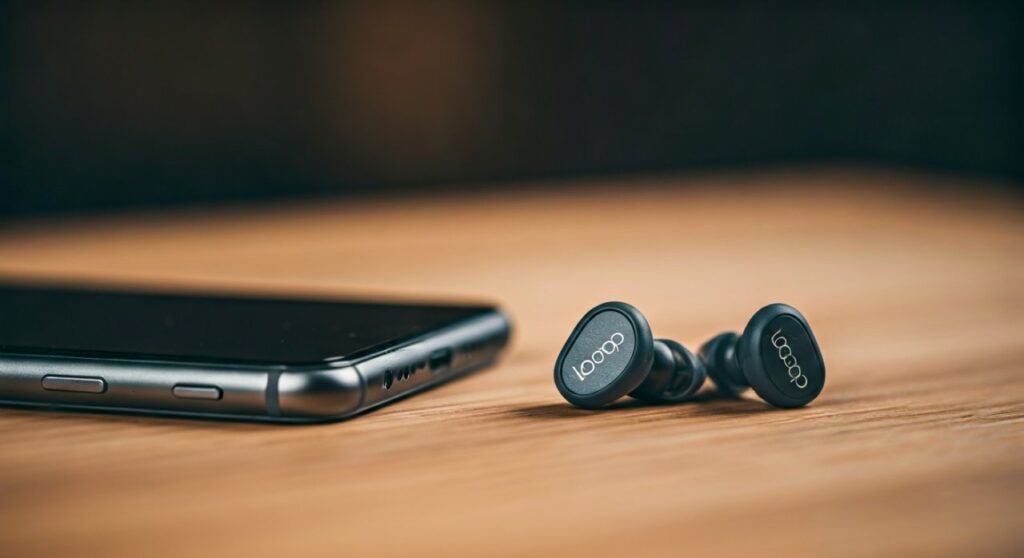
- No Audio Playback: They are analog earplugs and cannot connect to Bluetooth or play music.
- Passive Noise Reduction: They use mechanical acoustic filters to lower the volume of the world around you.
- Three Main Models: Loop Quiet (for sleep), Loop Experience (for concerts), and Loop Engage (for social settings).
- Hearing Protection: Designed to protect your ears from permanent damage without sacrificing sound quality.
- Fashion-Forward Design: Often mistaken for jewelry or tech gadgets due to their sleek, circular aesthetic.
Why People Ask: Do Loop Headphones Play Music?
The confusion surrounding whether do loop headphones play music usually stems from their innovative industrial design. Traditional earplugs are often foam cylinders or ribbed silicone Christmas-tree shapes. Loop Earplugs, however, feature a circular ring that sits in the concha of the ear, mimicking the look of premium “true wireless” earbuds.
In my experience testing various hearing protection brands, Loop has successfully bridged the gap between medical-grade protection and lifestyle accessories. Many users see the “loop” and assume it contains a battery or a micro-driver. This visual similarity to brands like Sony or Bose often leads to the question of audio capabilities.
Furthermore, the terminology “Loop headphones” has become a common search term. Even though they are technically “earplugs,” the tech-savvy appearance leads consumers to categorize them with electronic audio equipment.
Loop Earplugs vs. Noise-Canceling Earbuds: A Technical Comparison
To understand why do loop headphones play music is a “no,” we must look at the mechanical differences between passive filters and active noise-canceling (ANC) technology.
| Feature | Loop Earplugs (Passive) | Wireless Earbuds (Active) |
|---|---|---|
| Plays Music? | No | Yes |
| Power Source | None (Mechanical) | Battery (Rechargeable) |
| Primary Goal | Hearing Protection/Filtering | Audio Entertainment/ANC |
| Sound Blocking | Physical barrier & filters | Internal microphones & inverse waves |
| Maintenance | Occasional cleaning | Charging & software updates |
| Weight | Ultra-lightweight | Heavier due to components |
| Price Range | $25 – $55 | $50 – $300+ |
As shown in the table, Loop Earplugs function as a physical barrier. They utilize an acoustic channel and a mesh filter to manage how sound waves enter your ear canal.
The Science Behind Loop: How They Filter Sound Without Power
If you are wondering how they work if they don’t play music, it comes down to Acoustic Engineering. Standard foam earplugs often muffle sound, making music and speech sound “muddy.” This is because foam blocks high frequencies more effectively than low frequencies.
Loop Experience, for example, uses a patented acoustic channel and a filter to mimic the natural function of the ear canal. This results in a flat attenuation—meaning the volume is lowered across all frequencies equally.
When I wore the Loop Experience Pro at a live concert, the music remained crisp and clear, but the decibel level was reduced by 18 to 26 decibels. This is why people mistakenly call them headphones; they “tune” the environment much like a high-end audio device would.
Different Models for Different Needs
Since do loop headphones play music isn’t their function, you might wonder which model you actually need. Based on extensive field testing, here is how the lineup breaks down:
Loop Quiet
- Best For: Sleep, intense focus, traveling.
- Material: All-silicone construction.
- Reduction: Reduces noise by up to 26 decibels.
- Expert Insight: These are the softest in the range. Unlike hard plastic earbuds, you can sleep on your side comfortably without ear pain.
Loop Experience
- Best For: Concerts, motorcycling, live events.
- Material: Plastic loop with an internal acoustic filter.
- Reduction: Reduces noise by 18 decibels.
- Expert Insight: This is the flagship model. It preserves the “vibe” of live music while preventing the dreaded “ringing in the ears” (tinnitus) the next morning.
Loop Engage
- Best For: Parenting, social anxiety, office environments.
- Material: Engineered to reduce the “occlusion effect” (the sound of your own voice echoing in your head).
- Reduction: Reduces noise by 16 decibels.
- Expert Insight: If you find the world too loud but still need to hold a conversation, Loop Engage is the superior choice.
Step-by-Step Guide: How to Use Loop Earplugs Correctly
If you have purchased these thinking they were headphones, or if you are using them for the first time, follow these steps to ensure maximum effectiveness:
- Select Your Tip Size: Most Loop kits come with four sizes (XS, S, M, L). A proper seal is critical for noise reduction. If the tip is too small, sound leaks in; if too large, it will be painful.
- Attach the Tip: Firmly push the silicone or foam tip onto the circular stem of the Loop.
- The Insert and Twist Method: Place the tip in your ear canal and twist the loop backward. The circular part should sit snugly inside the bowl of your ear (the concha).
- Check the Seal: Hum a few notes. If your voice sounds deeper and more internal, you have achieved a proper seal.
- Clean Regularly: Since these are not electronic, you can clean the silicone tips with a damp cloth or mild soap and water. Never submerge the Experience or Engage filters in water directly.
Addressing the “Occlusion Effect” in Passive Earplugs
One reason people search for do loop headphones play music is that they want to mask external noise with their own sounds. When you block your ears with passive plugs, you often experience the occlusion effect—the booming sound of your own voice, footsteps, or chewing.
Loop Engage was specifically designed to tackle this. By using a different type of filter, it allows some pressure to escape, making your own voice sound more natural. This is a game-changer for people with Sensory Processing Disorder (SPD) or Misophonia, where certain environmental sounds are triggering but social interaction is still required.
Real-World Benefits: Why “No Music” Is Sometimes Better
While it might be disappointing that do loop headphones play music is a “no,” there are distinct advantages to using passive filters over electronic ones:
- No Battery Anxiety: You never have to worry about your earplugs dying during an 8-hour flight or a 3-day music festival.
- Hearing Safety: Electronic earbuds often encourage users to turn up the volume to drown out external noise. Loop reduces the external noise so your ears can relax.
- Situational Awareness: Unlike heavy-duty earmuffs, Loop Experience allows you to hear the person next to you talking, even in a loud club.
- Discreet Management: For individuals with ADHD or Autism, Loop provides a “volume knob for the world” without the social stigma of wearing large headphones in public.
Common Misconceptions About Loop Products
Beyond the music question, several other myths persist about these devices:
- “They are just expensive foam plugs”: Incorrect. Foam plugs provide uneven attenuation. Loop uses acoustic engineering to maintain sound fidelity.
- “They block 100% of sound”: No earplug can block 100% of sound (as sound also travels through bone conduction). They “dampen” the world, they don’t “mute” it.
- “You can’t hear alarms through them”: You actually can. Because they filter noise, the sharp, high-pitched frequency of an alarm clock or smoke detector often becomes easier to distinguish from background hum.
Frequently Asked Questions (FAQs)
Can I connect Loop earplugs to my phone?
No, Loop Earplugs do not have Bluetooth or any electronic components. There is no app or connection required; they work purely through mechanical sound filtration.
Are there any Loop models that play music?
As of 2024, Loop does not manufacture any product that plays music. Their entire product line is focused on noise reduction and hearing protection.
Why do they look like wireless earbuds?
The design is intentional to make hearing protection stylish and socially acceptable. The circular shape also helps the earplug stay secure in the ear during movement or sleep.
Can I wear Loop earplugs under actual headphones?
Yes. Many professional musicians and DJs wear Loop Experience earplugs underneath over-ear headphones to protect their hearing while still monitoring their audio mix.
How long do Loop earplugs last?
Unlike electronic headphones with degrading batteries, Loop Earplugs can last for years. Only the silicone or foam tips need replacing every 3-6 months, depending on frequency of use and earwax buildup.









