
Do NFL Players Have Headphones in Their Helmets? The Full Guide
Imagine standing in the center of a stadium with 80,000 screaming fans, the ground shaking beneath your cleats. In this wall of noise, a Quarterback must hear a complex play call consisting of fifteen distinct words in a matter of seconds. Do NFL players have headphones in their helmets to make this possible? The short answer is yes, but the system is far more regulated and technically advanced than a standard pair of earbuds.
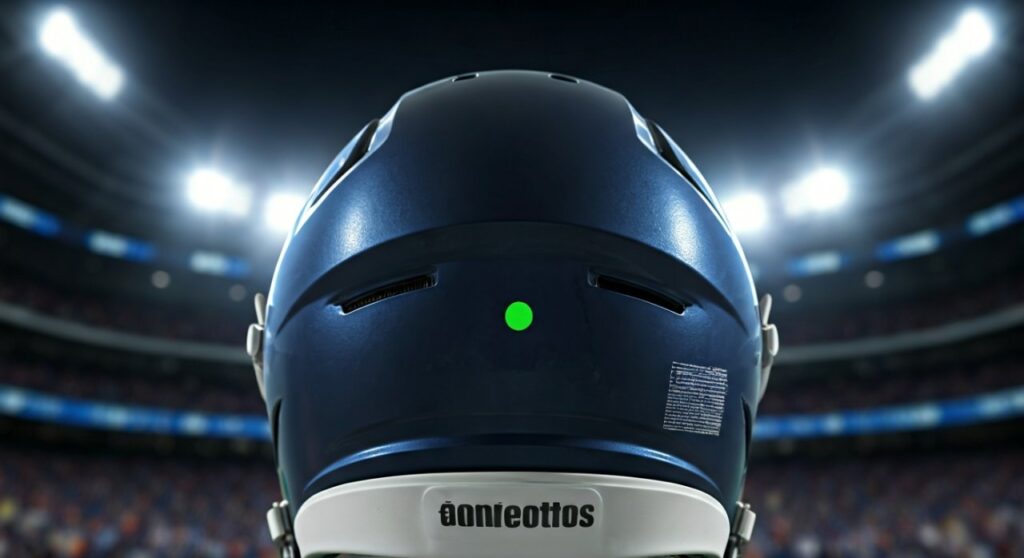
Only specific players on the field are permitted to have a radio receiver in their helmets. This technology allows a designated coach on the sideline or in the booth to communicate play calls directly to the “on-field general.” However, this is a one-way communication system governed by strict NFL officiating rules to ensure competitive balance.
Key Takeaways: NFL Helmet Communication at a Glance
If you are looking for a quick summary of how the NFL Coach-to-Player (C2P) system works, here are the essential facts:
- Who has them: Only the Quarterback and one designated defensive player (the Green Dot player) have active receivers.
- The “Green Dot”: A small green circular sticker on the back of the helmet identifies which player has the communication equipment.
- One-Way Only: Players can hear the coach, but they cannot speak back through the helmet; they must use hand signals or verbal calls to the huddle.
- The 15-Second Rule: Communication is automatically cut off by the NFL frequency coordinator when the play clock reaches 15 seconds or when the ball is snapped.
- Backup Systems: Teams are allowed backup helmets, but they must be strictly monitored by league officials to prevent cheating.
How the NFL Helmet Communication System Works: Step-by-Step
Understanding the technical journey of a play call from the coach’s lips to the player’s ear reveals the complexity of modern football. Here is the step-by-step process of how NFL players use headphones in their helmets during a live game.
Step 1: The Coach Initiates the Call
The offensive coordinator or head coach wears a heavy-duty, noise-canceling headset (currently provided by Bose or Sony depending on the league’s contract). They press a “push-to-talk” button that opens a secure, encrypted digital channel.
Step 2: Signal Transmission via Encryption
To prevent “spy-gate” scenarios where opposing teams intercept frequencies, the NFL uses high-end digital encryption. The signal is transmitted via UHF frequencies managed by an independent league technician known as the Frequency Coordinator. This ensures that the signal remains private and free from stadium Wi-Fi or local radio interference.
Step 3: Reception in the Helmet
Inside the designated player’s helmet, two small, thin speakers are tucked behind the ear pads. These are not traditional “headphones” that cover the ear, as the player still needs to hear the ambient sounds of the game and the referee’s whistle.
Step 4: The Automatic Shut-off
This is the most critical regulatory step. The NFL’s C2P system is programmed to shut down exactly when the play clock hits 15 seconds. If a team breaks the huddle late, the QB is on his own. This prevents coaches from “reading” the defense in real-time and whispering adjustments into the QB’s ear as the play unfolds.
The Technical Specs of NFL Helmet Hardware
The equipment used in an NFL helmet is designed to withstand massive G-forces and extreme weather. It is not something you can buy at a local electronics store.
| Feature | Specification | Purpose |
|---|---|---|
| Speaker Type | Dual Thin-Profile Transducers | Ensures clarity without blocking ambient field noise. |
| Signal Type | Digital Encrypted UHF | Prevents signal interception and “eavesdropping.” |
| Battery Life | 8+ Hours | Designed to last through pre-game and potential overtime. |
| Activation | Push-to-Talk (Sideline) | Gives coaches control over when the channel is open. |
| Identification | Green Dot Decal | Allows refs to easily identify legal radio users. |
Who Is Allowed to Wear the “Green Dot” Helmet?
The league is very strict about which NFL players have headphones in their helmets. If a team were caught with more than one radio-enabled player on the field at a time, they would face massive fines and loss of draft picks.
The Offensive Leader (The QB)
Almost every Quarterback on an active roster has a radio in their helmet. When the primary QB is injured, the backup must swap to a helmet with the Green Dot before entering the game.
The Defensive Leader (The “Mike” Linebacker)
Since 2008, the NFL has allowed one defensive player to wear a headset. This is usually the Middle Linebacker (the “Mike”) or a Safety who is responsible for calling out the defensive formation.
What Happens if the Green Dot Player is Injured?
If the primary defensive signal-caller leaves the field, another player can put on a Green Dot helmet. However, the team must notify the Lead Referee immediately. Having two green dots on the field simultaneously is a foul.
The History of Communication in the NFL
The question of do NFL players have headphones in their helmets wasn’t always answered with a “yes.” The road to this technology was paved with innovation and controversy.
: The Secret Invention
Paul Brown, the legendary coach of the Cleveland Browns, was the first to try this. He worked with two inventors to hide a radio receiver inside the helmet of QB George Ratterman. The experiment was short-lived as the league banned it shortly after discovering the “unfair advantage.”
: The Official Debut
It took nearly 40 years for the NFL to officially Sanction the use of radio helmets. The goal was to speed up the game and reduce the need for complicated hand signals from the sidelines, which were easily stolen by opponents.
: Defensive Equality
For years, defenses complained that the offense had an unfair advantage by using radio. In 2008, the NFL finally allowed one defensive player to have the same communication privileges as the QB.
Why Don’t All Players Have Helmets with Headphones?
You might wonder why a Wide Receiver or a Cornerback wouldn’t benefit from a headset. There are three primary reasons the NFL restricts this:
- Competitive Integrity: If every player had a coach in their ear, the game would become a “chess match between coaches” rather than a test of player instinct.
- Complexity: Managing 22 different radio frequencies on a single field without interference or “cross-talk” is a massive technical challenge.
- The Human Element: The NFL values the ability of players to communicate verbally and through “football IQ” on the field.
Expert Insights: The Challenges of Using Radio Helmets
Based on interviews with former players and equipment managers, the system is far from perfect. Here are some “insider” realities of the NFL helmet communication system:
- The Static Issue: In certain stadiums located near high-power radio towers or airports, players often report “ghost voices” or static in their ears.
- The Sweat Factor: Moisture is the enemy of electronics. Equipment managers must use specialized waterproof coatings to prevent the speakers from shorting out during a rainy game.
- The “Coach’s Scream”: Players often joke about coaches who forget the mic is hot and scream during a play, causing the player to wince in pain from the volume.
Frequently Asked Questions (FAQs)
Do college football players have headphones in their helmets?
Yes, as of the 2024 season, the NCAA has adopted the 15-second radio communication rule for the FBS level, mirroring the NFL’s system to combat sign-stealing scandals.
Can the coach hear the player talking?
No. The system is one-way communication. The player has no microphone in their helmet. If a QB wants to talk to the coach, they must walk to the sideline or use the “blue tent” phones/tablets.
What happens if the radio system fails?
If one team’s communication system fails, the “Equity Rule” may be invoked. If the home team’s system goes down and cannot be fixed, the away team may be forced to shut off their system to ensure a fair playing field.
Can players listen to music in their helmets?
Absolutely not. The frequencies are strictly controlled by the NFL and the FCC. Any attempt to transmit non-game-related audio would result in severe league discipline.
How do players hear over the loud crowd noise?
The speakers use noise-cancellation technology and are positioned directly over the ear canal. While it doesn’t block out the crowd, it ensures the coach’s voice is the most prominent sound.