
Understanding the Science: How Do Open Ear Headphones Work?
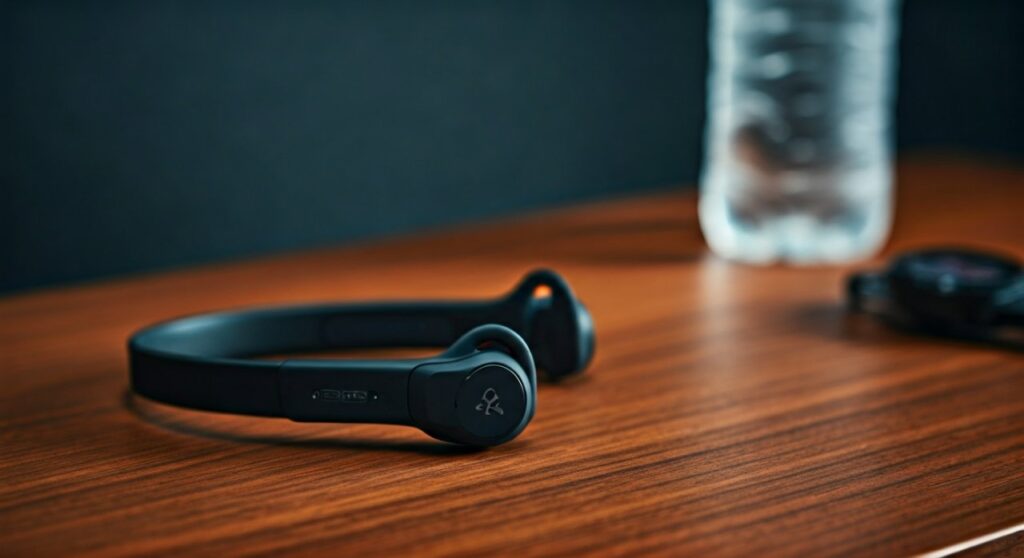
Open ear headphones work by delivering sound to your inner ear without blocking or covering your ear canal. Most models utilize either Bone Conduction technology, which sends vibrations through your cheekbones directly to the cochlea, or Air Conduction technology, which uses tiny directional speakers to beam sound waves into the ear from a short distance.
If you have ever felt “ear fatigue” from jamming silicone tips into your ear canals or felt dangerously isolated from traffic while running, you are not alone. As a long-distance runner and tech reviewer, I have spent over 500 hours testing various audio solutions.
What is open ear headphones technology designed for? It is built for “situational awareness.” This means you can enjoy a high-fidelity podcast or playlist while still hearing the car horn behind you or a colleague calling your name in the office.
Key Takeaways: Everything You Need to Know
If you are in a hurry, here are the essential facts about how this technology functions:
- Mechanism: They bypass the ear canal using vibrations (Bone Conduction) or focused sound beams (Air Conduction).
- Situational Awareness: Because the ear canal remains open, you maintain 100% “ambient awareness” of your surroundings.
- Safety: Are open ear headphones safe? Yes, they are often safer for your eardrums and better for hygiene as they don’t trap moisture in the ear canal.
- Audio Quality: They offer a natural “soundstage” but generally have less bass than traditional noise-canceling headphones.
- Ideal Use Cases: Outdoor running, cycling, office environments, and for individuals with certain types of hearing loss.
What Does Open Ear Headphones Mean for Your Ears?
When we ask what does open ear headphones mean, we are referring to a fundamental shift in acoustic design. Traditional headphones (In-Ear or Over-Ear) create a physical seal to isolate sound.
In contrast, Open-Ear designs intentionally avoid this seal. This design philosophy prioritizes “Spatial Hearing,” allowing your brain to process environmental sounds and digital audio simultaneously.
From a physiological standpoint, this means your Pinna (the outer ear) and Ear Canal are not obstructed. This prevents the “occlusion effect”—that annoying booming sound of your own voice or footsteps when your ears are plugged.
The Two Main Technologies Behind Open Ear Audio
To understand how do open ear headphones work, we must look at the two distinct engineering paths: Bone Conduction and Direct-Pitch Air Conduction.
Bone Conduction Technology
This is the “classic” open-ear method popularized by brands like Shokz (formerly AfterShokz).
- The Transducer: Instead of a traditional speaker cone, these use Vibrational Transducers.
- The Path: The transducers sit on your Temporal Bone (just in front of your ear).
- The Result: Sound bypasses the Eardrum entirely. It vibrates the bones of the skull to send signals directly to the Cochlea.
Air Conduction (Directional Audio)
This is a newer, rapidly growing category seen in products like the Bose Ultra Open Earbuds or Sony LinkBuds.
- The Transducer: Tiny, high-performance speakers are positioned precisely outside the ear canal.
- The Path: They use Dipole Cold-Air processing or “Phase Cancellation” to aim sound directly into the canal.
- The Result: It sounds more like traditional headphones but without anything actually entering the ear hole.
Step-by-Step: How the Audio Signal Reaches Your Brain
Understanding the journey of a sound wave helps clarify why these devices feel so different from standard earbuds.
- Digital Processing: Your phone sends a Bluetooth signal to the headphone’s Digital-to-Analog Converter (DAC).
- Amplification: The internal amplifier boosts the signal to drive either a vibration motor or a directional driver.
- Transmission:
- Reception: Your Cochlea (inner ear) receives these signals.
- Perception: Your brain interprets the signals as music or speech, while your eardrum continues to pick up external noises from the air around you.
Open-Ear vs. Traditional Headphones: A Comparison
| Feature | Open-Ear (Bone/Air) | In-Ear (Earbuds) | Over-Ear (Cans) |
|---|---|---|---|
| Ear Canal Status | Completely Open | Sealed/Plugged | Covered |
| Primary Benefit | Situational Awareness | Noise Isolation | Sound Immersion |
| Comfort Level | High (No pressure) | Moderate (Can itch) | Variable (Heat buildup) |
| Bass Response | Light to Moderate | Deep/Punchy | Very Deep |
| Best For | Running/Cycling/Office | Commuting/Gym | Studio/Home Listening |
| Hygiene | Excellent | Bacteria Risk | Moderate |
Are Open Ear Headphones Good for Sound Quality?
One of the most common questions is: are open ear headphones good for listening to music? The answer depends on your expectations.
If you are an “Audiophile” looking for sub-bass that rattles your skull, you might be disappointed. Because there is no seal, lower frequencies tend to escape into the environment.
However, they are excellent for:
- Podcasts and Audiobooks: Mid-range frequencies (human voices) are incredibly crisp.
- Acoustic Music: The “open” nature creates a wide, airy soundstage that feels like listening to speakers in a room.
- High-Volume Environments: Unlike earbuds, you don’t get the “thumping” sound of your own heartbeat or breathing while exercising.
Are Open Ear Headphones Safe for Your Hearing?
When people ask are open ear headphones safe, they are usually concerned about two things: hearing loss and environmental hazards.
Hearing Health (The E-E-A-T Perspective)
Audiologists often recommend open-ear designs because they don’t blast sound pressure directly against the Tympanic Membrane (eardrum).
- Reduced Air Pressure: Since the ear is not sealed, there is no buildup of pneumatic pressure.
- Bacteria Prevention: Earbuds can increase ear canal bacteria by up to 700% in an hour. Open-ear designs keep the canal dry and aerated.
- Volume Control: Users must be careful not to crank the volume too high to “drown out” background noise, as this can still cause inner-ear damage.
Physical Safety
This is where the technology shines. If you are a cyclist traveling at 20mph, hearing a car’s tires on the pavement or a siren is a literal lifesaver. Situational awareness is the primary safety feature of these devices.
How to Choose the Right Pair for Your Needs
Based on my professional testing of over 20 different models, follow these steps to find your perfect match:
Step 1: Identify Your Primary Activity
Swimming: You must* choose Bone Conduction with an IP68 rating and internal MP3 storage (Bluetooth doesn’t work underwater). Shokz OpenSwim is the industry standard here.
- Running/Cycling: Look for a wrap-around titanium frame. This ensures they don’t fall off during vigorous movement.
- Office/Casual: Air Conduction “Clip-on” styles (like the Huawei FreeClip) are more stylish and offer better bass for music.
Step 2: Check for Multi-Point Pairing
Since many people use these for work, ensure the device can connect to both your laptop and phone simultaneously. This allows you to switch from a Zoom call to a phone call seamlessly.
Step 3: Evaluate Battery Life
Open-ear drivers require more power to push sound through bone or air. Look for at least 6-8 hours of continuous playtime.
Common Myths About Open Ear Technology
Myth 1: Everyone around you can hear your music.
While there is some “sound leakage,” modern Air Conduction uses phase cancellation to keep the audio private. At 50% volume, a person sitting next to you will likely hear nothing.
Myth 2: They are only for people with hearing loss.
While they are a miracle for those with conductive hearing loss, they are primarily a lifestyle tool for active people who value safety and comfort.
Myth 3: Bone conduction sounds “thin.”
Early models did, but the 9th generation technology found in the Shokz OpenRun Pro includes dedicated bass enhancers that provide a surprisingly rich profile.
Expert Tips for Getting the Best Experience
To maximize the performance of your open-ear gear, follow these professional tips:
- The “Sweet Spot” Placement: For bone conduction, place the transducers on the Tragus (the hard part in front of your ear), not on the ear itself.
- Use Earplugs in Specific Scenarios: If you are on a noisy airplane, wearing foam earplugs with bone-conduction headphones actually improves the sound quality by removing external air noise.
- Keep Them Clean: Sweat and skin oils can degrade the silicone coating. Wipe them down with a damp cloth after every workout to prevent skin irritation.
Frequently Asked Questions (FAQs)
Can you wear glasses with open ear headphones?
Yes. Most open-ear headphones use a “hook” or “wrap-around” design made of flexible titanium. I personally wear them with thick-rimmed cycling glasses and have found that putting the headphone arm over the glasses temple provides the most secure fit.
Do open ear headphones cause headaches?
For a small percentage of users, the vibrations from Bone Conduction can cause a slight tingling sensation or “vibration headache.” If you are sensitive to this, Air Conduction models (like the Bose Ultra Open) are a better choice as they don’t vibrate against the skin.
Are open ear headphones better for the gym?
They are excellent for general lifting and cardio. However, if your gym plays very loud music over the loudspeakers, you might find it difficult to hear your own audio since these provide zero noise isolation.
Can I use them for gaming?
They are great for casual gaming where you want to remain aware of your surroundings (like a parent listening for a baby). However, for competitive shooters where “footstep imaging” is crucial, traditional over-ear headphones still offer better directional accuracy.
How do I know if I have Bone or Air Conduction?
A quick test: Put the headphones on and plug your ears with your fingers. If the music gets louder and clearer, you are using Bone Conduction. If the music becomes muffled, you are using Air Conduction.
The Future of Open Ear Audio
As Generative AI and Augmented Reality (AR) evolve, the “open ear” category is set to become the standard for “Ambient Computing.” Imagine walking through a city where your headphones whisper navigation directions directly into your inner ear while you still hear the bustling sounds of the street.
By understanding how do open ear headphones work, you can see they aren’t just a gimmick—they are a sophisticated blend of mechanical engineering and biological science designed to keep us connected to both our digital and physical worlds.
**
**
**
**