

Understanding Projector Alignment Essentials
To effectively adjust an Epson projector to fit your screen, you must primarily utilize the keystone correction, lens shift, and zoom functions found in the device’s OSD (On-Screen Display) menu. Most Epson projectors offer a combination of physical hardware adjustments and digital software corrections to ensure the projected image perfectly aligns with the screen boundaries. Start by physically positioning the projector as centered as possible to minimize the need for heavy digital distortion, which can degrade image quality.
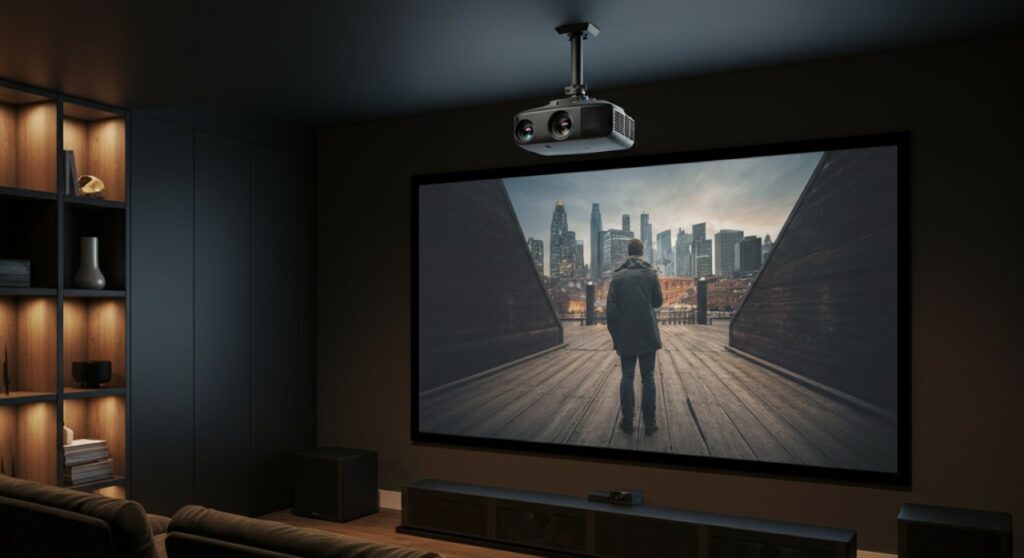
Key Takeaways
- Physical Alignment: Always attempt to position the projector at the correct height and distance before adjusting digital settings.
- Lens Shift vs. Keystone: Prioritize Lens Shift (if available) to adjust image position without distortion, using Keystone only as a last resort.
- Zoom and Focus: Use the optical zoom to fill the screen frame, then fine-tune with the focus ring.
- Test Patterns: Use the built-in Epson test pattern to ensure perfect alignment and sharpness.
Step-by-Step: How to Adjust Projector to Fit Screen Epson
Following these steps will help you achieve a professional-grade image. Whether you are using a home theater projector or a business projector, the core principles remain consistent.
Initial Positioning and Mounting
Before touching any settings, ensure the projector is placed on a stable surface or ceiling mount.
- Align the projector lens directly with the center of your projector screen.
- Ensure the projector is perfectly level horizontally.
- Check that the distance between the projector and screen matches the throw ratio specifications in your Epson user manual.
Using Optical Zoom and Focus
The best way to adjust projector to fit screen is by using the physical controls on the projector chassis.
- Locate the zoom ring or lever on the top or side of the lens assembly.
- Rotate the ring to enlarge or shrink the image until it matches the width of your screen frame.
- Adjust the focus ring slowly until the text and edges of the image look razor-sharp.
Adjusting with Lens Shift
If your Epson model includes a Lens Shift dial, use this to move the image position without moving the physical projector.
- Use the Vertical Lens Shift dial to move the image up or down.
- Use the Horizontal Lens Shift dial (if equipped) to shift the image left or right.
- Expert Tip: Always prioritize Lens Shift over Keystone because it maintains the pixel-for-pixel integrity of your source material.
Correcting Distortion with Keystone
If the image appears trapezoidal because the projector is mounted at an angle, use the Keystone correction feature.
- Press the Menu button on your Epson remote.
- Navigate to the Settings or Installation tab.
- Select Keystone and adjust the values until the corners of the image form a perfect rectangle.
- Note: Excessive use of keystone can cause visible blurring or “jagged” edges on high-resolution content.
Comparison of Adjustment Methods
| Adjustment Method | Best Used For | Impact on Image Quality |
|---|---|---|
| Physical Positioning | Initial setup | None (Best) |
| Lens Shift | Minor vertical/horizontal centering | Negligible |
| Optical Zoom | Sizing the image to the screen | None |
| Digital Keystone | Extreme angle correction | Noticeable softening |
Advanced Calibration Tips for Perfect Alignment
Once the image fits the screen, further calibration ensures the best experience.
- Screen Fit Feature: Many modern Epson projectors feature an “Auto Screen Fit” button that detects screen borders and performs the adjustment automatically.
- Overscan Settings: If your image is bleeding over the edges of the screen, navigate to the Aspect Ratio or Overscan setting in the menu and set it to “Normal” or “Auto.”
- Environmental Factors: Ensure the room is dark; stray light on the wall behind the screen can make alignment look “off” even when it is perfectly calibrated.
Frequently Asked Questions
Why is my Epson projector image not fitting the screen?
The image likely does not fit because the throw distance is incorrect, or the aspect ratio settings in the projector menu do not match the input device (e.g., laptop or Blu-ray player). Always check that your source resolution matches the projector’s native resolution.
Does Keystone correction reduce image resolution?
Yes, Keystone correction is a digital process that electronically resizes the image. While it makes the shape rectangular, it redistributes pixels, which can lead to a slight loss of sharpness, especially when viewing fine text or 4K content.
How do I know if my projector is perfectly centered?
Most Epson projectors have a built-in Test Pattern accessible through the menu. Turn this pattern on; if the grid lines are perfectly parallel to the screen edges and the corners are square, your alignment is correct.
Can I adjust the image size without moving the projector?
You can use the Optical Zoom to change the size, or the Digital Zoom (if available) to crop the image. Moving the projector physically is always preferred over using digital zoom, as the latter significantly reduces image resolution.









