
Why New Headphones Often Sound “Off”
You just unboxed a premium pair of audiophile cans, but they sound stiff, thin, or underwhelming. To fix this, you need to learn how to break in headphones, a process also known as “burn-in,” which allows the mechanical components to reach their intended flexibility. By playing audio through your headphones for a specific duration (usually 40 to 100 hours), the driver’s diaphragm and suspension loosen up, leading to a smoother frequency response and deeper bass.
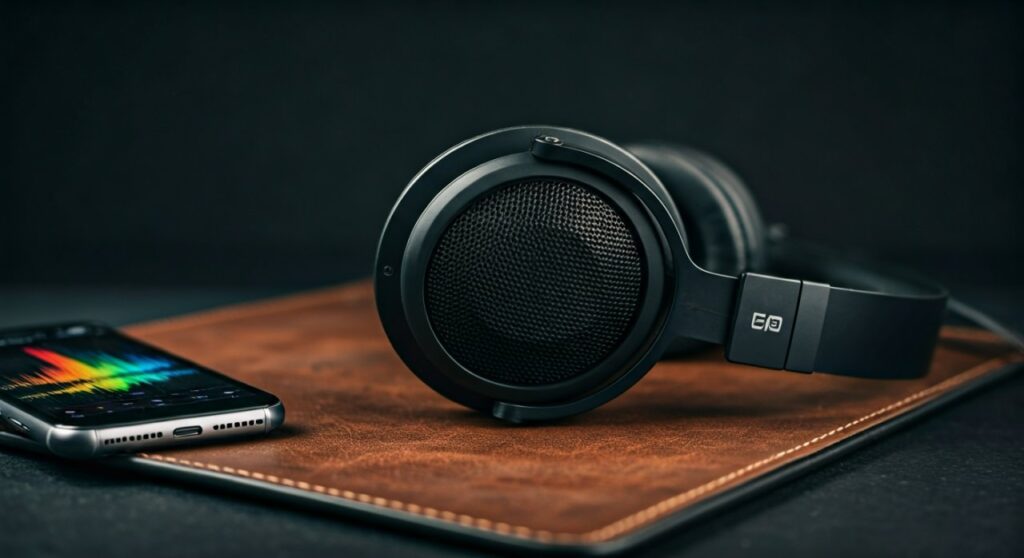
While the “burn-in” debate is legendary in audiophile circles, most experts agree that the mechanical parts of a transducer change slightly during their first few dozen hours of use. Think of it like breaking in a new pair of leather boots; the material is stiff at first and needs movement to become supple and comfortable.
Key Takeaways: Breaking In Your Headphones Fast
| Feature | Recommendation | Why It Matters |
|---|---|---|
| Primary Method | Continuous Music Playback | Safest way to exercise the drivers naturally. |
| Time Frame | 40 – 100 Hours | Most Dynamic Drivers stabilize after 50 hours. |
| Volume Level | Medium (Normal Listening) | High volume can permanently damage new voice coils. |
| Best Audio | Pink Noise / High-Dynamic Music | Covers the full frequency spectrum (20Hz – 20kHz). |
| Rest Periods | 1 hour rest every 4-5 hours | Prevents heat buildup in the headphone’s internal circuitry. |
What Does It Mean to Break In Headphones?
The process of learning how to break in headphones involves the physical “exercise” of the driver’s suspension (the surround) and the diaphragm itself. Most modern headphones use Dynamic Drivers, which function much like a miniature loudspeaker.
Inside the ear cup, a voice coil moves a diaphragm back and forth to create sound waves. When these components are fresh from the factory, the materials—often Mylar, paper, or bio-cellulose—are rigid.
As you play audio, these materials flex thousands of times per second. This mechanical stress increases the “compliance” of the driver, allowing it to move more freely. Users often report that the “harshness” in the treble disappears and the “muddy” bass becomes more controlled after a proper break-in period.
Step-by-Step Guide: How to Break in Headphones Properly
Follow this expert-verified method to ensure you get the best sound without risking any damage to your hardware.
Step 1: The Initial Baseline Listen
Before you start, listen to three of your favorite high-quality tracks (FLAC or Tidal Master preferred). Note the soundstage width, the punchiness of the bass, and any “sibilance” (harsh ‘s’ sounds). This gives you a reference point to compare against after the process is complete.
Step 2: Choose Your “Burn-in” Audio
You have three main choices for audio signals, each with specific benefits:
- Pink Noise: This is the industry standard. Unlike White Noise (which has equal energy per frequency), Pink Noise has equal energy per octave, mimicking how the human ear perceives sound. It exercises the full range from sub-bass to high-end.
- Frequency Sweeps: These are files that “glide” from 20Hz up to 20kHz. They are excellent for ensuring no specific frequency causes rattling or distortion.
- Diverse Music Playlist: A mix of Funk, Classical, and Electronic music provides real-world mechanical stress to the drivers.
Step 3: Set the Correct Volume
This is the most critical part of how to break in headphones. Never turn the volume to 100%.
- Set the volume to a Moderate Listening Level.
- If you can hear the headphones “screaming” from across the room, it is too loud.
- High-excursion movement on a stiff, new driver can cause the voice coil to rub against the magnet, ruining the headphones.
Step 4: Establish a Cycle
Don’t run them for 100 hours straight. Electronics and voice coils generate heat.
- Play audio for 4 to 5 hours.
- Turn off the audio and let the headphones “rest” for 1 hour.
- Repeat this cycle until you hit the 40-hour mark.
Step 5: The Final Verification
Once you hit the 40-100 hour threshold, listen to those same three baseline tracks. You should notice a more “open” sound and a more cohesive blend between the mids and highs.
The Science: Pink Noise vs. White Noise vs. Music
When researching how to break in headphones, you will encounter different “noise” colors. Understanding these helps you choose the right tool for your specific gear.
- White Noise: Sounds like static or a rushing waterfall. It contains all frequencies with equal power. It is very intense on the high-frequency drivers (tweeters) and can be fatiguing for the hardware if used too long.
- Pink Noise: Sounds like heavy rain. It is “flat” to human hearing. It is widely considered the safest and most effective signal for mechanical break-in.
- Radio Interstation Noise: An old-school trick using the static between FM stations. While effective, it is unpredictable and may contain spikes that could hurt the drivers.
Does Every Headphone Type Need a Break-in?
Not all headphones are created equal. The mechanical design dictates how much “burn-in” will actually change the sound.
Dynamic Drivers (Sennheiser, Beyerdynamic, Sony)
These benefit the most. Because they rely on a moving diaphragm with a physical surround, the mechanical change is measurable. Brands like Sennheiser often have strict quality control, but even an HD600 or HD800S can sound smoother after 50 hours.
Planar Magnetic (Audeze, HiFiMAN)
Planar Magnetic drivers use a thin film suspended in a magnetic field. These have much less “swing” than dynamic drivers. While many Audeze users swear by a 100-hour break-in, the physical change is usually much more subtle than in dynamic models.
Balanced Armature IEMs (In-Ear Monitors)
Most experts, including engineers at Campfire Audio and Shure, agree that Balanced Armatures (BA) do not “break in.” Since BA drivers use a reed that doesn’t have a traditional flexible surround, their sound profile is essentially fixed from day one.
Common Mistakes to Avoid
- Using “Burn-in” Apps exclusively: Some apps use extreme sine waves. If left unattended, these can “cook” the voice coil.
- Skipping the Rest: Just like a car engine, headphones need to cool down. Continuous play for 72 hours can lead to premature wear of the internal dampening materials.
- Judging Too Early: Never return a pair of high-end headphones after only 10 minutes of listening. Give them at least 20 hours of playback before deciding on their sound signature.
Breaking in the “Fit” (The Headband Stress)
Sometimes, the “bad sound” isn’t the drivers—it’s the fit. If the clamping force is too high, the ear pads won’t seal properly, resulting in a loss of bass.
- The Yoga Block Trick: If your headphones are too tight, stretch them over a stack of books or a yoga block (slightly wider than your head) overnight.
- Pad Compression: Memory foam pads adapt to your heat and pressure over time. “Breaking in” the pads is often just as important as breaking in the drivers for a consistent soundstage.
Frequently Asked Questions (FAQs)
Does breaking in headphones void the warranty?
No, normal playback of music or noise at safe volumes does not void your warranty. However, using “high-voltage” burn-in signals that melt the voice coil will likely not be covered under accidental damage.
Can I just use my headphones normally instead of a “break-in” process?
Absolutely. This is actually the recommended method by many manufacturers like Grado. By simply listening to music, you “break in” the headphones naturally. The only downside is that the sound quality will change slightly over the first month, rather than overnight.
How do I know if the break-in worked?
The most common signs are a reduction in “grainy” high frequencies and a more “elastic” bass response. If you don’t hear a difference, it’s possible your headphones were factory-tested (pre-burned) or your ears have simply adjusted to the sound signature (psychoacoustic adaptation).
Is “Burn-in” a myth?
In terms of electrical components (solid-state amps), it is largely considered a myth. However, for mechanical transducers (drivers), the physical softening of materials is a documented fact in physics. Whether that change is audible depends on the listener’s sensitivity and the headphone’s design.
Do cheap earbuds need to be broken in?
Most budget earbuds use very thin, cheap plastic diaphragms that don’t have enough mass or tension to require a break-in period. You likely won’t hear any improvement on a $10 pair of grocery-store buds.