
The Ultimate Guide to Choosing the Perfect Projector
Struggling to navigate the overwhelming sea of specs when figuring out how to choose a projector? The secret lies in balancing your room’s lighting conditions with your primary use case, whether it is high-intensity gaming, cinematic movie nights, or professional presentations. By focusing on brightness (Lumens), resolution, and throw distance first, you can narrow down your options immediately and avoid expensive, mismatched hardware.
TL;DR: Quick Selection Checklist
If you are short on time, use this quick reference to understand what to look for in a projector before you buy:
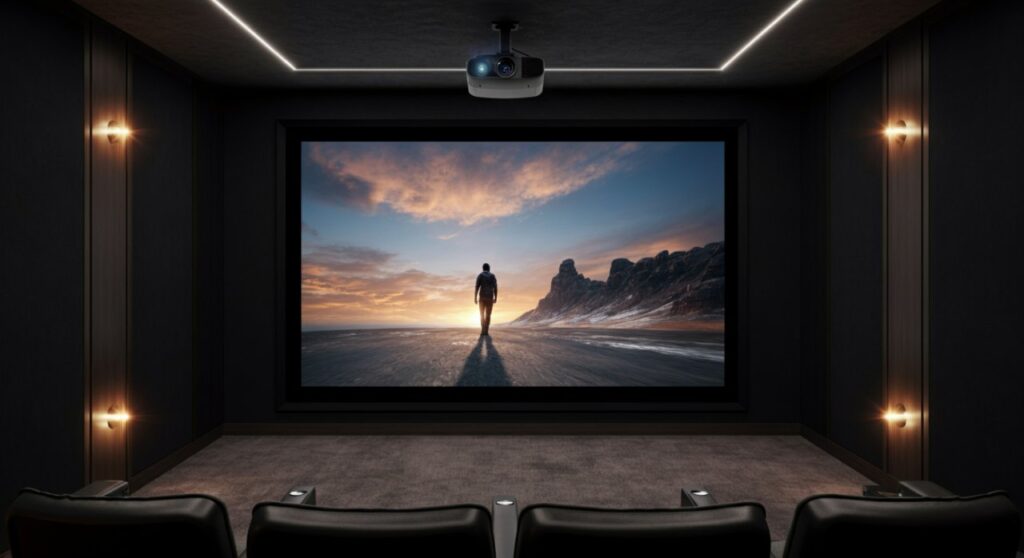
- For Home Theater: Prioritize color accuracy (Rec.709/DCI-P3) and contrast ratio over sheer brightness.
- For Bright Rooms: Focus on high ANSI Lumens (3,000+ is ideal) to combat ambient light.
- For Gaming: Look for low input lag (under 20ms) and a high refresh rate (120Hz+).
- For Portability: Check for built-in batteries, compact size, and wireless connectivity.
Core Specifications: What to Look for When Buying a Projector
When you start learning how to pick a projector, you will quickly realize that specifications can be misleading. Manufacturers often inflate numbers, so focusing on standardized metrics is essential.
Brightness (ANSI Lumens)
Brightness is the most misunderstood specification. ANSI Lumens is the industry-standard measurement for true light output.
- Under 2,000 Lumens: Best for dark, dedicated home cinema rooms.
- 2,000–3,000 Lumens: Good for rooms with controlled lighting (dimmable lamps/curtains).
- 3,000+ Lumens: Necessary for living rooms with natural daylight or office environments.
Resolution and Clarity
Resolution dictates how crisp your image will look, especially on larger screens.
- 1080p (Full HD): Still the “sweet spot” for most casual users and budget-conscious buyers.
- 4K UHD (3840 x 2160): The gold standard for home theater enthusiasts looking to future-proof their setup.
- 720p: Generally avoid unless you are buying a ultra-cheap portable model for kids.
Comparing Projector Technologies
Understanding the underlying technology helps you decide how to select a projector based on your specific needs. Each technology has distinct pros and cons regarding image stability and lifespan.
| Technology | Best For | Pros | Cons |
|---|---|---|---|
| DLP | Gaming & Movies | Sharp image, great contrast, compact. | Risk of “rainbow effect” for sensitive viewers. |
| LCD | Color Accuracy | Better color brightness, no rainbow effect. | Can be bulkier, visible “pixel grid” on older models. |
| LCoS/SXRD | High-End Cinema | Best black levels, film-like image. | Expensive, heavier units. |
| LED/Laser | Longevity | Instant on/off, 20,000+ hour lifespan. | Generally higher upfront cost. |
How to Choose a Good Projector for Home: Placement Matters
Knowing how to choose a projector for home isn’t just about the hardware; it’s about your space. You must measure your room before making a purchase.
Throw Distance
Throw distance is the physical gap between the lens and the screen.
- Standard Throw: Requires several feet of space; great for ceiling mounts in large rooms.
- Short Throw: Allows you to place the projector a few feet from the wall.
- Ultra-Short Throw (UST): Can sit inches away from the wall, effectively acting as a TV replacement.
Contrast Ratio
Don’t be fooled by “dynamic contrast” numbers, which are often marketing fluff. Focus on native contrast, as this determines how deep your blacks look. A higher native contrast ratio is vital if you are learning how to choose a projector for home theater to ensure dark scenes aren’t washed out.
Actionable Tips from Experience
In my years of setting up home entertainment systems, the biggest mistake I see is ignoring the screen. A $2,000 projector will look mediocre on a blank, textured wall.
- Invest in a proper screen: Even an entry-level ALR (Ambient Light Rejecting) screen can make a budget projector look twice as bright.
- Audio considerations: Never rely on the built-in speakers of a projector. Always plan for an external soundbar or AV receiver setup.
- Cable length matters: If you are running HDMI cables longer than 15 feet, use high-quality Active Optical Cables (AOC) to prevent signal loss.
Frequently Asked Questions
What is the most important factor when choosing a projector?
The most important factor is the environment. You must match the projector’s brightness (ANSI Lumens) and technology type to the amount of ambient light in your room.
How do I choose a projector that works well with my game console?
When learning how to pick a projector for home theater and gaming, prioritize low input lag. Look for models specifically marketed with “Game Mode” features that keep latency below 20ms.
Is 4K really necessary for a home projector?
If you have a screen size over 100 inches, 4K resolution is noticeable and worth the investment. For smaller setups, a high-quality 1080p projector often provides better value.
Can I use a projector in a room with a lot of windows?
Yes, but you need a high-lumen projector (3,000+) and ideally an Ambient Light Rejecting (ALR) screen to prevent the image from looking washed out.