
To choose headphones that perfectly match your needs, you must first identify your primary environment (home, office, or gym) and then select the form factor—In-ear, On-ear, or Over-ear—that balances comfort with sound quality. For most users, the decision hinges on choosing between Wireless Bluetooth convenience and the lossless audio fidelity of Wired connections, while prioritizing features like Active Noise Cancellation (ANC) for travel.
Key Takeaways: How to Choose the Right Headphones Guide
If you are in a hurry, here is the essential breakdown of what to look for based on your specific lifestyle:
| Feature | Best For | Top Consideration |
|---|---|---|
| Over-ear (Closed-back) | Office, Travel, Bass lovers | Active Noise Cancellation (ANC) |
| In-ear (Earbuds) | Gym, Commuting, Portability | IPX Water Resistance Rating |
| Open-back Headphones | Home listening, Mixing, Gaming | Soundstage & Breathability |
| Wireless/Bluetooth | General use, Modern iPhones/Androids | Battery life & Codec support (LDAC/aptX) |
| Wired | Audiophiles, Musicians, Video Editors | Impedance (Ohms) & DAC requirements |
Understanding the Three Primary Form Factors
The first step in how to choose headphones is deciding how you want them to sit on or in your ears. This physical design dictates both long-term comfort and the potential for sound isolation.
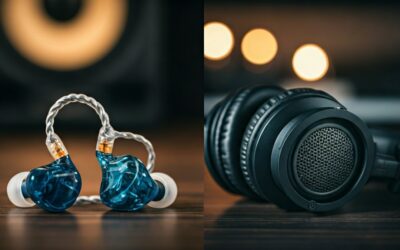
In-Ear Headphones (Earbuds/IEMs)
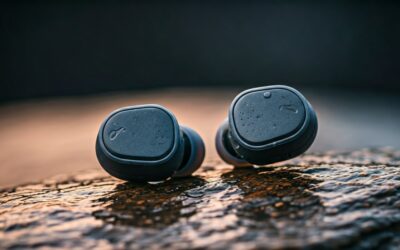
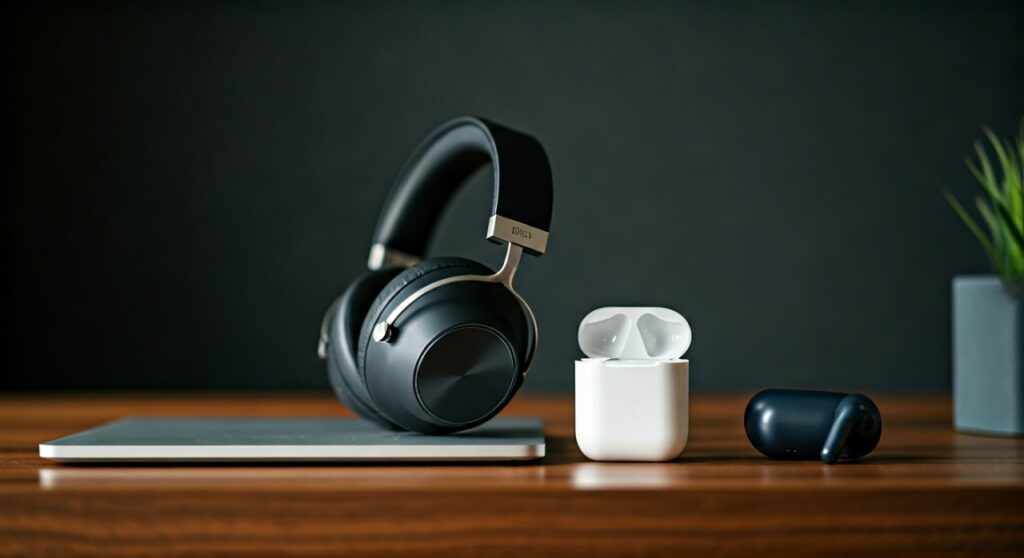
In-ear monitors (IEMs) or earbuds like the Apple AirPods Pro or Sony WF-1000XM5 are the kings of portability. They fit directly into the ear canal, providing a natural seal against outside noise.
In my experience, these are the best choice for fitness enthusiasts. Look for an IPX4 rating or higher to ensure they can handle sweat and rain during outdoor runs.
On-Ear Headphones (Supra-aural)
On-ear models rest directly on the cartilage of your ears. They are generally more compact than over-ear models but can cause “ear fatigue” after a few hours of pressure. They are excellent for people who want better sound than earbuds but don’t want the bulk of a full headset.
Over-Ear Headphones (Circumaural)
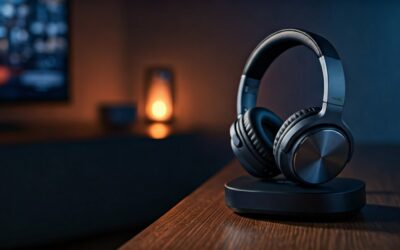
Over-ear headphones encompass the entire ear. This design is the gold standard for sound quality and comfort. Models like the Bose QuietComfort Ultra provide massive drivers that deliver deep bass and a wide soundstage. If you spend 4+ hours a day in meetings or listening to music, this is the form factor you need.
How to Choose Noise Cancelling Headphones for Travel and Work
When people ask how to choose noise cancelling headphones, they are usually looking for a way to reclaim their focus in loud environments. Not all noise cancellation is created equal.
Active vs. Passive Noise Isolation
- Passive Isolation: This is simply the physical barrier of the headphone pads blocking sound. High-quality memory foam earpads provide great passive isolation.
- Active Noise Cancellation (ANC): This technology uses internal microphones to “listen” to outside noise and create an inverse sound wave to cancel it out.
Key ANC Stats to Look For
When evaluating how to choose the right headphones for noise reduction, look for “Adaptive ANC.” This feature adjusts the level of cancellation based on your surroundings. In my testing, the Sony WH-1000XM5 remains the industry leader, capable of silencing the low-frequency hum of airplane engines almost entirely.
Wired vs. Wireless: Connectivity Matters
The debate between wired and wireless is no longer just about sound quality; it is about “Latency” and “Convenience.”
The Case for Wireless (Bluetooth)
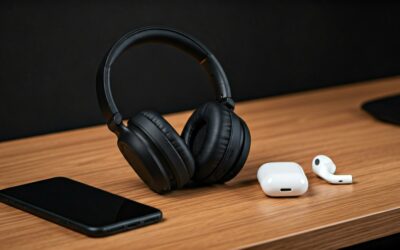
Most modern smartphones have ditched the 3.5mm jack, making Bluetooth headphones the default choice.
- Battery Life: Aim for at least 20-30 hours of playback.
- Codecs: Ensure the headphones support AAC (for iPhones) or aptX/LDAC (for Android) to get the best wireless bitrates.
The Case for Wired
If you are a professional editor or an audiophile, wired is still king.
- Zero Latency: Essential for gaming and video editing where sound must sync perfectly with the image.
- High-Res Audio: Wired connections can handle 24-bit/192kHz audio files that Bluetooth still struggles to compress accurately.
Technical Specs Simplified: Drivers, Impedance, and Frequency
You don’t need a degree in acoustics to understand how to choose the right headphones guide, but you should know three key terms:
- Drivers: The “speakers” inside the earcups. Larger drivers (40mm+) usually produce better bass. Planar Magnetic drivers offer more detail than standard Dynamic drivers but are often more expensive.
- Impedance (Ohms): Lower impedance (32 Ohms or less) means the headphones work great with phones. Higher impedance (250+ Ohms) requires a dedicated Headphone Amplifier.
- Frequency Response: Human hearing is 20Hz to 20,000Hz. Any headphones covering this range are fine, but “Hi-Res” certified gear often goes up to 40,000Hz for added clarity.
Step-by-Step: How to Choose the Right Headphones Guide
Follow this 5-step process to ensure you don’t end up with buyer’s remorse:
Step 1: Define Your Primary Use Case
Are you commuting on a loud train? Get Over-ear ANC headphones. Are you a competitive gamer? Look for a Wired Open-back headset for spatial awareness.
Step 2: Set a Realistic Budget
- Under $50: Reliable wired buds or entry-level wireless.
- $100 – $250: The “Sweet Spot.” You get great ANC and high-quality build materials.
- $400+: Enthusiast and Luxury territory (e.g., AirPods Max or Sennheiser HD 660S2).
Step 3: Check for “Multi-point” Connectivity
If you work on a laptop but keep your phone nearby, Multi-point Bluetooth allows you to stay connected to both. It will automatically switch the audio when a call comes in.
Step 4: Prioritize Comfort and Weight
A headphone might sound amazing, but if it weighs over 300 grams and has a high “clamping force,” it will hurt your head. Check reviews for “clamping force” if you have a larger head or wear glasses.
Step 5: Test the Microphone Quality
If you take Zoom calls, the mic is as important as the speakers. Look for “Beamforming microphones” or “Bone conduction sensors” which help isolate your voice from background chatter.
Frequently Asked Questions
Are expensive headphones actually worth it?
Yes, but only up to a point. Between $50 and $300, you will see massive jumps in build quality, ANC effectiveness, and driver resolution. Beyond $500, you are paying for “diminishing returns”—minor improvements in soundstage that only trained ears usually notice.
Should I choose open-back or closed-back headphones?
Closed-back headphones are best for public use because they don’t leak sound. Open-back headphones allow air and sound to pass through the earcups, creating a more “natural” and “airy” sound, but everyone around you will hear what you are listening to.
How do I know if my headphones are “Hi-Res”?
Look for the Hi-Res Audio logo on the packaging. This certifies that the headphones can reproduce frequencies up to 40kHz. However, to actually hear the difference, you need a high-quality source like Tidal HiFi or Apple Music Lossless.
Is 7.1 Surround Sound important for music?
No. 7.1 Surround Sound is a marketing term usually reserved for gaming. For music, a high-quality Stereo (2.0) setup provides a much more accurate and pleasant listening experience.
How long do wireless headphones usually last?
The hardware can last 5-10 years, but the Lithium-ion battery usually begins to degrade after 2-3 years of daily use. To extend life, avoid leaving your headphones in hot cars or draining the battery to 0% frequently.