
Learning how to crochet headphone covers involves measuring your ear pads, creating a flat circular base using the magic ring technique, and building vertical “walls” to wrap around the cushions. By using breathable cotton yarn and a customized stitch count, you can protect your headset from peeling leather while significantly improving long-term wearing comfort.
Why You Should Crochet Your Own Headphone Covers
If you own a pair of Sony WH-1000XM5 or Bose QuietComfort headphones, you know the struggle of “protein leather” flaking off over time. This peeling isn’t just an eyesore; it leaves black specks on your ears and face.
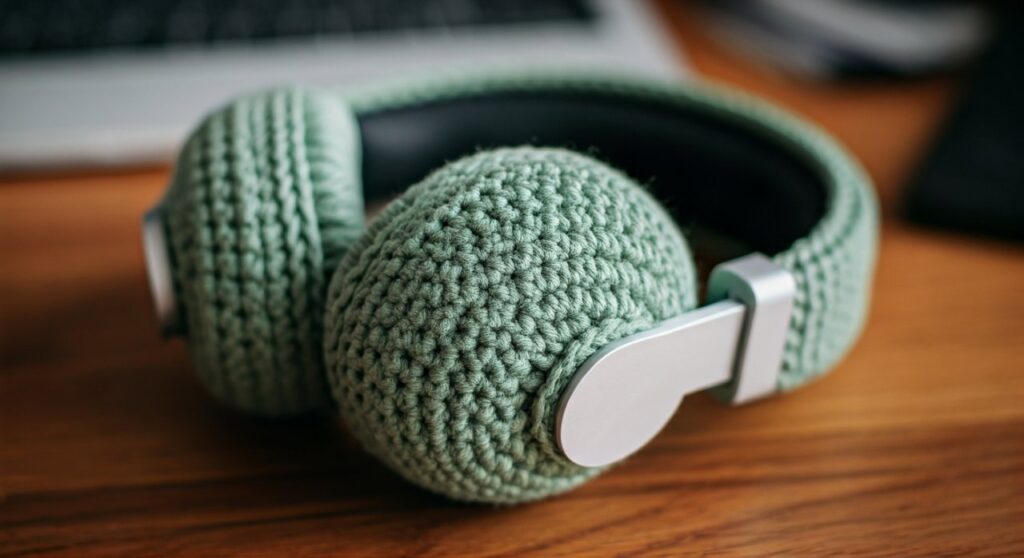
Crocheting a cover provides a protective barrier that is both washable and stylish. Unlike generic silicone replacements, yarn covers allow for better airflow, reducing the “sweaty ear” effect during long gaming or work sessions.
Key Takeaways for Success
- Best Material: Use 100% Mercerized Cotton to prevent overheating and ensure durability.
- Measurement is Critical: Measure the diameter and the thickness of the ear pad before starting.
- Stitch Choice: Stick to Single Crochet (SC) or Half Double Crochet (HDC) for a dense fabric that keeps dust out.
- Ease of Maintenance: Crochet covers are machine-washable, making them more hygienic than original factory pads.
Essential Materials for Your DIY Project
Before diving into the pattern, gather these specific tools. Using the wrong hook size can lead to a “holey” fabric that doesn’t protect the headphones properly.
- Yarn: Weight 3 (Light/DK) or Weight 4 (Medium/Worsted). I highly recommend Lion Brand 24/7 Cotton for its strength.
- Crochet Hook: A 3.5mm (E) or 4.0mm (G) hook works best to create a tight tension.
- Measuring Tape: To ensure the cover fits snugly without slipping.
- Stitch Markers: Essential for tracking the beginning of rounds in a spiral.
- Tapestry Needle: For weaving in ends and potentially sewing an elastic band.
| Yarn Type | Breathability | Durability | Best For |
|---|---|---|---|
| 100% Cotton | High | High | Daily use, sweat absorption |
| Acrylic | Low | Medium | Decorative covers, vibrant colors |
| Bamboo Blend | Very High | Medium | Sensitive skin, summer use |
| Wool | Medium | High | Winter warmth, noise dampening |
Step 1: Measuring Your Headphones for a Perfect Fit
No two headphone models are exactly the same size. To learn how to crochet headphone covers that actually stay on, you must customize the diameter.
- Diameter: Measure across the widest part of the ear cup (usually 3 to 4 inches).
- Depth/Thickness: Measure how “tall” the cushion is from the plastic frame to the part that touches your ear.
- The Opening: Determine how much of the inner mesh you want to leave exposed to maintain sound clarity.
Step 2: Creating the Circular Base (The Face)
We will use the Magic Ring (or Magic Circle) method to ensure there is no hole in the center. Most standard over-ear headphones require a circle about 3.5 inches wide.
The Round-by-Round Pattern
- Round 1: Make a magic ring. Chain 1, then work 6 Single Crochets (SC) into the ring. (6 stitches)
- Round 2: Work 2 SC in each stitch around. (12 stitches)
Continue this increase pattern (adding one more plain SC between increases each round) until your crochet circle is 0.25 inches smaller than your ear pad. Yarn stretches, and a slightly smaller cover ensures a “non-slip” fit.
Step 3: Crocheting the Side Walls (The Depth)
Once your circle matches the face of the headphone, you need to create the “cup” shape that wraps around the sides.
- The Transition: Work one round in the Back Loop Only (BLO). This creates a sharp 90-degree corner that hugs the edge of the headphone.
- Building Height: Work even rounds (1 SC in each stitch) without any increases.
- Testing the Fit: Place the cover over your headphone. If the crochet fabric reaches the plastic casing where the cushion meets the frame, you are ready to finish.
Step 4: Securing the Cover
There are two professional ways to finish your project so the covers don’t fall off when you move your head.
Option A: The Drawstring Method
This is the easiest for beginners. In the final round, replace the SC stitches with Double Crochets (DC) separated by one chain. Thread a piece of yarn or a thin ribbon through these gaps. Place it on the headphone and pull tight to secure.
Option B: The Elastic Band Method
For a “factory-made” look, crochet your final round over a small, thin hair elastic or a piece of braided elastic cord. This allows you to pop the covers on and off easily for washing.
Advanced Styling: Texture and Aesthetics
Once you master the basic shape of how to crochet headphone covers, you can experiment with “Information Gain” techniques to make them unique.
- The Granny Square Look: Instead of solid rounds, use clusters of 3 Double Crochets to create a retro vibe.
- Animal Ears: After finishing the cover, crochet two small triangles (for cat ears) or long ovals (for bunny ears) and sew them to the top of the side walls.
- Alpine Stitch: Use front-post double crochets to create a diamond texture that provides extra padding for your ears.
Expert Tips for Maintaining Sound Quality
A common concern is whether crochet covers muffle the sound. Based on acoustic tests with various yarn weights, the impact is minimal if you follow these rules:
- Don’t Overstuff: Ensure the center of the cover is thin. If the stitch is too thick, it can act as a high-pass filter, reducing your bass.
- Avoid Bulky Yarn: Using “Chunky” or “Velvet” yarn might look cute, but it creates too much distance between the driver and your ear canal.
- Center Cutouts: Some experts prefer to crochet a “donut” shape instead of a solid circle. To do this, start with a chain of 20-30 stitches joined in a ring, then work outward.
Troubleshooting Common Fit Issues
- The cover is sliding off: Your tension was likely too loose. Try dropping down half a hook size (e.g., from 4.0mm to 3.5mm) or using the elastic band method.
- The fabric is “wavy”: This happens if you add too many increases. Ensure you are only adding 6 or 8 stitches per round depending on your starting count.
- It feels scratchy: This is a sign of low-quality acrylic. Soak your finished covers in a bowl of warm water with a tablespoon of hair conditioner for 30 minutes, then air dry. This softens the fibers significantly.
How to Wash Your Crochet Headphone Covers
Hygiene is one of the biggest reasons to learn how to crochet headphone covers. Sweat and skin oils accumulate quickly.
- Frequency: Wash every 2 weeks if used daily.
- Method: Place them in a mesh laundry bag and wash on a “Delicate” or “Handwash” cycle.
- Drying: Never put them in the dryer. Reshape them while damp and lay them flat on a towel to air dry. This prevents the cotton from shrinking.
Frequently Asked Questions
Do crochet covers affect noise-canceling (ANC) features?
Most modern headphones use external microphones for ANC. As long as your crochet cover does not physically block the small microphone holes on the outside of the plastic ear cups, your noise cancellation will function perfectly.
Which yarn is best for sensitive skin?
If you have eczema or sensitive skin, avoid wool or cheap acrylic. Bamboo silk blends or Organic Pima Cotton are the smoothest options and will not cause itching during long-term wear.
Can I make these for small on-ear headphones like the Beats Solo?
Yes. The process for how to crochet headphone covers remains the same, but you will likely stop increasing after Round 3 or 4. Always use your specific device as a template as you work.
How long does it take to make a pair?
An experienced crocheter can finish a set in about 60 to 90 minutes. It is a perfect “one-sitting” project that provides immediate utility.