
How to Equalize Headphones: The Ultimate Guide to Perfect Sound
To equalize headphones, you must use software or hardware tools to adjust specific frequency ranges, such as bass, mids, and treble, to correct sound flaws or match your personal taste. The most effective method involves installing a parametric equalizer like Equalizer APO on Windows or Wavelet on Android, selecting a preset based on professional measurements (like the Harman Target), and fine-tuning the sliders until the audio reaches peak clarity.
Key Takeaways for Better Headphone Audio
Before diving into the technical steps, here are the essential points you need to know about how to equalize headphones effectively:
- Subtractive EQ is King: It is always better to lower (cut) annoying frequencies than to boost (add) quiet ones to avoid audio distortion or clipping.
- Use AutoEq Presets: Don’t guess the settings; use the AutoEq database which contains over 4,000 professional profiles for specific headphone models.
- Pre-Amp Gain is Critical: If you boost any frequency, you must lower the Pre-amp gain by the same amount to prevent digital “crunching” sounds.
- Hardware Matters: While software is free, dedicated hardware like the Qudelix-5K provides a consistent EQ experience across all your devices.
- Trust Your Ears: Measurements get you 90% of the way there, but your unique ear anatomy (the pinna gain) means you should always do a final “ear-test.”
Understanding the Frequency Spectrum
To learn how to equalize headphones, you first need to understand what you are actually moving when you slide those bars up and down. Sound is measured in Hertz (Hz) and Kilohertz (kHz).
The Bass (20Hz – 250Hz)
This is the “thump” and “rumble.” If your headphones sound thin, you might want a shelf boost here. However, too much boost in the 200Hz range leads to “muddiness,” where the bass bleeds into the vocals.
The Midrange (250Hz – 4kHz)
This is where vocals and most instruments live. If voices sound like they are coming through a telephone, you have a “honky” midrange. If they sound distant, you may have a “recessed” midrange.
The Treble (4kHz – 20kHz)
This provides detail, “air,” and sparkle. Be careful here; boosting the 5kHz to 8kHz range too much causes sibilance (that piercing “S” sound) which leads to listener fatigue.
Essential Tools for Headphone Equalization
You cannot equalize headphones without the right “engine.” Depending on your device, the tools vary significantly in terms of power and precision.
| Platform | Recommended Software | Type | Best For |
|---|---|---|---|
| Windows | Equalizer APO + Peace GUI | Parametric | Total system-wide control |
| Android | Wavelet or Poweramp Equalizer | Automatic/Graphic | Easy one-tap improvements |
| macOS | SoundSource or eqMac | System-wide | Audiophiles on Mac |
| iOS/iPhone | In-app EQ or Hardware DAC | Limited | Minimal adjustments |
| Hardware | Qudelix-5K or RME ADI-2 | DSP | Cross-platform consistency |
Step-by-Step Guide: How to Equalize Headphones on Windows
Windows offers the most powerful free tools for audio enthusiasts. We will use the industry standard: Equalizer APO.
Step 1: Install Equalizer APO
Download and install Equalizer APO. During installation, the “Configurator” window will pop up. Select your primary playback device (e.g., Realtek Audio or your USB DAC) and restart your computer.
Step 2: Install the Peace Interface
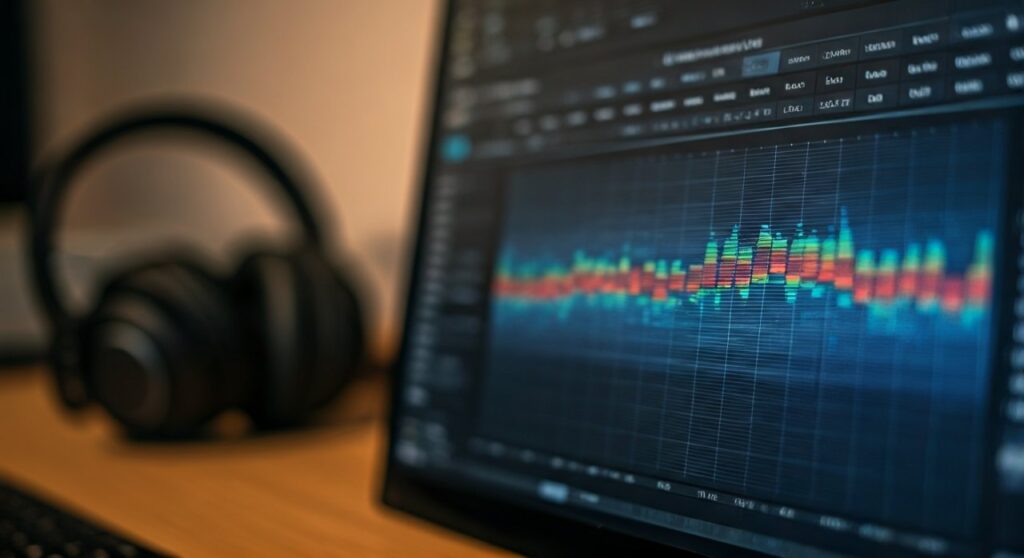
Equalizer APO itself is just a text-based engine. To make it user-friendly, download and install the Peace GUI. This gives you a professional-looking dashboard with sliders and graphs.
Step 3: Load an AutoEq Preset
The fastest way to get “perfect” sound is to use a preset.
- Open Peace GUI.
- Click on the “AutoEq” button (if available) or go to the AutoEq website.
- Search for your specific headphone model (e.g., Sennheiser HD600 or Sony WH-1000XM5).
- Download the “Parametric EQ” values and enter them into Peace.
Step 4: Adjust the Pre-Amplifying Gain
Look at your highest boost. If you boosted the bass by 5dB, set your Pre-amplifying gain to -5.1dB. This creates “headroom” so the digital signal doesn’t exceed the maximum limit and cause ugly distortion.
How to Equalize Headphones on Android
Android users have a much easier path thanks to an app called Wavelet. It is the gold standard for mobile EQ because it works automatically.
The Wavelet Method
- Install Wavelet from the Google Play Store.
- Play some music in the background (Spotify, YouTube, etc.).
- Open Wavelet and enable AutoEq.
- Search for your headphone model in the database.
- The app will instantly apply a compensation curve that flattens the frequency response of your headphones to the Harman Target.
The Poweramp Method
If you want manual control, Poweramp Equalizer offers a Parametric EQ (where you can choose the exact frequency and “Q-factor” or width of the adjustment) for all system sounds.
Understanding EQ Types: Graphic vs. Parametric
When researching how to equalize headphones, you will encounter two main types of interfaces.
Graphic Equalizers
These have fixed frequency bands (e.g., 31Hz, 62Hz, 125Hz). They are easy to use—like the EQ in the Spotify settings—but they are “blunt instruments.” They lack the precision needed to fix narrow peaks in a headphone’s response.
Parametric Equalizers
This is the professional choice. You can choose:
- Center Frequency: Exactly where the change happens.
- Gain: How much you are increasing or decreasing.
- Q-Factor: How wide the “bell curve” is. A high Q affects a tiny needle-point frequency; a low Q affects a wide range.
Expert Tips for a Professional Sound Profile
After years of testing hundreds of headphones, I have found that these three “golden rules” will save you hours of frustration:
- Avoid the “V-Shape” Trap: Many beginners boost the bass and treble while cutting the mids. This sounds exciting for 5 minutes but quickly becomes tiring and masks the detail in vocals.
- Match the Harman Target: Most people prefer the Harman Research Curve, which mimics the sound of high-end speakers in a treated room. It features a slight bass shelf and a smooth ear-gain rise in the upper mids.
- Use Low-Shelf Filters for Bass: Instead of boosting a single frequency like 60Hz, use a Low-Shelf filter. This raises everything below a certain point equally, resulting in a much more natural-sounding low-end.
Hardware EQ: The “Set it and Forget it” Solution
If you switch between a laptop, a phone, and a tablet, software EQ is a nightmare to manage. This is why many experts recommend Hardware DSP (Digital Signal Processing).
Devices like the Qudelix-5K or the Fiio BTR15 allow you to “flash” the EQ settings directly onto the device. This means no matter what you plug the headphones into, the EQ is always active. I personally use the Qudelix-5K because it has the entire AutoEq library built directly into its mobile app.
Common Mistakes When Equalizing Headphones
- Equalizing at High Volumes: Your ears perceive frequencies differently at high volumes (see: Fletcher-Munson curves). Always EQ at your “normal” listening volume.
- Ignoring the Seal: If your headphone pads are old or you wear glasses, you will lose bass. No amount of EQ can fix a broken physical seal.
- Boosting “Nulls”: Some headphones have “dips” in sound caused by physical cancellation. If you try to boost a 10dB null by 10dB, you are just stressing your amplifier without fixing the sound.
Frequently Asked Questions (FAQs)
Can equalizing headphones damage them?
No, software equalization cannot damage your headphones unless you boost the volume to extreme, distorted levels for long periods. Modern drivers are very resilient. However, excessive bass boosting can cause “clipping,” which sounds bad but usually doesn’t break the hardware.
Does Spotify have a good equalizer?
The Spotify EQ is a basic Graphic Equalizer. It is fine for quick adjustments, but it is not precise enough for high-fidelity correction. For the best results, use system-wide tools like Peace GUI or Wavelet.
What is the “Harman Target” I keep hearing about?
The Harman Target is a frequency response curve developed by Dr. Sean Olive. It is based on decades of research into what sounds “natural” and “preferred” to the majority of listeners. Most EQ presets aim to move your headphones toward this target.
Why does my music sound quieter after I equalize?
This is likely because you (correctly) applied a negative Pre-amp gain. Since you are cutting frequencies to prevent distortion, the overall volume drops. Simply turn up your physical volume knob to compensate.