

How to Fix a Bent Headphone Headband: The Expert Guide
To fix a bent headphone headband, you must first identify the frame material: metal headbands can be restored using steady, manual counter-pressure or a “clamping mold,” while thermoplastic headbands require controlled heat from a hairdryer to become pliable for reshaping. If the frame is made of brittle plastic and has snapped, you will need a structural reinforcement like epoxy resin or internal splinting to ensure a lasting repair.
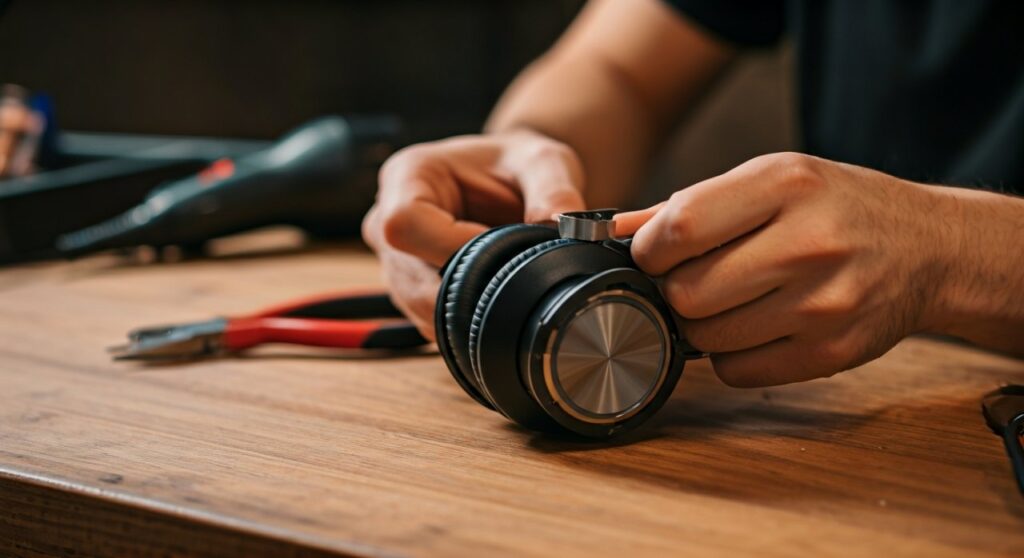
Whether you accidentally sat on your Sony WH-1000XM5s or your vintage Sennheisers have lost their clamping force, a warped frame is more than an aesthetic issue. It ruins the acoustic seal, degrades bass response, and creates painful pressure points on your skull.
As someone who has refurbished hundreds of studio monitors and consumer headsets, I can tell you that most headbands are surprisingly resilient if handled with the correct “material-first” approach. This guide will walk you through professional-grade techniques to repair headphone headband structures without causing further damage.
Key Takeaways: Quick Fix Summary
| Material Type | Recommended Fix Method | Difficulty Level | Risk Factor |
|---|---|---|---|
| Spring Steel / Metal | Manual counter-bending or “Book Clamping” | Easy | Low |
| Thermoplastic (ABS/PC) | Controlled heat application (Hairdryer) | Medium | Moderate (Melting risk) |
| Composite / Carbon Fiber | Component replacement or Splinting | Hard | High (Snapping risk) |
| Broken Plastic | Two-part Epoxy + Heat Shrink Tubing | Medium | Moderate |
Understanding Your Headband Material Before Repairing
Before you apply force, you must know what you are working with. Different materials respond differently to stress and heat.
Metal Headbands (Spring Steel or Aluminum)
Most high-end headphones, like the Beyerdynamic DT 770 Pro or Hifiman models, use a spring steel core. This material has “memory.” It wants to return to a specific shape. If it is bent out of alignment, it requires a force that exceeds its yield strength to take a new permanent set.
Plastic Headbands (ABS or Polycarbonate)
Common in gaming headsets and travel headphones (like Bose QuietComfort), these are usually thermoplastics. If you try to bend these cold, they may develop stress whiting (white marks on the plastic) or snap entirely. These require thermal energy to soften the polymer chains before reshaping.
Hybrid and Padded Structures
Many modern headphones wrap the frame in memory foam and protein leather. When using heat or pressure, you must protect these soft goods, as high heat can shrivel synthetic leathers or melt the foam.
Step 1: Manual Reshaping for Metal Headbands
If your metal headband is too wide (losing clamping force) or skewed to one side, the manual molding method is the safest starting point.
- Identify the Bend Point: Put the headphones on and look in a mirror. Note where the gap is between the earcup and your ear.
- Protect the Drivers: If possible, remove the ear pads to avoid putting pressure on the delicate driver mesh.
- The Counter-Bend Technique: Grasp the headband firmly with both hands, placing your thumbs at the center of the bend.
- Apply Incremental Pressure: Slowly apply pressure in the opposite direction of the bend. Do not “snap” the movement; use a slow, rolling motion.
- Test for Symmetry: Lay the headphones flat on a table. The earcups should be equidistant from the center line of the headband.
Expert Tip: If the headband is too loose, use the “Book Stack” method. Place the headphones over a stack of books that is slightly narrower than your head. Wrap a velcro strap around the earcups to pull them inward and leave them overnight. This “cold setting” technique is safer for aluminum frames.
Step 2: Using Heat to Fix Plastic Headbands
If you need to repair headphone headband components made of plastic, heat is your best friend—and your worst enemy.
Tools Needed:
- High-heat hairdryer or a variable-temp heat gun (set to low).
- A “Form” (a yoga block or a small soccer ball works well).
- Thick gloves to protect your hands.
The Process:
- Isolate the Bend: Focus the heat only on the area that is warped. Shield the earcups with a thick towel to prevent the heat from damaging the internal electronics or magnets.
- Heat Evenly: Keep the hairdryer 4-6 inches away. Move it constantly in a circular motion for 60-90 seconds. The plastic should feel warm to the touch but not hot enough to smell “chemical.”
- Molding: Once the plastic is slightly pliable, gently mold it into the desired shape.
- The Cooling Phase (Critical): Hold the plastic in the corrected position until it cools completely. If you let go while it is still warm, the “thermal memory” will cause it to revert to the bent shape.
- Cold Shock: For a more permanent set, you can wipe the area with a damp, cold cloth while holding the shape.
Step 3: Repairing Snapped or Cracked Headbands
Sometimes a “bend” is actually a hairline fracture that has caused the headband to sag. In this case, simple bending won’t work; you need structural reinforcement.
The “Splint and Bond” Method
For a professional-grade headband repair, follow these steps:
- Clean the Surface: Use Isopropyl Alcohol (70% or higher) to remove oils and hair products from the crack.
- Apply Adhesive: Use a two-part epoxy (like Gorilla Epoxy or J-B Weld). Avoid standard Super Glue (Cyanoacrylate), as it is too brittle for the constant flexing of a headband.
- Add a Splint: Find a thin piece of flexible metal (like a piece of a metal ruler) or high-density plastic. Glue this across the break on the underside of the headband.
- Compression: Use mini-spring clamps to hold the splint in place for at least 24 hours.
- Aesthetic Finish: Once cured, wrap the area in heat-shrink tubing or a neoprene headband cover to hide the repair.
Advanced Troubleshooting: Symmetry and Clamping Force
Even after straightening the frame, you might find the clamping force is uneven. This often happens because the yoke (the U-shaped piece holding the earcup) is also twisted.
Checking the Yoke Alignment
- Ensure the swivel mechanism moves freely.
- If the yoke is plastic, check for “stress fractures” near the pivot points.
- For metal yokes, you can often use needle-nose pliers (wrapped in electrical tape to prevent scratching) to slightly twist the yoke arms back into alignment with the headband.
Measuring Clamping Force
Professional technicians use a clamping force gauge, but you can simulate this at home. Place the headphones over a box that is roughly 6 inches wide (the average width of a human head). If the headphones slide off with a light tug, the tension is too low. If they leave indentations on the box, the tension is too high and may lead to headband fatigue or snapping.
Preventative Maintenance: How to Avoid Future Bends
To ensure you don’t have to fix bent headphone headband issues again, follow these industry-standard care tips:
- Use a Stand: Never lay headphones flat on a desk where they can be sat on or leaned against. Use an Omega-style stand which supports the headband’s natural curve.
- One-Handed Removal: Most bends happen when people pull the earcups apart with excessive force to take them off. Always use two hands or grasp the top of the headband.
- Case Storage: When traveling, always use a hard-shell case. Soft pouches do nothing to prevent structural bending in a backpack.
- Temperature Control: Never leave plastic headphones in a hot car. The interior of a car can reach 140°F, which is the glass transition temperature for many consumer plastics, causing them to warp under their own weight.
When to Replace vs. Repair
Not every headband can be saved. If you notice the following, it is time to look for replacement parts:
- Structural “Crazing”: Small spider-web cracks throughout the plastic. This means the polymer has degraded due to UV exposure or age.
- Snapped Internal Wiring: If the bend was severe enough to sever the wires running through the headband, you’ll lose sound in one ear.
- Memory Loss: If a metal headband immediately returns to a warped shape no matter how much you bend it, the molecular structure of the steel has failed.
You can often find replacement headbands for popular models like the Audio-Technica ATH-M50x or Beats by Dre on sites like eBay or specialized retailers like Full Compass.
Frequently Asked Questions
Can I fix a headband that has completely snapped in half?
Yes, but it won’t be as flexible as before. Using a combination of epoxy and a metal reinforcement splint is the best way to restore structural integrity. However, for high-end headphones, replacing the headband assembly is recommended for comfort.
Will heating my headphones void the warranty?
Almost certainly. Most manufacturers, including Sony and Bose, consider physical damage and DIY repairs as “user-inflicted,” which voids the standard warranty. Only proceed if you are out of the warranty period or willing to take the risk.
Why do my headphones feel tighter after I fixed the bend?
This is usually due to over-correction. When you bend metal or plastic back, it is easy to apply too much force. You can “relax” the fit by stretching the headphones over a wide object (like a PC tower or a few books) for 12-24 hours.
Is it safe to use a blowtorch to heat the headband?
No. Never use an open flame. The temperature is uncontrollable and will instantly char the plastic or ignite the internal foam and wiring. Stick to a hairdryer or a heat gun with digital temperature control.
How do I fix a bend in a leather-wrapped headband?
You must be very careful with heat. Leather can shrink or crack. Try the cold-setting method (clamping over books) first. If you must use heat, apply it to the underside or use a leather conditioner afterward to restore moisture to the material.
**
**
**
**









