
To make headphone wires retractable, you can either manually coil them using a heat-setting technique to create a “spring” effect or retrofit an external spring-loaded reel mechanism onto your existing cable. Both methods prevent tangling and allow the wire to expand and contract as needed without internal damage to the copper strands.
Tangled headphone cables are one of the most frustrating “first-world problems” for audiophiles and casual listeners alike. I have spent years testing various cable management solutions, and I found that most “store-bought” retractable headphones sacrifice sound quality for convenience. By learning how to make headphone wires retractable yourself, you can keep your high-end sound while adding the functionality of a clutter-free setup.
Key Takeaways: Retractable Headphone Guide
| Method | Effort Level | Best For | Durability |
|---|---|---|---|
| Heat-Coil Method | Medium | Creating a permanent “Slinky” effect | High |
| Badge Reel Hack | Low | Quick DIY retraction for office use | Medium |
| Recoil Winders | Very Low | Non-invasive, portable cable management | Very High |
| Heat-Shrink Mod | High | Professional-grade, reinforced cables | High |
Understanding the Physics of Retractable Wires
Before diving into the “how-to,” it is crucial to understand the materials you are working with. Most headphone cables are insulated with PVC (Polyvinyl Chloride) or TPE (Thermoplastic Elastomer). These materials have a “memory” property.
When you apply controlled heat, the molecular structure of the plastic relaxes. If you cool it in a specific shape—like a coil—the plastic “remembers” that shape. This is the secret behind how to make headphone wires retractable without using bulky mechanical parts.
Method 1: The DIY “Heat-Set” Coiling Technique
This is my personal favorite method. It transforms your standard straight wire into a coiled cable, similar to those found on classic studio headphones or old-school telephone receivers.
Materials Needed
- Your headphones (works best with 3.5mm wired earbuds).
- A pencil or a wooden dowel.
- Masking tape or electrical tape.
- A hairdryer or a heat gun (on low setting).
- A refrigerator or a bowl of ice water.
Step-by-Step Instructions
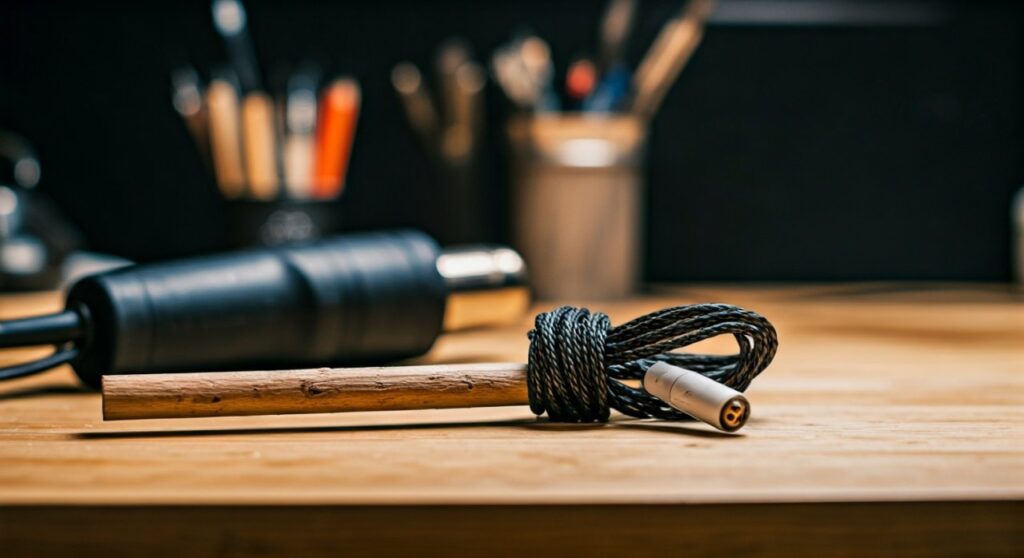
- Secure the Base: Tape one end of the headphone wire (near the jack) to the end of the pencil. Ensure it is tight so it doesn’t slip during the process.
- The Tight Wrap: Wrap the wire tightly around the pencil. Avoid overlapping the wires; keep the coils side-by-side. The tighter the wrap, the better the retraction.
- Tape the End: Once you reach the earpieces, tape that end to the pencil as well. You should now have a “pencil-sized” coil of wire.
- Apply Controlled Heat: Use your hairdryer on the highest heat setting. Move it back and forth along the coils for about 3–5 minutes. Warning: Keep the heat source at least 6 inches away to avoid melting the PVC insulation.
- The “Shock” Cool: Immediately place the pencil (with the wire still taped) into the freezer for 10 minutes or submerge it in ice water. This “locks” the plastic memory.
- Unwrap and Reverse: Remove the tape and slide the wire off the pencil. For extra “spring,” gently twist the coil in the opposite direction of the wrap.
Method 2: Retrofitting a Retractable Badge Reel
If you want a mechanical retraction (where the wire actually zips into a housing), the easiest way is to modify a Heavy-Duty Badge Reel. This is a popular hack among warehouse workers and office professionals.
Why use a Badge Reel?
- It features a torsion spring that provides consistent tension.
- Most use a nylon cord that can be substituted or paired with your wire.
- It includes a clip for your belt or shirt.
How to Assemble
- Choose the Reel: Purchase a Carabiner-style Badge Reel with a high-strength spring.
- The Loop Method: Do not take the reel apart. Instead, pull the string out and use a zip tie to attach the midpoint of your headphone cable to the end of the badge reel string.
- The Feed: As the reel retracts, it will pull the “excess” headphone wire toward the reel housing.
- Security: Use a small piece of heat-shrink tubing to secure the connection point between the headphone wire and the reel string.
Method 3: Using Commercial Recoil Winders
Sometimes, the best way to learn how to make headphone wires retractable is to use a dedicated tool designed by industrial engineers. Products like the Recoil Winder are non-permanent and won’t void your headphone warranty.
Benefits of Commercial Winders
- Spring-loaded mechanism: Uses a calibrated spring to prevent wire crimping.
- Portable: Can be moved from one pair of headphones to another.
- Protective: The outer shell protects the wire from friction and “pocket lint” damage.
Expert Tip on Usage
When using a Recoil Winder, always fold your cable in half first. Hook the “loop” onto the inner spindle and give it a slight tug. The mechanism will automatically wind the dual strands, keeping them perfectly balanced.
Advanced Mod: Internal Spring Integration
For those with soldering experience, you can harvest a retraction mechanism from a broken pair of Sony MDR-series retractable headphones or a generic retractable charging cable.
- Disassemble the Donor: Open the housing of the retractable device to extract the circular spring plate.
- Solder the Connections: You will need to desolder your headphone drivers and re-solder them to the contact points on the rotating spool.
- Reassemble: Mount the spool into a 3D-printed housing or a modified mint tin.
This method is high-risk but provides the most “factory” look for high-end Audiophile cables.
Comparing DIY vs. Professional Solutions
| Feature | DIY Heat-Coiling | Badge Reel Hack | Commercial Winder |
|---|---|---|---|
| Cost | ~$0 (Uses household items) | $5 – $10 | $15 – $25 |
| Portability | Excellent | Bulkier | Good |
| Risk of Damage | High (Heat risk) | Low | Zero |
| Best For | Minimalists | Office/Work | Commuters |
Essential Safety Precautions
When learning how to make headphone wires retractable, safety for both you and your gear is paramount.
- Avoid Open Flames: Never use a lighter to heat your cables. The flame temperature is too high and will carbonize the TPE jacket, making it brittle.
- Strain Relief: Always leave at least 2 inches of “straight” wire near the 3.5mm jack and the earpieces. These areas are prone to “cable fatigue” and internal snapping.
- Check Resistance: If you use the heat method, test the audio quality afterward. If you hear crackling, you may have overheated the internal copper filaments.
Troubleshooting Common Issues
The Coil is Too Loose
If your heat-coiled wire doesn’t “snap” back, you likely didn’t heat it long enough or the cooling phase was too slow. Repeat the process, but leave the wire in the freezer for a full hour.
The Mechanism Jams
For mechanical reels, jams usually happen because the wire is twisted. Ensure the wire is perfectly straight before it enters the spool. Applying a tiny amount of silicone lubricant to the spool can also help.
Wire “Kinking”
Kinks occur when the wire is wound too tightly around a sharp edge. Always use a rounded object like a Sharpie or a wooden dowel as your winding base.
FAQs
Can I make braided cables retractable?
Yes, but the heat-coil method is less effective on braided nylon. For braided cables, the Badge Reel Hack or Recoil Winders are much better options as they don’t rely on plastic memory.
Does coiling affect sound quality?
In theory, coiling creates a small amount of inductance. However, at the low voltages used by headphones, this is completely imperceptible to the human ear. Your FLAC files or Spotify Premium streams will sound exactly the same.
Will the heat method damage my iPhone or Android?
No, as long as the headphones are unplugged during the heating process. Never apply heat to a cable that is currently connected to an electronic device.
How long does the “memory” last?
A well-executed heat-set coil can last for 6 to 12 months of daily use. If it starts to sag, simply re-wrap it and apply a quick burst of heat to reset the polymer memory.
Is there a way to make Bluetooth headphones retractable?
Most Bluetooth headphones are already wireless, but if you have “neckband” style buds, you can use small rubber O-rings to slide the excess wire up against the neckband, effectively shortening them.
**
**
**
**