
Effective Strategies to Store Headphones in a Classroom
Tangled wires, snapped headbands, and missing ear pads are the common nightmares of a tech-integrated classroom. To store headphones in classroom environments effectively, you must implement a system that combines cable management, labeling, and durable hardware. The most successful methods include using over-the-door pocket charts, individual plastic bins, or mobile storage carts. These solutions prevent the “spaghetti wire” mess, ensure hygiene, and extend the lifespan of your school’s hardware.
Key Takeaways (TL;DR)
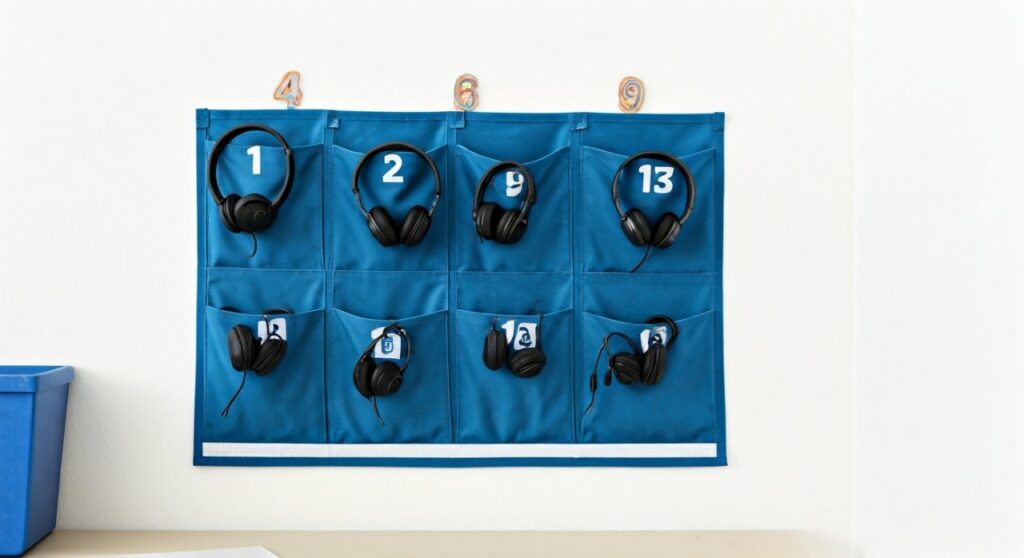
- Best Budget Option: Use numbered pocket charts (designed for cell phones) to hang headphones vertically.
- Best for Durability: Individual hard-shell cases or Ziploc bags inside plastic bins protect against dust and impact.
- Best for Mobility: Rolling headphone carts allow for easy sharing between different classrooms or grade levels.
- Essential Maintenance: Use Velcro cable ties instead of twisting wires to prevent internal copper breakage.
- Student Accountability: Assign each student a specific numbered pair that corresponds to their seat number or roster.
Why Professional Classroom Headphone Storage Matters
Investing in a high-quality storage system isn’t just about aesthetics; it’s about budget preservation. In my experience managing a STEM lab, I observed that classrooms without a dedicated storage system replaced nearly 30% of their headphones every semester.
When headphones are stuffed into desks or thrown into a communal box, the 3.5mm jacks undergo significant stress. This leads to “one-ear audio” issues. Furthermore, hygiene is a critical concern. Cross-contamination of skin oils and earwax can lead to the spread of bacteria if headphones are not properly separated.
Step-by-Step Guide: How to Store Headphones in a Classroom
Follow this structured approach to transform your classroom tech corner from a tangled mess into a streamlined station.
Step 1: Inventory and Grade Your Equipment
Before buying bins or hooks, audit your current stock. Check for frayed wires or cracked plastic.
- Group headphones by brand (e.g., Logitech, Cyber Acoustics, or Koss).
- Test each pair for audio clarity.
- Discard any units that require “wiggling” the wire to work—they are a fire hazard and a distraction to students.
Step 2: Choose Your Primary Storage Method
Depending on your square footage and budget, select one of the following “Primary Pillars” of storage:
Method A: The Hanging Pocket Chart
This is the gold standard for space-saving. Use a heavy-duty over-the-door jewelry or shoe organizer.
- Pros: Easy to see which pair is missing; keeps wires separate.
- Cons: Not suitable for large, “over-ear” gaming-style headphones.
Method B: Individual Plastic Bins
Use small Sterilite or IRIS plastic bins stacked on a shelf.
- Pros: Superior protection from dust and spills; can hold larger headsets.
- Cons: Requires more shelf surface area.
Method C: Command Hook Wall Station
Install 3M Command Hooks along a low wall or the side of a bookshelf.
- Pros: High accessibility for younger students (K-2).
- Cons: Wires can still dangle and get caught on passing backpacks.
Step 3: Implement a Numbering System
Entity mapping is crucial. Match each headphone to a specific student.
- Use a Label Maker (like a Brother P-Touch) to place a number on the headband.
- Apply a corresponding number to the storage slot or bin.
- Cover the label with a small piece of clear packing tape to prevent students from picking it off.
Step 4: Master the “No-Tangle” Wrap
Teach students the “Figure-8” wrap rather than wrapping the cord tightly around the earcups.
- Tight wrapping causes tension at the entry point, leading to wire failure.
- Provide Velcro One-Wrap ties for every pair. These stay attached to the wire so they don’t get lost.
Comparison of Classroom Headphone Storage Solutions
| Storage Method | Estimated Cost | Space Required | Durability Level | Best For |
|---|---|---|---|---|
| Pocket Charts | $15 – $25 | Minimal (Wall) | Medium | Small Earbuds / Lightweight Headsets |
| Mobile Carts | $150 – $400 | Moderate (Floor) | High | Multi-classroom use / Shared Tech |
| Plastic Tubs | $2 – $5 per bin | High (Shelf) | Very High | Heavy-duty headsets / 1:1 Programs |
| Dish Racks | $10 – $20 | Moderate | Low | DIY / Budget-conscious teachers |
Advanced DIY Hacks for Teachers
If your school budget is tight, these “expert-verified” hacks can help you store headphones in a classroom for under $20.
The Dish Rack Method
Purchase a vinyl-coated wire dish drying rack. The slots designed for plates are perfectly sized to hold the headbands of most standard classroom headphones. This keeps them upright and prevents them from touching each other.
The Binder Clip Solution
Attach large binder clips to the edge of a table. You can hang the headphones on the silver “arms” of the clip. This is an excellent way to keep headphones off the floor during active work sessions.
PVC Pipe “Tree”
For the handy teacher, building a small “tree” out of PVC piping provides a sturdy, industrial-grade hanging station. You can spray paint it to match your classroom decor.
Maintenance and Hygiene Protocols
To ensure the longevity of your hardware, establish a weekly maintenance routine.
- Sanitization: Use 70% Isopropyl Alcohol wipes on the ear pads. Avoid using bleach, as it can degrade the synthetic leather (protein leather) found on many Logitech or Sony headsets.
- Wire Inspection: Check for “kinks.” If a wire is spiraling, unplug it and let it hang straight to “reset” the plastic memory.
- Jack Cleaning: Use a toothpick to gently remove lint from the 3.5mm headphone jack to ensure a crisp connection.
Common Mistakes to Avoid
- The “Tangle Bucket”: Never use a single large bin for all headphones. The time lost untangling them at the start of a lesson can take up to 10 minutes of instructional time.
- Cheap Rubber Bands: Do not use rubber bands to secure cords. Over time, the rubber degrades and melts onto the wire, creating a sticky mess that is nearly impossible to clean.
- High Placement: Don’t hang headphones higher than the students’ eye level. This leads to students pulling on the cords to reach them, which snaps the internal copper wiring.
Frequently Asked Questions (FAQs)
How do I stop my students from breaking the headphone jacks?
The best way is to use jack protectors or teach the “two-finger pull” method. Students should always grab the plastic housing of the plug, never pull on the wire itself.
Should I store headphones and iPads together?
Ideally, no. Storing them in the same slot can lead to the headphone jack scratching the iPad screen or getting snapped off inside the port if the device shifts.
What is the most hygienic way to store headphones?
Individual gallon-sized Ziploc bags are the most hygienic. They prevent the spread of head lice and keep earwax transfers contained to a single student’s environment.
How often should I replace classroom headphones?
With a proper storage system like a numbered pocket chart, a quality pair of Koss or HamiltonBuhl headphones should last 3 to 5 years. Without a system, they rarely survive a single school year.