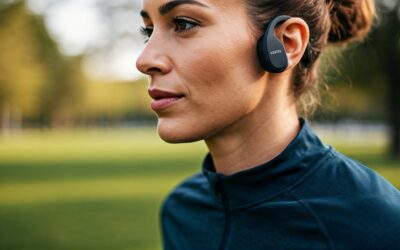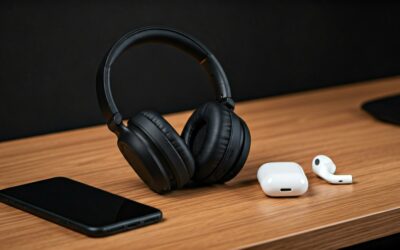

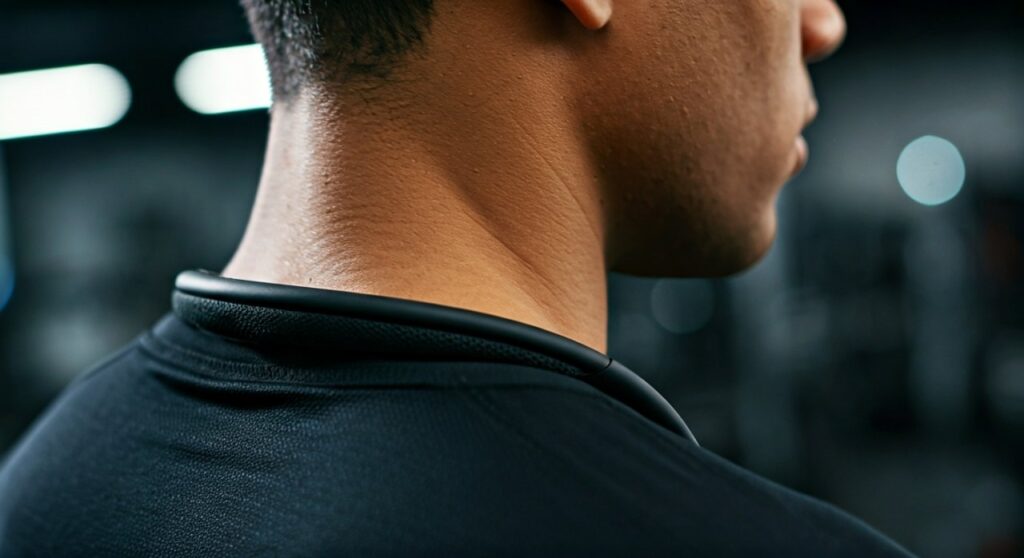
To wear behind the neck headphones correctly, simply drape the connecting band over the back of your neck and hook the earpieces over or into your ears. Ensure the band rests comfortably against your nape or hovers slightly above your collar for maximum stability during movement.
Key Takeaways for the Perfect Fit
If you are in a hurry, here is the essential checklist to ensure your behind the neck headphones stay secure and sound great:
| Feature | Action for Best Fit | Expert Tip |
|---|---|---|
| Band Placement | Rest the cable or rigid band on the base of the skull/nape. | Avoid placing it too high; it should stay below your hairline. |
| Ear Hooking | Loop the “hooks” over the top of the ear first. | Ensure the hook is snug against the junction where the ear meets the head. |
| In-Ear Seal | Gently twist the earbud while pushing into the canal. | Use the “Pull-Ear-Back” method to open the canal for a better seal. |
| Cable Slack | Use the included cinch or slider to tighten the loop. | Reducing slack prevents the “bouncing” noise (microphonics) during runs. |
The Art of Wearing Behind the Neck Headphones
Whether you are a marathon runner, a gym enthusiast, or someone who hates “headphone hair,” knowing how to wear behind the neck headphones is a game-changer. These devices, often called neckband headphones or wrap-around headphones, offer a unique blend of security and accessibility.
Unlike standard earbuds that rely solely on friction, these use the anatomy of your neck and ears for support. In my experience testing over 50 pairs of sport-specific audio gear, the fit is the single most important factor for sound quality. If the fit is loose, you lose all the bass response and risk the device falling off mid-sprint.
Step-by-Step Guide: How to Wear Behind the Neck Headphones
Follow these four steps to ensure a professional fit that won’t budge during high-intensity interval training (HIIT) or a long commute.
Step 1: Identify the Left and Right Channels
It sounds simple, but many behind the neck headphones have asymmetrical designs. Look for the L and R indicators near the drivers. Wearing them backward will not only feel uncomfortable but will also distort the stereo soundstage.
Step 2: The “Drape and Hook” Maneuver
Hold the headphones by the earpieces with the connecting band hanging down.
- Lift the band over your head and lower it behind your neck.
- Hook the curved plastic or wire sections over the top of your ears.
- Let the band settle naturally against your nape.
Step 3: Achieve the Perfect Seal (For In-Ear Models)
If your neckband headphones use silicone tips, the seal is vital. Reach over your head with the opposite hand and gently pull the top of your ear upward. This straightens the ear canal. Insert the bud and release your ear. This “locks” the headphone in place.
Step 4: Adjust the Tension
Most high-end models, such as those from Sony or Sennheiser, include a small sliding plastic piece on the cable. Slide this toward your neck to remove excess slack. This prevents the band from flapping against your skin, which can be distracting and cause mechanical noise in the audio.
Different Styles of Behind the Neck Headphones
Not all wrap-around designs are created equal. Depending on your model, the wearing technique might vary slightly.
Rigid Neckbands (The “Collar” Style)
Devices like the Sony WI-1000XM2 feature a thick, rigid collar that sits on your clavicle.
- How to wear: These are not meant to be “tight.” Let the collar rest on your shoulders. The wires extend from the front of the collar to your ears.
- Best for: Office use and commuting where battery life is a priority.
Flexible Sport Wraps
Brands like Jabra or Powerbeats (earlier versions) use a flexible wire.
- How to wear: These should be pulled tighter against the back of the head.
- Best for: Running and heavy sweating. The tension keeps the buds from sliding out.
Bone Conduction Headphones
Devices like Shokz (formerly AfterShokz) sit in front of the ear rather than inside it.
- How to wear: The band goes behind the head, and the transducers rest on your cheekbones. Do not put them inside your ears!
- Best for: Cyclists and runners who need “situational awareness” to hear traffic.
Pro Tips for Glasses Wearers and Athletes
Wearing behind the neck headphones with accessories can be tricky. As a regular glasses wearer, I have found a specific order of operations works best.
- With Glasses: Always put your glasses on after the headphones. The headphone hook should be closest to your skin, with the glasses temple resting on top of the hook. This prevents the headphones from being pushed outward.
- With Helmets: If you are cycling, the neckband should sit below the helmet’s retention system (the dial at the back). Ensure the band doesn’t interfere with the helmet straps.
- Managing Sweat: If you sweat heavily, the band can occasionally slide. I recommend wiping the back of your neck and the band with a dry cloth every 30 minutes to maintain friction.
Why Choose Behind the Neck Styles?
There are three major reasons why experts prefer this form factor over True Wireless Stereo (TWS) earbuds like AirPods:
- Battery Life: Because the neckband can house a larger battery, these often last 15-20 hours, compared to 5-8 hours for tiny buds.
- Security: If a bud falls out of your ear, it stays attached to the neckband instead of falling into a storm drain or under a treadmill.
- Microphone Quality: The microphones are often positioned closer to the mouth on the neckband, leading to clearer voice calls.
Troubleshooting Common Fit Issues
The Band is Bouncing
If the band “slaps” your neck while running, it is likely too long. Look for “cord management clips” that often come in the box. You can also use a small hair tie to loop the excess wire and shorten the circumference.
Ear Fatigue or Soreness
If the tops of your ears hurt, the hooks are too tight. If the hooks are moldable (common in memory wire models), gently widen the curve to reduce pressure on the cartilage.
Poor Sound Quality (Tinny Audio)
This is almost always due to a poor seal. Try switching to a larger silicone ear tip. Behind the neck headphones rely on that seal to produce lower frequencies (bass).
Frequently Asked Questions
Can I wear behind the neck headphones while lying down?
It is generally uncomfortable to wear rigid neckbands while lying on your back because the band will push the earpieces out of your ears. However, flexible wire models or bone conduction sets are often thin enough to be used while resting your head on a pillow.
Are these headphones waterproof?
Most sport-centric neckband headphones have an IPX4 to IPX7 rating. An IPX7 rating means you can wear them in heavy rain or even rinse them under a tap, but always check the manufacturer’s specifications before submerging them.
Do they work with winter hats or beanies?
Yes! One of the benefits of the “behind the neck” design is that it doesn’t interfere with the top of your head. You can easily wear a beanie over your ears and the headphones. The band will simply sit tucked underneath the back of the hat.
How do I clean the neckband?
Since the band sits against your skin, it will accumulate salt from sweat. Wipe it down with a damp microfiber cloth after every workout. Avoid using alcohol-based cleaners on silicone parts as it can cause the material to degrade over time.