
To wrap headphones with embroidery floss, you start by securing the thread to the base of the wire with a double knot and then use a series of forward knots (similar to a friendship bracelet) or a spiral wrap to cover the length of the cord. This DIY technique not only prevents frustrating tangles but also significantly increases the durability and lifespan of your cables by providing a protective, flexible layer.
Key Takeaways: The DIY Cord Wrap Essentials
If you are looking for a quick overview before diving into the detailed process, here are the core facts about how to wrap headphones with embroidery floss:
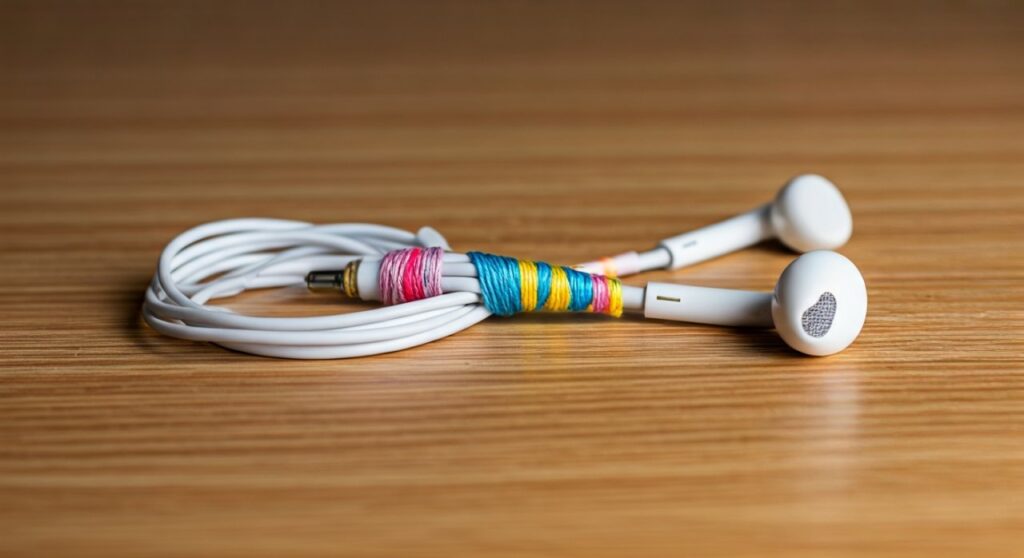
- Time Commitment: Approximately 2 to 4 hours depending on the length of the cord and the complexity of the pattern.
- Primary Benefit: Eliminates “tangle-stress” and protects the internal wiring from fraying or pet damage.
- Best Materials: DMC Embroidery Floss or Pearle Cotton thread are the gold standards for a smooth, lint-free finish.
- Pro Tip: Use a small piece of washi tape to secure the headphones to a table edge while you work to maintain consistent tension.
- End Game: Secure the final knot with a tiny drop of clear nail polish or super glue to prevent unravelling over time.
Why You Should Wrap Your Headphones with Embroidery Floss
Standard headphone cables, especially those from Apple or basic third-party manufacturers, are notorious for two things: tangling into impossible knots and fraying at the connection points. By learning how to wrap headphones with embroidery thread, you are essentially adding a custom “armor” to your tech.
Expertly wrapped cords provide a tactile grip that prevents the “sliding” effect that leads to knots. Furthermore, the added thickness makes the wire less appealing to pets like cats or rabbits who enjoy chewing on rubberized cables. From a fashion perspective, it allows you to color-code your gear, making it easy to identify your charger or earbuds in a shared household.
Essential Materials for Your DIY Project
Before you begin, gather these items. Having everything within reach will make the repetitive motion of wrapping much more meditative and less frustrating.
- Embroidery Floss: Choose 3-4 colors for a patterned look or 1 solid color for a sleek finish.
- Scissors: A sharp pair of craft scissors for clean cuts.
- Clear Nail Polish or Fabric Glue: Essential for “locking” the start and end knots.
- Tape (Masking or Washi): To hold the cord steady on a flat surface.
- Safety Pin or Clipboard: Optional, but helpful if you prefer working on your lap.
Comparison: Embroidery Floss vs. Other Materials
| Material Type | Durability | Ease of Use | Aesthetic Appeal | Best For |
|---|---|---|---|---|
| Embroidery Floss | High | Medium | Very High | Long-term use, aesthetic customisation |
| Yarn | Medium | Easy | Low (Fuzzy) | Thick power cables, quick fixes |
| Paracord | Very High | Difficult | Industrial | Heavy-duty outdoor gear |
| Washi Tape | Low | Very Easy | High | Temporary decoration, no protection |
Step-by-Step Guide: How to Wrap Headphones with Embroidery Floss
Follow these steps to ensure a professional, tight wrap that won’t slip or gap over time.
Step 1: Preparation and Measuring
Start by cleaning your headphone wire with a damp cloth to remove any oils or dust. Measure out your thread. A good rule of thumb is that you need about 3 to 4 times the length of the cord for each color you plan to use. If you are using three colors, you will have three long strands of embroidery thread.
Step 2: Securing the Starting Point
Tie all your strands together at one end of the headphone wire (usually near the jack or the earbud). Use a tight double knot. Leave a small “tail” of about half an inch; you will wrap over this tail to hide it, ensuring a seamless look.
Step 3: The “Chinese Staircase” Knot (The Primary Technique)
This is the most popular method for how to wrap headphones with embroidery floss.
- Separate the color you want to start with from the others.
- Hold the other threads against the headphone wire.
- Create a “4” shape with the active thread over the wire.
- Loop the end of the active thread under the wire and through the hole of the “4”.
- Pull tight upwards toward the starting knot.
Repeat this motion. You will notice a spiral pattern beginning to form naturally.
Step 4: Changing Colors
When you want to switch colors, simply drop the current thread into the “bundle” held against the wire. Pick up the next color from the bundle and begin the same “4” shape knotting process. This creates a clean transition without needing extra knots in the middle of the cord.
Step 5: Finishing and Sealing
Once you reach the end of the wire, tie a final surgeon’s knot or a series of tight double knots. Trim the excess thread closely. Apply a small dab of clear nail polish to the final knot. This acts as a permanent bond so the wrap doesn’t unravel during daily use.
Advanced Patterns and Techniques
Once you master the basic spiral, you can experiment with more complex designs to make your headphones truly unique.
The Alternating Half-Hitch
Instead of always knotting in one direction, switch sides. Do ten knots starting from the left, then ten knots starting from the right. This creates a “flat” woven look rather than a spiral, which feels different in the hand and provides a more structured grip.
The Candy Cane Stripe
To achieve a striped look, use two colors simultaneously. Hold both strands and perform the loop together. This results in a thicker wrap that covers the cord much faster, though it uses more embroidery thread and creates a bulkier profile.
The Chevron Pattern
This is for the advanced DIYer. It involves using friendship bracelet techniques like the Forward-Backward knot. While time-consuming, it results in a stunning “V” shape pattern often seen in high-end woven cables.
Expert Tips for a Professional Finish
As someone who has wrapped dozens of cables—from Lightning cables to high-end Sennheiser wires—I have discovered several “pro secrets” that save time and improve quality.
- Tension is Everything: If you pull too hard, the wire might coil. If you pull too loosely, the thread will slide. Aim for a “snug” fit that stays in place but doesn’t distort the cable’s natural flexibility.
- The “Bobbin” Method: Instead of working with 10 feet of loose thread that gets tangled, wrap your excess thread around a small piece of cardboard (a bobbin). This keeps your workspace organized.
- Avoiding Gaps: Every 10-15 knots, use your fingernail to “push” the knots up toward the start. This compresses the wrap and ensures the original cable color doesn’t peek through the thread.
- Dealing with “The Fork”: When you reach the part where the headphone wire splits into two (for the left and right ears), wrap the “V” junction extra tightly. It is the most common point of failure.
Troubleshooting Common Issues
Even for experts, wrapping can occasionally go wrong. Here is how to fix common pitfalls.
The thread is sliding down the wire:
This usually happens with very smooth, silicone-based cables. To fix this, start with a tiny piece of double-sided tape at the beginning of the wrap to give the thread something to “bite” into.
The spiral looks uneven:
This is caused by inconsistent tension. If you notice an uneven section, it is best to unwrap those few knots and redo them. Because you are using knots and not glue, it is easy to backtrack.
The thread is getting “fuzzy”:
This happens with cheaper, low-quality floss. Stick to mercerized cotton threads like DMC. If fuzziness occurs after months of use, you can carefully use a lighter to “singe” the stray fibers (be extremely careful not to melt the wire!).
Maintenance: Keeping Your Wrapped Headphones Clean
Embroidery floss is a textile, which means it can absorb oils from your hands or stains from your bag. To maintain them:
- Spot Clean: Use a toothbrush dipped in a mix of water and mild detergent.
- Drying: Always air dry. Never use a hairdryer on high heat, as it can damage the internal copper wiring of the headphones.
- Protection: Store your wrapped headphones in a hard-shell case. This prevents the thread from snagging on keys or zippers.
Frequently Asked Questions (FAQs)
Does wrapping headphones with embroidery floss affect sound quality?
No, wrapping the exterior insulation of a cable has zero impact on the electrical signals passing through the copper core. It only affects the physical durability and aesthetics of the cable.
How much thread do I need for a standard 4-foot headphone cable?
For a standard 1.2-meter (4-foot) cable, you will typically need about 12-15 yards of total thread if you are using a standard spiral knot technique. If you are doing a thicker “flat” wrap, you may need up to 20 yards.
Can I wrap charging cables too?
Yes! In fact, wrapping USB-C or Lightning cables is highly recommended as these cables often break at the “neck” near the connector. The thread provides extra strain relief.
Will the floss make the headphones feel heavy?
The weight increase is negligible. You might notice a slight difference in how the cable “drapes” or hangs, as the thread adds a bit of stiffness, but it will not feel heavy during use.
How do I remove the embroidery floss if I want to change the color?
Simply use a pair of small embroidery scissors to carefully snip the starting knot. You can then unwrap the entire cord in a few minutes. Be careful not to nick the rubber insulation of the wire itself.