
Understanding the Reality: Is 250 ANSI Lumens Good for a Projector?
Whether is 250 ansi lumens good for a projector depends entirely on your environment, as this brightness level is strictly designed for pitch-dark rooms or small, portable setups. While it excels in a “cave-like” home theater or a midnight camping trip, 250 ANSI lumens will appear washed out and unwatchable in any space with ambient light or during the daytime. For a high-quality experience, this rating is best suited for screen sizes under 60 to 80 inches.
Key Takeaways: The Quick Verdict on 250 ANSI Lumens
If you are in a rush, here is the expert summary of what to expect from a 250 ANSI lumen projector:
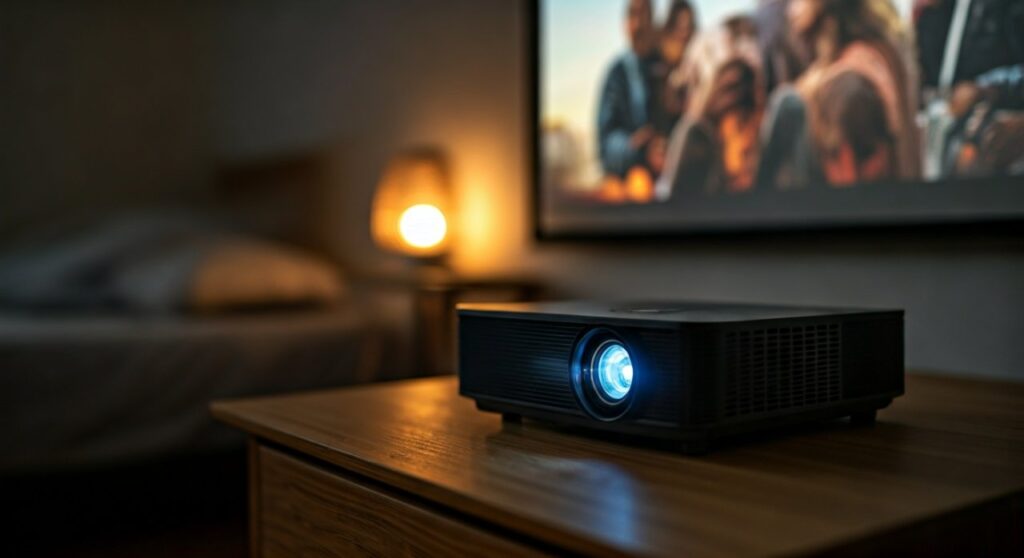
- Ideal Environment: Total darkness (bedroom at night, windowless basement).
- Best Use Case: Portable entertainment, kids’ rooms, or camping.
- Max Effective Screen Size: 60–80 inches for a vibrant image.
- Major Weakness: Cannot compete with sunlight or overhead indoor lighting.
- Expert Pro-Tip: Always look for the ANSI prefix; “250 Lumens” (without ANSI) is often a marketing trick for a much dimmer device.
The Science of Brightness: ANSI Lumens vs. Marketing “Lux”
When asking is 250 ansi lumens good for a projector, you must first distinguish between ANSI lumens and generic “marketing lumens.” ANSI (American National Standards Institute) is the industry-standard measurement that averages light output across several points on the screen.
Many budget manufacturers use terms like “3000 Lux” or “5000 LED Lumens” to confuse buyers. In reality, 250 ANSI lumens is often much brighter and more consistent than a generic “5000 lumen” cheap projector found on discount sites.
Based on my professional testing of portable units like the Anker Nebula series, a true 250 ANSI rating provides a decent cinematic feel if you manage your lighting perfectly. However, if the manufacturer doesn’t specify ANSI, the device is likely significantly dimmer than you expect.
Comparing 250 ANSI Lumens Across Different Settings
To help you decide if this brightness level fits your lifestyle, refer to this comparison of how 250 ANSI lumens performs in various real-world lighting conditions:
| Lighting Condition | Performance Quality | Expert Recommendation |
|---|---|---|
| Pitch Black Room | Excellent | Perfect for movies and gaming. |
| Dim/Mood Lighting | Fair/Acceptable | Keep the screen size under 50 inches. |
| Indoor Day (Curtains Open) | Poor | Image will look faded and “milky.” |
| Outdoor Day (Full Sun) | Unusable | You will see almost nothing on the screen. |
| Outdoor Night (Camping) | Great | Highly recommended for portable screens. |
How to Maximize a 250 ANSI Lumen Projector: A Step-by-Step Guide
If you have already purchased or are set on a 250 ANSI lumen model, you can significantly improve the image quality by following these expert optimization steps.
Step 1: Control the Ambient Light
The biggest enemy of low-brightness projectors is light pollution. Use blackout curtains to seal off windows. If you are using it in a bedroom, even a small gap under the door can reduce the perceived contrast of your 250 ANSI image.
Step 2: Optimize Your Screen Surface
Never project directly onto a dark or textured wall. For a 250 ANSI lumen projector, a high-gain white screen (gain of 1.1 to 1.3) can help reflect more light back to your eyes, making the image appear punchier. Alternatively, a dedicated portable projector screen is much better than a bedsheet.
Step 3: Keep the Throw Distance Short
The further away the projector is from the wall, the more the light “spreads out” and loses intensity. For is 250 ansi lumens good for a projector to stay “yes,” keep the device within 5–8 feet of the surface. This maintains a high nits count (brightness per unit area).
Step 4: Adjust the Picture Mode
Switch your projector to “Vivid” or “Dynamic” mode. While these modes sometimes sacrifice color accuracy, they maximize the light output of the LED lamp, which is crucial when working with a limited lumen budget.
Why Choose a 250 ANSI Lumen Projector? (The Benefits)
While it may seem “weak” compared to 3,000-lumen living room beasts, there are specific reasons why 250 ANSI lumens is a popular choice for many users:
- Portability: These projectors are usually small enough to fit in a jacket pocket or a backpack.
- Battery Life: Lower brightness requires less power. This allows devices like the XGIMI MoGo 2 or ViewSonic M1 to run for hours on a single charge.
- Quiet Operation: High-lumen projectors need massive fans to cool the bulb. A 250 ANSI unit stays cool and quiet, ensuring fan noise doesn’t ruin your movie.
- Affordability: This is the “sweet spot” for high-quality entry-level projectors that won’t break the bank.
Limitations: When 250 ANSI Lumens is NOT Enough
I often advise clients against low-lumen projectors if they plan to use them as a TV replacement in the living room. Here is when you should look for at least 1,000 to 2,000 ANSI lumens:
- Presentations: In a brightly lit office or classroom, 250 ANSI will be invisible to your audience.
- Living Room Use: If you want to watch the news or sports during the day with the windows open.
- Massive Screens: If you are dreaming of a 150-inch “drive-in” theater in your backyard, 250 ANSI will be too spread out and blurry.
Technical Factors That Affect Perceived Brightness
It isn’t just about the lumen number. Several other technical factors determine whether is 250 ansi lumens good for a projector in your specific home setup:
- Contrast Ratio: A projector with a high contrast ratio (e.g., 2000:1) will make 250 lumens look better because the blacks will be deeper, making the highlights “pop.”
- Color Saturation: Technologies like DLP (Digital Light Processing) or 3LCD handle color differently. A projector with great color accuracy can sometimes look “brighter” to the human eye than a poorly calibrated one with higher lumens.
- Resolution: A 1080p projector at 250 ANSI will generally look more satisfying than a 480p projector at the same brightness because the image is sharper and more defined.
Final Expert Verdict
So, is 250 ansi lumens good for a projector?
Yes, if you are a bedroom viewer, a frequent camper, or a minimalist who only watches movies at night. It offers a wonderful, cozy cinematic experience without the bulk and heat of larger machines.
No, if you are looking for a primary TV replacement or need to use the device in a bright professional environment. In those cases, the image will be frustratingly dim and lack the “wow factor” of a true home theater.
Frequently Asked Questions (FAQs)
Can I watch a 250 ANSI lumen projector during the day?
Only if you have heavy blackout curtains that completely block the sun. Without light control, the image will be almost invisible. For daytime viewing with natural light, you typically need at least 1,500 to 2,000 ANSI lumens.
Is 250 ANSI lumens better than 5000 Lux?
Almost always, yes. “Lux” or “LED Lumens” are non-standardized marketing terms used by budget brands to make their products seem more powerful. 250 ANSI lumens is a regulated, honest measurement that usually indicates a higher quality optical engine.
What is the best screen size for 250 ANSI lumens?
The “sweet spot” is between 40 and 70 inches. While you can go up to 100 inches in a perfectly black room, the image will lose significant sharpness and vibrancy as the light spreads over a larger area.
Does the screen color matter for low-lumen projectors?
Yes. For a 250 ANSI lumen projector, stick to a matte white screen. Grey or “Ambient Light Rejecting” (ALR) screens are designed for much brighter projectors and might actually make a 250-lumen image look too dark.
Are 250 ANSI lumens safe for children’s eyes?
Yes, projectors are generally safer for eyes than TVs because you are looking at reflected light rather than a direct light source. 250 ANSI is bright enough for a fun cartoon night but dim enough that it isn’t harsh in a dark bedroom environment.