
Understanding the Safety Threshold: Is 80 dB Safe for Headphones?
Yes, 80 dB is safe for headphones for a duration of up to 40 hours per week (roughly 8 hours per day). Most audiologists and health organizations, including the World Health Organization (WHO), consider 80 decibels (dB) the “safe” upper limit for prolonged exposure without significant risk of permanent hearing damage.
However, the safety of 80 dB depends heavily on the duration of exposure and the proximity of the sound source to your eardrum. Because headphones bypass the natural “filtering” of the outer ear, 80 dB delivered directly into the ear canal can feel louder and more fatiguing than 80 dB from a distant speaker.
Key Takeaways: Safe Listening at a Glance
If you are in a hurry, here are the essential facts regarding is 80 dB safe for headphones:
- The 8-Hour Rule: You can safely listen at 80 dB for up to 8 hours a day.
- Logarithmic Scaling: Sound intensity doubles every 3 dB; 83 dB is twice as powerful as 80 dB.
- The 60/60 Rule: Experts recommend listening at 60% volume for no more than 60 minutes at a time.
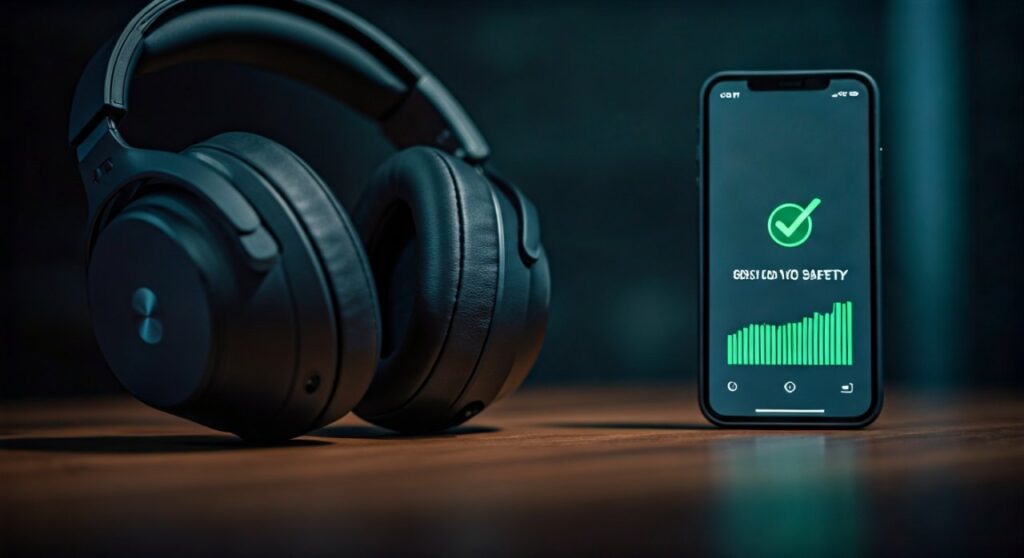
- Device Monitoring: Modern smartphones (iPhone/Android) have built-in tools to track Headphone Level in real-time.
- Warning Signs: If you experience “muffled” hearing or Tinnitus (ringing) after listening, your volume is too high, regardless of the dB reading.
The Science of Decibels and Your Ears
To understand why 80 dB is the “magic number” for safety, we must look at how the human ear processes sound. Decibels are measured on a logarithmic scale, not a linear one.
This means that a small numerical increase represents a massive jump in sound pressure. For example, 90 dB is not 10% louder than 80 dB; it is actually 10 times more intense and significantly more damaging to the Stereocilia (tiny hair cells in the inner ear).
How 80 dB Compares to Everyday Sounds
| Sound Level (dB) | Common Example | Maximum Safe Exposure (Daily) |
|---|---|---|
| 60 dB | Normal conversation | Unlimited |
| 70 dB | Vacuum cleaner | Unlimited |
| 80 dB | Loud alarm clock / Busy street | 8 Hours |
| 85 dB | Food blender / Shouting | 2 Hours (NIOSH Standard) |
| 95 dB | Motorcycle engine | 45 Minutes |
| 105 dB | Maximum volume on most phones | 4 Minutes |
| 120 dB | Rock concert / Siren | Immediate Risk |
As shown in the table, 80 dB sits at the boundary. It is loud enough to be immersive but low enough that the ear can recover if given proper rest.
Why 80 dB on Headphones Feels Different
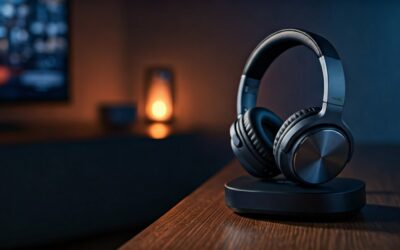
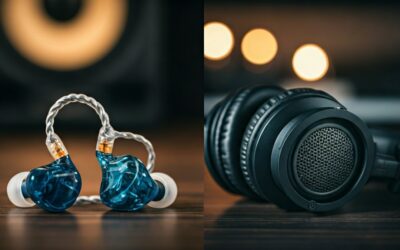
When you listen to 80 dB through In-Ear Monitors (IEMs) or Over-Ear Headphones, the sound pressure is trapped. This is known as the Occlusion Effect.
In an open environment, sound waves dissipate. In your ear canal, those waves have nowhere to go but against your eardrum. This is why a “safe” 80 dB can still cause ear fatigue—a temporary dullness of hearing—if you don’t take breaks.
The Role of Ambient Noise
Most people turn their headphones up to 80 dB or higher because of background noise. If you are on a bus (approx. 75-80 dB ambient noise), you will naturally push your music to 90 dB just to hear it clearly. This is where the real danger lies.
Step-by-Step Guide: How to Ensure Your Headphones are at a Safe Level
Monitoring your decibel levels isn’t just for audio engineers. You can do it easily with tools you already own.
Step 1: Use Built-in Smartphone Monitors
- For iPhone Users: Go to Settings > Sounds & Haptics > Headphone Safety. Enable Reduce Loud Sounds and set the limit to 80 dB. You can also view your “Real-Time Headphone Level” by adding the Hearing icon to your Control Center.
- For Android Users: Most modern Android devices have a Volume Limiter in the “Sounds and Vibration” menu. Look for Media Volume Limit and set a custom PIN-protected ceiling.
Step 2: Calibrate Using the “Arm’s Length” Test
If you don’t have a digital readout, use this old-school expert trick:
- Hold your headphones at arm’s length while music is playing.
- If you can clearly hear the lyrics or the melody from that distance, the volume is likely over 85 dB.
- Lower the volume until the sound is just a faint murmur.
Step 3: Invest in Active Noise Cancellation (ANC)
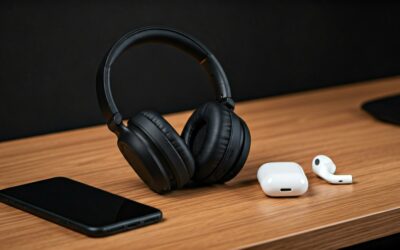
I have tested dozens of headphones, from Sony WH-1000XM5 to Apple AirPods Pro. ANC is the single best tool for hearing safety. By cancelling out the 70 dB rumble of an airplane or office, you can keep your music at a comfortable 65-70 dB instead of cranking it to 85 dB to “mask” the environment.
Step 4: Follow the 60/60 Rule
This is the gold standard for audiologists. Never listen at more than 60% of the maximum volume for more than 60 minutes. After an hour, take a 10-minute “silent break” to let the hair cells in your cochlea recover.
Expert Insights: The Danger of “Hidden” Volume
As an expert in audio gear, I often see users fall into the “Clean Audio Trap.” High-end headphones (like Sennheiser HD600 or Hifiman planars) have very low distortion.
Because the audio sounds so clean and crisp, your brain doesn’t perceive it as “loud” or “painful.” You might be listening at 90 dB and feeling fine, while your ears are actually sustaining microscopic damage. Always rely on your device’s decibel meter rather than your “feeling” of loudness.
Long-Term Effects of Exceeding 80 dB
If you consistently push past the 80 dB threshold, you risk Noise-Induced Hearing Loss (NIHL). This condition is:
- Permanent: Once the hair cells in your inner ear die, they do not grow back.
- Cumulative: Small amounts of damage every day add up over decades.
- Preventable: Unlike age-related hearing loss, NIHL is 100% avoidable with volume control.
Symptoms to Watch For
- Tinnitus: A persistent ringing, buzzing, or hissing in the ears.
- Hidden Hearing Loss: You can pass a standard hearing test, but you struggle to understand speech in noisy environments (like a restaurant).
- Hyperacusis: Increased sensitivity or pain to everyday sounds.
FAQs: Is 80 dB Safe for Headphones?
Is 80 dB loud for music?
For most people, 80 dB is moderately loud. It is comparable to a loud office or a garbage disposal. While it is enjoyable for music, it is not “concert-level” loud, which usually starts at 100 dB.
Can I sleep with headphones at 80 dB?
No. Sleeping with headphones at 80 dB is dangerous because you are likely exceeding the 8-hour safety window. For sleep, keep volume levels below 50-60 dB to ensure your ears can rest along with your body.
Are earbuds more dangerous than over-ear headphones at 80 dB?
Yes, potentially. Earbuds sit closer to the eardrum, increasing the sound pressure level (SPL). Additionally, earbuds don’t block out external noise as well as over-ear headphones, often leading users to turn the volume up higher than they should.
Does 80 dB cause Tinnitus?
80 dB is unlikely to cause immediate Tinnitus in healthy ears if limited to 8 hours. However, if you already have sensitive hearing or existing damage, even 80 dB can trigger a “flare-up” of ringing.
How do I know if my headphones are hitting 80 dB?
On an iPhone, use the Health App to check your “Headphone Audio Levels” history. On a PC or Mac, you can use a Sound Pressure Level (SPL) meter app, though these are less accurate without a calibrated microphone.