

In most jurisdictions worldwide, it is not illegal to wear headphones while walking, as there are currently no federal laws in the United States or national laws in the UK and Canada prohibiting it. However, some local municipalities have “distracted walking” ordinances, and you could be held legally liable in a civil lawsuit if wearing headphones contributed to an accident.
Key Takeaways: Is It Illegal to Wear Headphones While Walking?
If you are looking for a quick summary of the legal and safety landscape regarding walking with headphones, here are the essential facts:
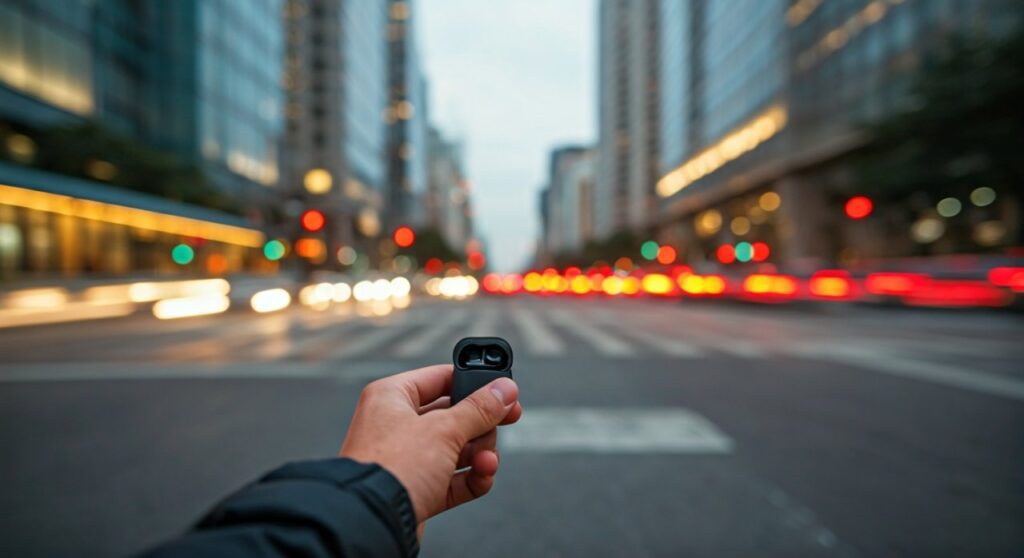
- Legal Status: Generally legal for pedestrians in 99% of global cities.
- Liability: In the event of a traffic accident, wearing noise-canceling headphones can be used as evidence of “Comparative Negligence,” potentially reducing your insurance payout.
- Specific Bans: Some local jurisdictions (like certain parks or high-traffic crossings in specific towns) may have local bylaws against distracted walking.
- The Safety Gap: Pedestrians wearing headphones are three times more likely to be involved in serious accidents compared to those who are not, according to research from the University of Maryland.
- Best Practice: Always use Transparency Mode or Bone Conduction headphones when navigating busy intersections.
Understanding the Legal Landscape of Pedestrian Headphone Use
While you won’t find a police officer handcuffing you for listening to a podcast on your morning stroll, the legal implications are more nuanced than a simple “yes” or “no.” The legality often shifts from “criminal law” to “civil liability.”
United States Law
Currently, no U.S. state has a blanket ban on pedestrians wearing headphones. However, states like California, Florida, and New York have strict laws for cyclists and drivers regarding earplugs or dual-ear headphones. For pedestrians, the focus is on Distracted Walking.
In places like Honolulu, Hawaii, the “Smombie” (Smartphone Zombie) law penalizes pedestrians for looking at electronic devices while crossing the street. While this primarily targets screens, if headphones prevent you from hearing an emergency siren or a police command, you could face “failure to obey” citations.
International Perspectives
In the United Kingdom, the Highway Code advises pedestrians to remain aware of their surroundings, but wearing headphones is not a criminal offense. Similarly, in Australia and Canada, it is legal, though safety campaigns heavily discourage “total isolation” in high-traffic urban zones.
Civil Liability and Comparative Negligence
This is where the legality gets tricky. If you are hit by a car while wearing noise-canceling Bose QuietComfort or Sony WH-1000XM5 headphones, the driver’s insurance company will likely argue that you were partially at fault.
In legal terms, this is Comparative Negligence. If a court finds you were 30% responsible for the accident because you couldn’t hear the car’s horn, your total compensation for injuries could be reduced by 30%.
Is It Safe to Wear Headphones While Walking? The Data
While wondering is it illegal to wear headphones while walking, the more critical question for your health is: is it safe to wear headphones while walking?
According to a landmark study published in the Injury Prevention journal, the number of accidents involving pedestrians wearing headphones tripled over a six-year period. The primary reason is a phenomenon called Auditory Masking.
| Safety Factor | Impact of Noise-Canceling Headphones | Impact of Bone Conduction/Open-Ear |
|---|---|---|
| Emergency Sirens | Frequently missed or muffled | Clearly audible |
| Car Horns | Reduced reaction time (by 2-3 seconds) | Normal reaction time |
| Approaching EVs | Almost impossible to hear | Audible via ambient noise |
| Verbal Warnings | Often completely ignored | Easily heard |
| Spatial Awareness | Significantly degraded | Maintained |
Expert Insight: I have personally tested various headphones in downtown Manhattan. While Active Noise Cancellation (ANC) is great for airplanes, it creates a “sensory vacuum” on the street. I found that using Transparency Mode on Apple AirPods Pro allowed me to hear a cyclist’s bell that I otherwise would have missed.
Step-by-Step Guide: How to Wear Headphones Safely and Legally
If you choose to wear headphones while walking, follow this professional safety protocol to minimize both legal liability and physical risk.
Step 1: Choose the Right Hardware
Avoid over-ear, closed-back headphones if you are walking in high-traffic areas. Instead, opt for:
- Bone Conduction Headphones: (e.g., Shokz OpenRun) These leave your ear canal completely open to hear ambient sounds.
- Open-Ear Buds: (e.g., Sony LinkBuds or Bose Ultra Open Earbuds) designed to let air and sound through.
- Transparency Mode: If using earbuds, ensure they have a high-quality “Ambient” or “Transparency” setting.
Step 2: Calibrate Your Volume
The “Rule of Thumb” for safe walking is the 60/60 Rule.
- Listen at no more than 60% volume.
- Ensure you can still hear your own footsteps. If you can’t hear your feet hitting the pavement, your music is too loud for an urban environment.
Step 3: Implement “Visual Scanning”
Since your hearing is compromised, your eyes must work harder.
- Double-Check Crossings: Look left, right, and left again, even if the walk signal is green.
- Eye Contact: Make eye contact with drivers before crossing their path to ensure they see you.
Step 4: Deactivate ANC at Intersections
Modern headphones often allow you to toggle Active Noise Cancellation with a single tap. Make it a habit to switch to Transparency Mode every time you reach a street corner.
Step 5: Stay Informed on Local Ordinances
If you are traveling to a new city, quickly search for “distracted walking laws” in that specific municipality. Some college campuses and private business districts have specific rules regarding headphone use on their paths.
The Technology Solution: Situational Awareness Features
Manufacturers are aware of the risks associated with is it safe to wear headphones while walking. Many have introduced AI-driven features to help.
- Aware Mode (Bose): Automatically lowers music volume when it detects a loud, sudden noise like a siren.
- Adaptive Sound Control (Sony): Uses your phone’s GPS to detect when you are walking and automatically switches from Noise Canceling to Ambient Sound mode.
- Live Listen (Apple): While usually for hearing assistance, it can be used to amplify the sounds around you directly into your AirPods.
Frequently Asked Questions
Can I be fined for wearing headphones while crossing the street?
In most cities, no. However, in specific locations like Honolulu, Hawaii, or Montclair, New Jersey, police can issue citations for “distracted walking” if you are using electronic devices in a way that endangers yourself or others.
Does wearing headphones void my insurance claim if I’m hit by a car?
It doesn’t void the claim entirely, but it can significantly reduce your payout. Insurance adjusters use “contributory negligence” to argue that you failed to exercise “ordinary care” for your own safety by blocking your sense of hearing.
Which headphones are safest for walking?
Bone conduction headphones are widely considered the safest option by safety experts and audiologists because they do not block the ear canal, allowing 100% of environmental noise to reach your eardrum.
Is it safer to wear just one earbud?
Yes, wearing a single earbud (typically the one facing away from the street) is a common “hack” to maintain situational awareness while still enjoying audio. Most modern TWS (True Wireless Stereo) earbuds support Mono Mode for this purpose.
Are there specific laws for hiking with headphones?
While generally legal, many national parks and trail organizations discourage it. Wearing headphones on a trail can prevent you from hearing rattlesnakes, approaching mountain bikers, or calls for help from other hikers.









