
Understanding the Basics: What Are IEM Headphones?
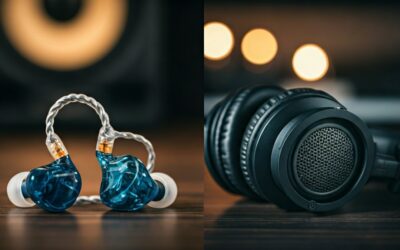
IEM headphones, or In-Ear Monitors, are high-fidelity audio devices designed to fit snugly inside your ear canal to provide exceptional sound isolation and clinical audio accuracy. Unlike standard earbuds that rest on the outer ear, IEMs create a physical seal that blocks out ambient noise while delivering professional-grade sound directly to your eardrums.
If you have ever seen a musician on stage wearing small, flesh-colored earpieces, those are IEMs. They were originally created for live performers to hear their own instruments clearly amidst the roar of a concert. Today, they have become a staple for audiophiles, content creators, and commuters who prioritize detail and portability over the bulk of traditional over-ear headphones.
Key Takeaways: The Essentials of IEMs
Before we dive into the technical details, here is a quick summary of what makes IEM headphones unique:
- Superior Isolation: Because they sit inside the ear canal, they block up to 25dB-30dB of external noise without needing active noise cancellation (ANC).
- Driver Diversity: They use multiple driver types—like Balanced Armatures and Dynamic Drivers—to produce a wide frequency range.
- Detachable Cables: Most high-end IEMs feature replaceable cables, allowing for customization and a longer product lifespan.
- Professional Roots: Originally built for stage monitoring, they offer a “flat” or “neutral” sound signature that reveals every detail in a recording.
- Versatility: You can use them for professional mixing, gaming, or simply enjoying high-resolution music on the go.
What is IEM Headphone Technology?
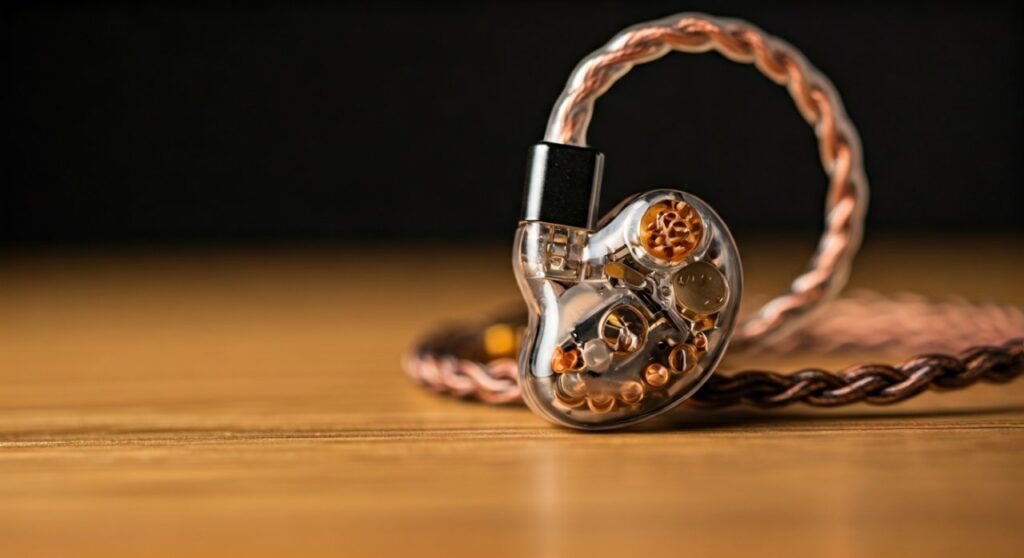
To understand what is iem headphone technology, you have to look at how they are built differently than consumer-grade gear. While a standard pair of cheap earbuds usually features a single, low-cost plastic driver, IEM headphones often house a complex ecosystem of components within a tiny shell.
The “Monitor” part of the name is the most important. In the audio world, a monitor is a tool used to accurately represent sound without adding artificial bass or “coloring.” When you use an IEM, you are hearing the music exactly as the producer intended, making them invaluable for studio engineers and serious music lovers.
Common Driver Types in IEMs
- Dynamic Drivers (DD): These function like miniature versions of home speakers. They are excellent at moving air, which results in impactful, natural bass.
- Balanced Armature (BA): Originally used in hearing aids, these are incredibly small and fast. They excel at producing crisp treble and detailed mid-range frequencies.
- Planar Magnetic Drivers: These use a thin membrane and magnets to produce extremely low-distortion sound, though they often require more power.
- Hybrid Designs: Many modern IEMs combine a Dynamic Driver for the lows and several Balanced Armatures for the highs to get the best of both worlds.
Comparing IEMs, Earbuds, and Over-Ear Headphones
Many people ask, “what are iems headphones compared to what I already own?” It essentially comes down to fit and function.
| Feature | IEM Headphones | Standard Earbuds | Over-Ear Headphones |
|---|---|---|---|
| Placement | Inside ear canal | Resting on outer ear | Over the entire ear |
| Noise Isolation | High (Passive) | Low | Variable (Active/Passive) |
| Sound Accuracy | Extremely High | Low to Medium | High |
| Portability | Excellent | Excellent | Low to Medium |
| Typical Use | Professionals/Audiophiles | Casual listening/Gym | Studio/Home/Office |
Can IEMs Be Used as Headphones for Daily Use?
A common question for beginners is: can iems be used as headphones for normal tasks like office work or gaming? The answer is a resounding yes. In fact, many users prefer them over traditional headphones for several reasons.
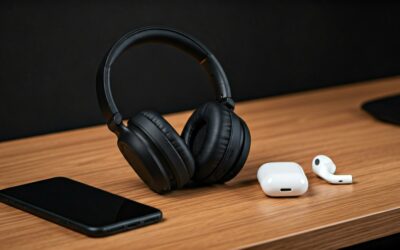
First, IEMs are much more breathable. If you find that over-ear headphones make your ears hot or sweaty after an hour, IEMs solve that problem completely. Second, the passive noise isolation is often better than the Active Noise Cancellation (ANC) found in popular consumer headphones. This makes them perfect for focusing in a noisy office or surviving a long flight.
However, you should keep in mind that IEMs require a “seal.” If you don’t choose the right size ear tip, you will lose the bass response and the isolation. Most IEM headphones come with a variety of silicone and memory foam tips to ensure you get the perfect fit for your specific ear shape.
Step-by-Step Guide: How to Choose and Use Your First IEMs
If you are ready to transition from basic audio to the world of IEM headphones, follow these steps to ensure a premium experience.
Step 1: Identify Your Sound Preference
Before buying, decide what kind of “sound signature” you enjoy. Do you like heavy bass (V-shaped signature), or do you prefer a clear, clinical sound where vocals shine (Neutral or Mid-forward signature)? What is an iem headphone good for if it doesn’t match your music taste?
Step 2: Choose the Right Connection
Most IEMs use a 3.5mm jack, but because they are “low impedance” (easy to drive), they can be very sensitive. If you use them with a smartphone, you might hear a faint “hiss.” Using a small USB-C DAC/Amp (like a Crinacle or Fiio dongle) can significantly improve the clarity.
Step 3: Master the “Deep Fit”
Unlike earbuds, you don’t just “hang” IEMs in your ear.
- Gently pull the top of your ear upward with your opposite hand.
- Insert the IEM and twist it slightly until it feels secure.
- Ensure the cable loops over the back of your ear—this reduces “microphonics” (the thumping sound of the cable hitting your chest).
Step 4: Experiment with Ear Tips
The tip is the most underrated part of the IEM experience. Silicone tips are easy to clean and provide a bright sound. Memory foam tips (like Comply tips) expand to fit your ear perfectly, providing maximum isolation and a warmer bass profile.
Maintenance: How to Make Your IEMs Last for Years
Because what is a iem headphone often involves a significant financial investment, you need to care for them properly. Unlike cheap plastic buds, high-quality IEMs can last a decade if maintained.
- Clean the Nozzles: Earwax is the #1 killer of IEMs. Use the small brush tool usually included in the box to clear the wax filters weekly.
- Store in a Case: Never wrap your IEMs around your phone or toss them in a pocket. The delicate internal wires can snap. Always use a hard-shell carrying case.
- Manage Moisture: If you use them for long periods, moisture from your ear can build up. Dropping a small silica gel packet into your storage case will keep the drivers dry and functional.
Why Audiophiles Are Obsessed with IEMs
In the past few years, the market for IEM headphones has exploded, particularly due to the rise of “Chi-Fi” (Chinese Hi-Fi) brands like Moondrop, KZ, and 7Hz. These companies have made professional-level audio affordable.
Experts agree that for under $100, you can often get an IEM that outperforms over-ear headphones costing $300. The level of detail—the ability to hear the singer’s breath or the subtle vibration of a guitar string—is simply higher because the sound doesn’t have to travel through the air or reflect off your outer ear before reaching your eardrum.
Frequently Asked Questions (FAQs)
Are IEMs bad for your ears?
No, IEMs are not inherently more dangerous than other headphones. In fact, because they block out background noise so effectively, most users find they can listen at lower volumes than they would with earbuds, which actually protects your hearing in the long run.
Why do musicians use IEM headphones instead of wedges?
Stage monitors (wedges) create a lot of noise on stage, which can lead to feedback and “audio mud.” IEMs allow each musician to have a custom mix sent directly to their ears, protecting their hearing from loud drums while letting them hear their own vocals clearly.
Can I use IEMs for gaming?
Absolutely. Many pro gamers are switching to IEM headphones because the imaging (the ability to tell exactly where a sound is coming from) is often superior to “Gaming Headsets.” This helps in hearing footsteps or directional cues in competitive shooters.
What is the difference between active and passive isolation?
Active isolation (ANC) uses electronics to “cancel” noise with opposing sound waves. Passive isolation, which IEMs use, simply blocks the noise physically, like a high-tech earplug. Passive isolation is usually better for high-frequency sounds like people talking or dishes clattering.
Do I need an amplifier for IEMs?
Most IEMs are designed to be efficient, meaning they work fine with a phone or laptop. However, a dedicated DAC (Digital-to-Analog Converter) can help remove background hiss and provide a cleaner signal, especially for high-end models with multiple drivers.