
Understanding the Basics: What is a Headphone Amp?
Have you ever plugged a premium pair of headphones into your laptop or smartphone, only to find the sound thin, quiet, or lacking “punch”? You aren’t alone. This common frustration is exactly why audiophiles and music professionals invest in dedicated hardware.
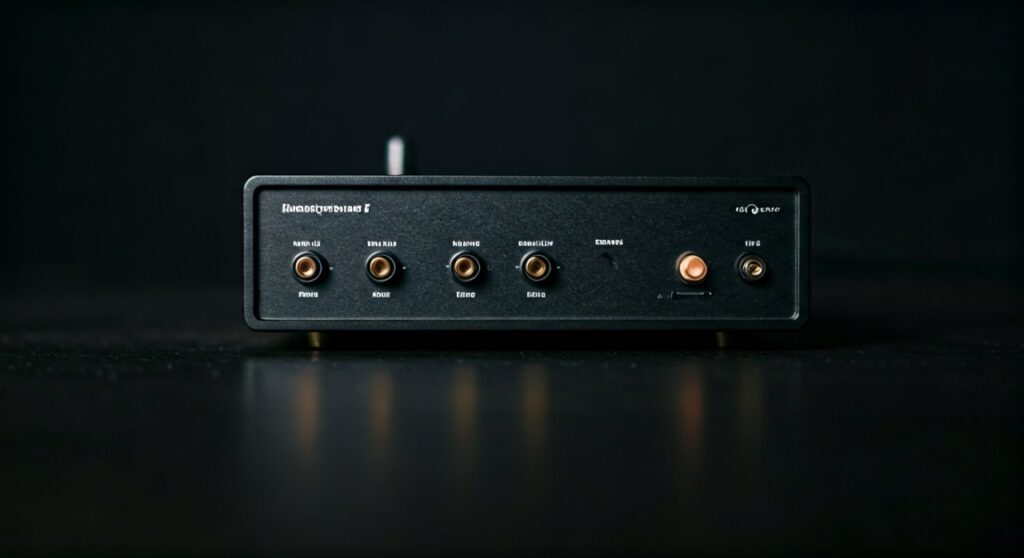
What is a headphone amp? A headphone amp is a dedicated device designed to take a low-voltage audio signal and boost it to a level high enough to drive the small speakers inside your headphones. It acts as a specialized power plant, ensuring your headphones receive the precise amount of energy needed to produce clear, loud, and high-fidelity sound.
While every device with a headphone jack has a built-in amplifier, these “stock” chips are often cheap and underpowered. A dedicated headphone amplifier provides the clean power and overhead required to unlock the full potential of high-end audio gear.
Key Takeaways: TL;DR
- Purpose: A headphone amp increases signal strength to drive headphones that require more power than a phone or laptop can provide.
- Improved Clarity: Beyond just volume, what a headphone amplifier does is reduce distortion and improve the dynamic range (the difference between the quietest and loudest sounds).
- Impedance Matching: Essential for high-impedance headphones (like the Sennheiser HD600 series) which demand higher voltage to function correctly.
- Key Components: Look for Power Output (mW), Output Impedance, and Signal-to-Noise Ratio (SNR) when shopping.
Why Quality Power Matters: What Does a Headphone Amp Do?
To understand what a headphone amp does, you have to look at how sound is created. Your digital music files are converted into electrical signals that move the drivers (the tiny speakers) in your headphones.
Low-powered devices like a standard MacBook or iPhone often struggle to push enough current to move those drivers accurately. This results in “clipping” or a muddy sound where the bass feels flabby and the high notes sound harsh.
What do headphone amps do to fix this? They provide “headroom.” This means the amplifier has enough extra power to handle sudden peaks in music—like a loud drum hit—without distorting the signal. In my experience testing the Schiit Magni, the most noticeable difference wasn’t just volume; it was the way the instruments felt separated and distinct in the soundstage.
The Three Main Roles of a Headphone Amplifier:
- Voltage Gain: Boosting the signal level so you can hear it clearly at comfortable volumes.
- Current Delivery: Providing the physical “push” needed to move the headphone diaphragms, especially for low-sensitivity models.
- Impedance Buffering: Ensuring the source device (your phone) “sees” a consistent electrical load, which prevents frequency response shifts.
Technical Breakdown: What is a Headphone Amplifier Internally?
At its core, a headphone amp consists of an input stage, a gain stage, and an output stage. The input receives the signal from your DAC (Digital-to-Analog Converter), the gain stage increases the amplitude, and the output stage sends it to your ears.
There are several types of internal architectures that define what headphone amplifiers do to the sound signature:
- Solid-State Amps: These use transistors (like the JFET or Bipolar types). They are known for being transparent, reliable, and “fast.” They don’t typically color the sound, making them perfect for clinical listening.
- Tube Amps (Vacuum Tubes): These use glass vacuum tubes to amplify the signal. They add a specific “warmth” or “harmonic distortion” that many listeners find pleasing and “analog.”
- Hybrid Amps: These use a tube for the initial gain and transistors for the output power, attempting to provide the best of both worlds.
Do You Actually Need a Headphone Amp?
Not everyone needs a headphone amp. If you are using standard Apple EarPods or consumer-grade headphones like the Sony WH-1000XM5, a dedicated amp won’t offer a significant upgrade because those headphones are designed to be “easy to drive.”
However, you definitely need one if you own:
- High Impedance Headphones: Anything over 50-80 Ohms (e.g., Beyerdynamic DT 880 250-ohm version).
- Low Sensitivity Headphones: Planar magnetic headphones (like the Hifiman Sundara) often have low sensitivity and require high current to sound their best.
- Professional Studio Monitors: To ensure the most accurate frequency response for mixing or mastering.
Comparison Table: Portable vs. Desktop Amps
| Feature | Portable Headphone Amp | Desktop Headphone Amp |
|---|---|---|
| Power Source | Internal Battery / USB | Wall Outlet (AC Power) |
| Best For | Mobile use, IEMs, Laptops | Home setups, Power-hungry headphones |
| Power Output | Moderate (100mW – 500mW) | High (1000mW – 6000mW+) |
| Typical Size | Pocket-sized | Larger, stationary box |
| Common Examples | FiiO Q3, Chord Mojo 2 | Schiit Magni, JDS Labs Atom |
How to Connect Your Headphone Amp: A Step-by-Step Guide
Setting up your new gear is straightforward, but doing it in the right order ensures you don’t damage your ears or your equipment. Here is how to integrate a headphone amp into your system.
Step 1: Identify Your Source
Your source is where the music starts—this could be a PC, Mac, Smartphone, or Turntable. If you are using a digital source, you usually want a DAC between the source and the amp.
Step 2: Connect the Signal Cable
- If your DAC and Amp are separate, use RCA cables (Red and White) or Balanced XLR cables to connect the “Line Out” of the DAC to the “Line In” of the amp.
- If you are using a DAC/Amp combo unit, simply plug the USB cable from your computer into the device.
Step 3: Power On and Volume Down
Before plugging in your headphones, ensure the volume knob on the amp is turned all the way down. This prevents accidental “pops” or dangerously loud bursts of sound.
Step 4: Plug in Your Headphones
Use the 1/4 inch (6.35mm) or 3.5mm jack on the front of the amp. If your headphones have a balanced cable, use the 4.4mm Pentaconn or 4-pin XLR output if available.
Step 5: Adjust Gain Settings
Many amps have a “Gain Switch” (Low/Medium/High). Start on Low Gain. If you find you have to turn the volume knob past 3 o’clock to get a good level, switch to High Gain.
Exploring Different Amp Classes: Expert Insights
When researching what does a headphone amplifier do, you will encounter “Classes” of amplification. These refer to how the transistors manage electricity.
- Class A: The most “pure” form of amplification. The transistors are always on, which generates a lot of heat but results in the lowest possible distortion. Expert audiophiles often prefer Class A for its musicality.
- Class AB: More efficient than Class A. It stays in Class A for low-power signals and switches to Class B for higher peaks. This is the most common type found in high-quality desktop amps.
- Class D: Highly efficient and runs cool. While once criticized for sound quality, modern Class D amps (like those using THX AAA technology) are incredibly clean and powerful.
In my years of reviewing audio gear, I’ve found that what does headphone amp do for the user experience is often psychological as much as physical. There is a tactile joy in turning a heavy, machined-aluminum volume knob that a touch-screen slider simply cannot replicate.
Understanding Impedance and Sensitivity
To truly answer “what is a headphone amplifier used for?”, we must talk about the “difficult” headphones.
Impedance (measured in Ohms) is the electrical resistance of your headphones. High-impedance headphones (300 ohms+) require more voltage to overcome that resistance. If you plug a 300-ohm Sennheiser HD800S into a smartphone, it will sound quiet and “thin.”
Sensitivity (measured in dB/mW) tells you how loud the headphones get with one milliwatt of power. Low-sensitivity headphones (under 95dB) are “power hungry.” Even if they have low impedance, they need a lot of current to move the drivers quickly. A dedicated amp provides both the voltage and current necessary for these edge cases.
Common Myths About Headphone Amps
There is a lot of “fluff” in the audio world. Let’s debunk a few misconceptions about what does headphone amp do:
- “Amps make everything sound better”: Not true. If your source file is a low-bitrate MP3, an amp will simply make the flaws and compression artifacts more noticeable.
- “Expensive cables are required”: While good shielding matters, you don’t need $500 RCA cables for a $100 amp. Focus your budget on the amp itself.
- “More power is always better”: You only need enough power to drive your headphones with about 10-20dB of “headroom.” Excessively powerful amps can actually introduce a “noise floor” (hiss) when used with sensitive In-Ear Monitors (IEMs).
Buying Guide: What to Look for in a Headphone Amp
If you are ready to buy, keep these three criteria in mind to ensure you get the right value for your setup.
- Output Impedance: Ideally, the output impedance of the amp should be less than 1/8th of your headphones’ impedance. For example, if your headphones are 32 ohms, the amp should have an output impedance of 4 ohms or less. This ensures a high “damping factor,” keeping the bass tight.
- Noise Floor: Check the Signal-to-Noise Ratio (SNR). You want a high number (usually over 110dB) so that you don’t hear a background hiss during quiet passages of music.
- Versatility: Look for an amp that offers both a 3.5mm jack for convenience and a 1/4 inch jack for professional cables. Having multiple gain stages is a huge plus if you plan on using both sensitive IEMs and heavy over-ear headphones.
Frequently Asked Questions (FAQs)
What does a headphone amplifier do that a standard headphone jack doesn’t?
A dedicated headphone amplifier provides higher voltage and more stable current than the generic chips found in phones or laptops. This results in higher volume levels, better bass control, and a wider soundstage with less distortion.
Can a headphone amp damage my headphones?
Yes, if you use a high-gain setting and turn the volume up too high, you can “blow” the drivers of your headphones or cause permanent hearing damage. Always start with the volume at zero when plugging in.
Is a DAC the same thing as a headphone amp?
No. A DAC (Digital-to-Analog Converter) converts your digital files (0s and 1s) into an electrical signal. A headphone amp takes that electrical signal and makes it stronger. Many modern devices are “DAC/Amp Combos” which perform both tasks in one box.
Do I need an amp for noise-canceling headphones?
Generally, no. Most noise-canceling headphones (like Bose or Sony) are active, meaning they have their own built-in amplifiers and digital processing. Adding an external amp may not provide any benefit and could actually introduce noise.
Does a headphone amp improve sound quality?
Yes, provided you are using high-quality headphones. An amp improves sound quality by providing “clean power,” which allows the headphones to reproduce the full frequency range (from deep sub-bass to crystalline highs) without the electrical strain that causes distortion.
META