
Understanding What is Impedance in Headphones
What is impedance in headphones? In short, it is the measure of electrical resistance that your headphones provide to the audio signal coming from an amplifier or device. Measured in Ohms (Ω), it determines how much voltage is required to drive the drivers and produce sound at a specific volume level.
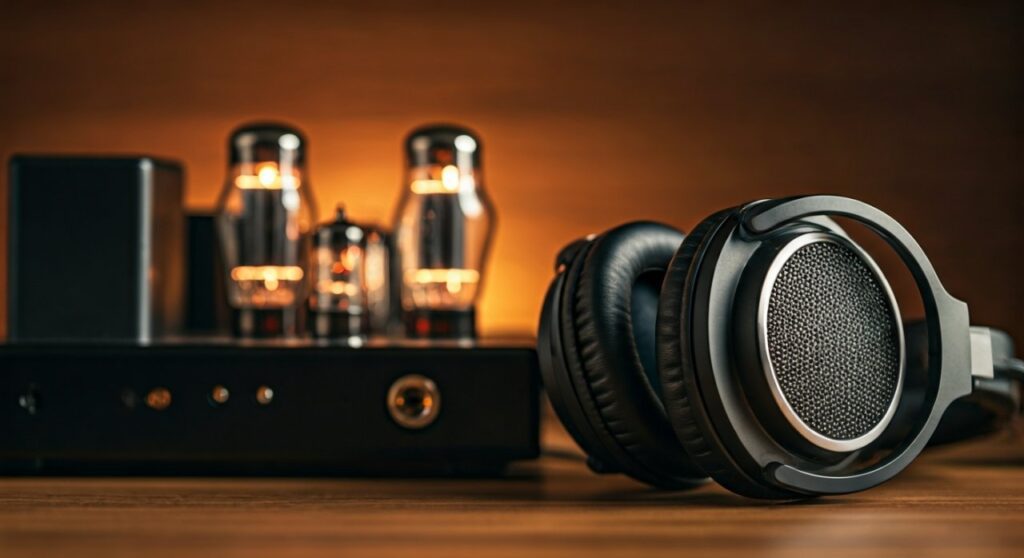
Low-impedance headphones (under 32-50 Ohms) are designed to work efficiently with low-voltage portable devices like smartphones and laptops. Conversely, high-impedance headphones (above 100 Ohms) require more powerful, dedicated amplifiers to reach their full sonic potential and prevent “thin” or distorted sound.
Key Takeaways: TL;DR for Audiophiles
If you are in a hurry to match your gear, here is the essential breakdown of what headphone impedance means for your daily listening:
- Low Impedance (16–32 Ω): Ideal for mobile use. They reach high volumes easily without an external amp but are more susceptible to “hiss” or electrical noise.
- High Impedance (100–600 Ω): Best for studio or home hi-fi setups. They offer better protection against blowouts and generally provide more refined detail when paired with a quality DAC/Amp.
- The 1/8th Rule: For optimal sound quality (damping factor), your amplifier’s output impedance should be at least eight times lower than your headphones’ impedance.
- Compatibility: High-impedance headphones used with a phone will sound quiet, flat, and lack bass. Low-impedance headphones used with a high-output tube amp might suffer from excessive distortion.
What Does Impedance Mean in Headphones? The Science Simplified
To understand what impedance headphones use to function, we must look at the relationship between Voltage, Current, and Resistance. Think of the audio signal as water flowing through a pipe.
In this analogy, Voltage is the water pressure, Current is the volume of water flowing, and Impedance is the diameter of the pipe. A narrow pipe (high impedance) resists the flow of water, requiring more pressure (voltage) to get a high volume of water through. A wide pipe (low impedance) allows water to flow easily with very little pressure.
Inside your headphones, the voice coil consists of thin wire wrapped around a magnet. The length and thickness of this wire determine the impedance. More windings of thinner wire create higher resistance, while fewer windings of thicker wire create lower resistance.
High vs. Low: Decoding What is Headphone Impedance
Choosing between high and low impedance isn’t about which is “better,” but about which fits your specific playback device. Below is a comparison table to help you categorize your equipment.
| Feature | Low Impedance (16 – 50 Ohms) | High Impedance (100 – 600 Ohms) |
|---|---|---|
| Typical Devices | Smartphones, Tablets, Gaming Controllers | Studio Mixers, High-End Amps, Hi-Fi Systems |
| Power Needs | Low Voltage (Easy to drive) | High Voltage (Requires amplification) |
| Portability | Excellent – No extra gear needed | Poor – Requires a portable or desktop amp |
| Sonic Benefit | High efficiency and loud volume | Better damping, lower distortion, refined detail |
| Durability | Vulnerable to power surges | High protection against overloading |
| Example Models | Audio-Technica M50x, Sony WH-1000XM5 | Sennheiser HD 600, Beyerdynamic DT 880 (250Ω) |
Why Headphone Impedance Matters for Sound Quality
When people ask what does impedance mean for headphones, they are usually looking for the “hidden” impact on audio fidelity. While impedance alone doesn’t dictate quality, it affects the Damping Factor.
Damping is the ability of an amplifier to control the movement of the headphone driver. When the signal stops, the driver (diaphragm) should stop instantly. High-impedance headphones are generally easier for an amplifier to control, leading to:
- Tighter Bass: The driver doesn’t “wobble” after a drum hit.
- Cleaner Mids: Reduced vibration interference between frequencies.
- Lower Noise Floor: High-impedance sets are less likely to pick up the “hiss” from the internal circuitry of a laptop or phone.
However, if you use high-impedance headphones without enough voltage, the sound will feel “hollow.” This is because the amplifier is clipping or failing to push the driver through its full range of motion.
Step-by-Step Guide: How to Match Your Headphones to Your Source
Knowing what is impedance on headphones is useless if you don’t know how to apply it. Follow these steps to ensure a perfect match.
Step 1: Check the Specification Sheet
Look at the technical specs of your headphones. Find the Nominal Impedance (measured in Ohms).
- If it’s under 32 Ohms, proceed to use any device.
- If it’s 50–150 Ohms, you may need a small portable DAC/Amp like the Fiio BTR7.
- If it’s 250–600 Ohms, a desktop amplifier is mandatory.
Step 2: Identify Your Source Output
Check the manual of your smartphone or audio interface. Look for the Output Impedance.
- Pro Tip: If you cannot find the output impedance, assume a modern smartphone or high-end laptop (like a MacBook Pro) has a low output impedance suitable for most consumer headphones.
Step 3: Apply the 1/8th Rule
To avoid frequency response changes (where the bass becomes boomy or the treble gets harsh), ensure your source’s output impedance is 1/8th of the headphone’s impedance.
- Example: If your headphones are 32 Ohms, your amp output should be 4 Ohms or less.
Step 4: Evaluate the Volume and Dynamics
Plug them in and listen.
- Sign of a bad match: You have the volume at 100%, but it’s still quiet.
- Sign of a bad match: There is a constant “hissing” sound even when no music is playing.
- The Goal: You should reach a comfortable listening level at 50-60% volume with a completely silent background.
The Role of Sensitivity: The Missing Link
It is a common mistake to think what impedance for headphones is the only factor in loudness. Sensitivity (expressed in dB/mW) is equally important.
Sensitivity measures how loud the headphones get at a specific power level. You can have high-impedance headphones that are also very sensitive (making them relatively easy to drive), or low-impedance headphones with very low sensitivity (like Planar Magnetic headphones) that actually require a massive amount of current to sound good.
Always look at both numbers. If the sensitivity is below 90dB, you will likely need an amplifier regardless of the impedance rating.
Professional Insights: My Experience with Impedance Matching
In my years of testing audio gear, I have found that impedance curves are often overlooked. Impedance is not a flat line; it changes depending on the frequency.
For example, a headphone might be rated at 300 Ohms, but at the bass frequency of 100Hz, the impedance might spike to 500 Ohms. If your amplifier lacks “headroom” (extra power), those bass notes will sound weak and thin because the amp can’t overcome that specific resistance spike.
This is why “Overpowering” is rarely a problem, but “Underpowering” is the most common cause of poor sound quality in the audiophile world. When in doubt, a dedicated O2 Amp or Schiit Magni provides a safe, high-voltage floor for almost any headphone.
Frequently Asked Questions (FAQs)
Does higher impedance always mean better sound?
No, impedance is an electrical characteristic, not a quality rating. However, high-impedance headphones often have thinner, lighter voice coils that can move faster and more accurately, which often results in better detail and clarity.
Can I damage my phone by using 600 Ohm headphones?
No. You will not damage your phone or the headphones. The only result will be very low volume and a lack of bass. The phone simply doesn’t have the “pressure” to push the signal through the high resistance.
Will an amp make my low-impedance headphones sound better?
Sometimes. If your source has a high noise floor (hiss), a clean external DAC/Amp will remove that noise. However, it won’t necessarily make them “better” in terms of raw volume, and you must be careful not to blow the drivers.
What happens if I use low-impedance headphones with a high-output amp?
You risk “blowing” the drivers if you turn the volume up too high. Additionally, you might experience a high noise floor and poor damping, making the music sound bloated and messy.
Why do professional studios use high-impedance gear?
Studios often use multiple headphones connected to the same source. High impedance allows several pairs to be “daisy-chained” without overloading the circuit, and it protects the gear from accidental volume spikes during recording sessions.