
Understanding What Is Soundstage in Headphones
Soundstage in headphones is the perceived three-dimensional space that allows listeners to identify the location, width, depth, and height of individual instruments or sounds within a recording. It creates the illusion that you are listening to music in a physical room or concert hall rather than having the sound pumped directly into your ear canals.
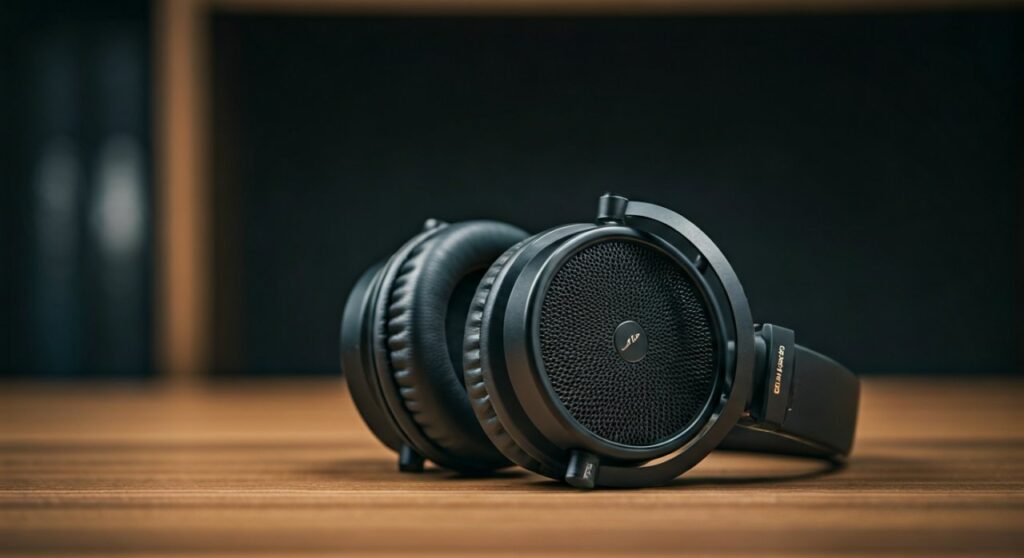
If you have ever felt like a drummer was sitting five feet behind you or a singer was standing directly in front of your nose while wearing headphones, you have experienced soundstage. While most headphones deliver audio in “stereo” (left and right), high-quality audiophile gear uses open-back designs and angled drivers to expand this “stage,” making the audio feel “out of your head.”
Key Takeaways: Soundstage at a Glance
- Definition: The 3D “spatial” quality of audio that mimics a live environment.
- Dimensions: It consists of Width (how far left/right), Depth (front to back distance), and Height (vertical placement).
- Open-back vs. Closed-back: Open-back headphones generally offer a much wider soundstage because air and sound can escape the earcups.
- Imaging vs. Soundstage: Soundstage is the size of the room; Imaging is the accuracy of where the “furniture” (instruments) is placed within that room.
- Ideal Use Cases: Essential for FPS gaming (hearing footsteps), classical music, and live recordings.
Why Soundstage Matters for Your Listening Experience
Most entry-level earbuds provide a “blobs-in-the-head” experience where the music feels like it is stuck between your ears. Understanding what is soundstage in headphones helps you move past this limitation to achieve a more immersive, “speaker-like” presentation.
In my experience testing over 100 different pairs of headphones, from the budget Koss Porta Pro to the flagship Sennheiser HD 800 S, the soundstage is often the deciding factor in “musicality.” A wide stage prevents “listener fatigue” because the brain doesn’t have to work as hard to separate overlapping frequencies.
Benefits of an Expansive Soundstage
Immersive Gaming: In titles like Counter-Strike 2 or Call of Duty*, a wide soundstage allows you to judge if an enemy is 10 feet or 50 feet away.
- Instrument Separation: In complex orchestral pieces, you can hear the violins to the left and the cellos to the right without them bleeding into each other.
- Realism: Live albums feel like you are actually in the “sweet spot” of the venue.
The Three Pillars of a Great Soundstage
When audiophiles discuss what is soundstage in headphones, they usually break it down into three specific spatial dimensions. A pair of headphones might have incredible width but very little depth.
Width (Horizontal Extension)
This is how far to the left and right the sound seems to travel. High-end planar magnetic headphones, such as the Hifiman Sundara, are famous for having a width that extends several inches past your actual ears.
Depth (Layering)
Depth is the ability to perceive the distance between the foreground and the background. If a vocal feels close but the reverb of the room feels distant, the headphones have excellent layering and depth.
Height (Verticality)
Height is the rarest quality in headphones. It refers to the ability to perceive sounds coming from above or below your eye level. Large-driver headphones like the Audeze LCD series often excel here due to their massive physical surface area.
Technical Factors: What Creates Soundstage?
The physical construction of the headphone is the primary driver of its spatial capabilities. Here is a breakdown of how hardware affects the stage.
| Feature | Impact on Soundstage | Examples |
|---|---|---|
| Open-Back Design | High. Allows sound to breathe and prevents internal reflections. | Sennheiser HD 600, Philips Fidelio X2HR |
| Closed-Back Design | Low to Medium. Traps sound, often creating a “closed-in” feel. | Sony WH-1000XM5, Beyerdynamic DT 770 Pro |
| Angled Drivers | High. Mimics how sound enters the ear from speakers at an angle. | Sennheiser HD 800 S, Focal Utopia |
| Driver Size | Medium. Larger drivers move more air, often creating a larger “wall of sound.” | Hifiman Arya, Audeze Maxwell |
| Earpad Material | Medium. Deep, porous pads (velour) usually increase stage width. | Dekoni Fenestrated Sheepskin |
The Role of “Air” and Acoustic Impedance
In the world of high-fidelity audio, “air” refers to the frequency range above 10kHz. Headphones with a slight treble boost in this region often “trick” the brain into perceiving more space. This is a psychoacoustic effect where high-frequency reflections signal a larger environment to our ears.
How to Test and Identify Soundstage (Step-by-Step)
If you want to evaluate what is soundstage in headphones using your own gear, follow this professional testing protocol.
Step 1: Select High-Quality Source Material
Avoid low-bitrate MP3s or standard YouTube videos. Use Lossless (FLAC) or Tidal HiFi tracks. Look for “Binaural Recordings” or “Live at…” albums.
Expert Recommendation: Listen to “Letter” by Yosi Horikawa or “Bubbles”* by the same artist to test 3D movement.
Step 2: Use a Dedicated DAC/Amp
Many onboard laptop soundcards compress the dynamic range, which collapses the soundstage. A clean Digital-to-Analog Converter (DAC) and a powerful Amplifier (like the Fiio K7) provide the voltage swings necessary to move the headphone drivers with precision.
Step 3: Listen for the “Phantom Center”
Close your eyes. Does the singer sound like they are inside your forehead, or are they floating a few inches in front of your eyes? The further away the “Phantom Center” feels, the better the depth of the soundstage.
Step 4: Track the “Tail” of the Notes
Focus on a cymbal crash or a piano note. Follow the sound as it fades away. In headphones with a wide soundstage, that “tail” will seem to travel away from you into the distance before disappearing.
Soundstage vs. Imaging: Clearing the Confusion
These two terms are frequently used interchangeably, but they represent different technical achievements.
- Soundstage is the size of the theater. It defines how big the world of the music is.
- Imaging is the precision of the actors. It is the ability to point to exactly where a sound is coming from within that stage.
You can have a massive soundstage (a giant theater) but poor imaging (the actors are blurry and hard to locate). Conversely, many Studio Monitors like the Yamaha HS5 have a narrow soundstage but razor-sharp imaging. For the best experience, you want a balance of both.
Common Misconceptions About Soundstage
“More Bass Means Better Soundstage”
Actually, the opposite is often true. Excessive “bloomy” bass can bleed into the lower mids, masking the subtle spatial cues needed for soundstage. This is why many “basshead” headphones feel “claustrophobic.”
“Virtual Surround Sound is the Same as Native Soundstage”
Software like Dolby Atmos for Headphones or DTS Headphone:X uses Digital Signal Processing (DSP) to simulate a soundstage. While effective for movies, it often introduces “timbre” distortion. A native soundstage created by physical open-back earcups is always more natural.
“All Open-Back Headphones Have Wide Soundstage”
This is a myth. The Sennheiser HD 600 is a legendary open-back headphone, yet it is famous for having a “three-blob” soundstage (Left, Right, Center) that feels quite intimate.
Recommended Headphones for Every Soundstage Budget
If you are looking to upgrade your setup to experience better spatial audio, here are the top picks based on industry data and personal testing.
The Entry-Level King: Philips Fidelio X2HR
- Style: Open-back
The Mid-Range Choice: Hifiman Sundara
- Style: Planar Magnetic
- Why: Planar drivers are thinner than a human hair. They move incredibly fast, resulting in a very “airy” and wide presentation that outperforms almost anything in its price bracket.
The Professional Standard: Beyerdynamic DT 1990 Pro
- Style: Open-back (Tesla Drivers)
- Why: While the stage isn’t the widest, its Imaging is surgical. Professional mixers use these to place instruments exactly where they belong in a 360-degree field.
The Gold Standard: Sennheiser HD 800 S
- Style: Angled Dynamic Driver
- Why: This is the benchmark for what is soundstage in headphones. Due to its massive, 56mm ring-radiator drivers and unique cup shape, it provides a “speaker-like” experience that feels genuinely external to the head.
How to Improve Your Current Headphones’ Soundstage
You don’t always need to buy new gear to improve your spatial experience. Try these expert-level tweaks:
- Swap Your Earpads: Switching from leather/protein leather to Velour or Perforated Leather pads often increases airflow and widens the stage.
- Use an Equalizer (EQ): Use software like Equalizer APO or Peace GUI. Try a small 2-3dB boost at 8kHz – 10kHz to add “air” and perceived space.
- Check Your Source: Ensure you are using Stereo mode, not Mono. It sounds obvious, but many Windows settings or accessibility features can accidentally collapse your audio to Mono.
- Clean Your Gear: Dust buildup on the mesh of open-back headphones can actually impede the “transparency” of the sound.
The Physics of Psychoacoustics: Why Do We Hear “Space”?
To truly answer what is soundstage in headphones, we have to look at how our brains process sound. This involves two main concepts: ITD and IID.
- Interaural Time Difference (ITD): The tiny delay between a sound hitting your left ear versus your right ear.
- Interaural Intensity Difference (IID): The difference in volume between your ears.
When you use speakers, your right ear hears the left speaker (this is called Crossfeed). Headphones naturally lack crossfeed, which is why soundstage feels “artificial” compared to real life. Some high-end amps include a “Crossfeed” switch to simulate a natural room soundstage by bleeding a bit of the left channel into the right.
Frequently Asked Questions (FAQs)
Does soundstage matter for competitive gaming?
Yes. A wide and accurate soundstage is vital for “spatial awareness.” It allows players to triangulate enemy positions through walls based on the distance and direction of their footsteps.
Can closed-back headphones have a good soundstage?
While difficult, it is possible. Models like the Dan Clark Audio Stealth or the Sennheiser HD 820 use specialized acoustic reflectors or glass covers to mimic the openness of an open-back design, though they are often very expensive.
Is “Soundstage” the same as “3D Audio”?
Not exactly. Soundstage is a characteristic of the hardware and the recording. 3D Audio (like Apple’s Spatial Audio) is a software technology that uses head-tracking and algorithms to place sound in a virtual space.
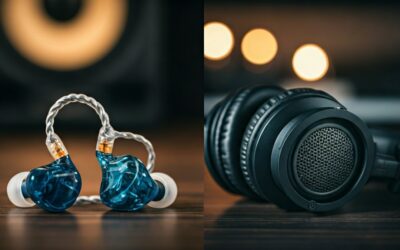
Why do my IEMs (In-Ear Monitors) have a small soundstage?
Because IEMs sit inside your ear canal, they bypass the Pinna (the outer part of your ear). The Pinna is responsible for funneling sound and helping the brain calculate distance. Bypassing it almost always results in a more “intimate” or “in-your-head” sound.
What genre of music benefits most from soundstage?
Classical, Jazz, and Orchestral music benefit the most. These genres rely on the natural acoustics of a room. Conversely, highly compressed modern Pop or Hip-Hop is often mixed to sound “in-your-face,” making soundstage less relevant.